A small kitchen can feel like a daily frustration — not enough counter space, never enough storage, and the constant sense that no matter how much you tidy, it still looks cluttered. If that sounds familiar, you’re not alone. Small kitchens are one of the most searched topics in home decor for a reason.
The good news is that most small kitchen problems aren’t actually space problems — they’re organization and design problems. And those are completely solvable. These 18 small kitchen ideas are the ones that genuinely make a difference, whether you’re in a tiny apartment, a rental, or just working with a kitchen that never quite has enough room.
Switch to Open Shelving on at Least One Wall
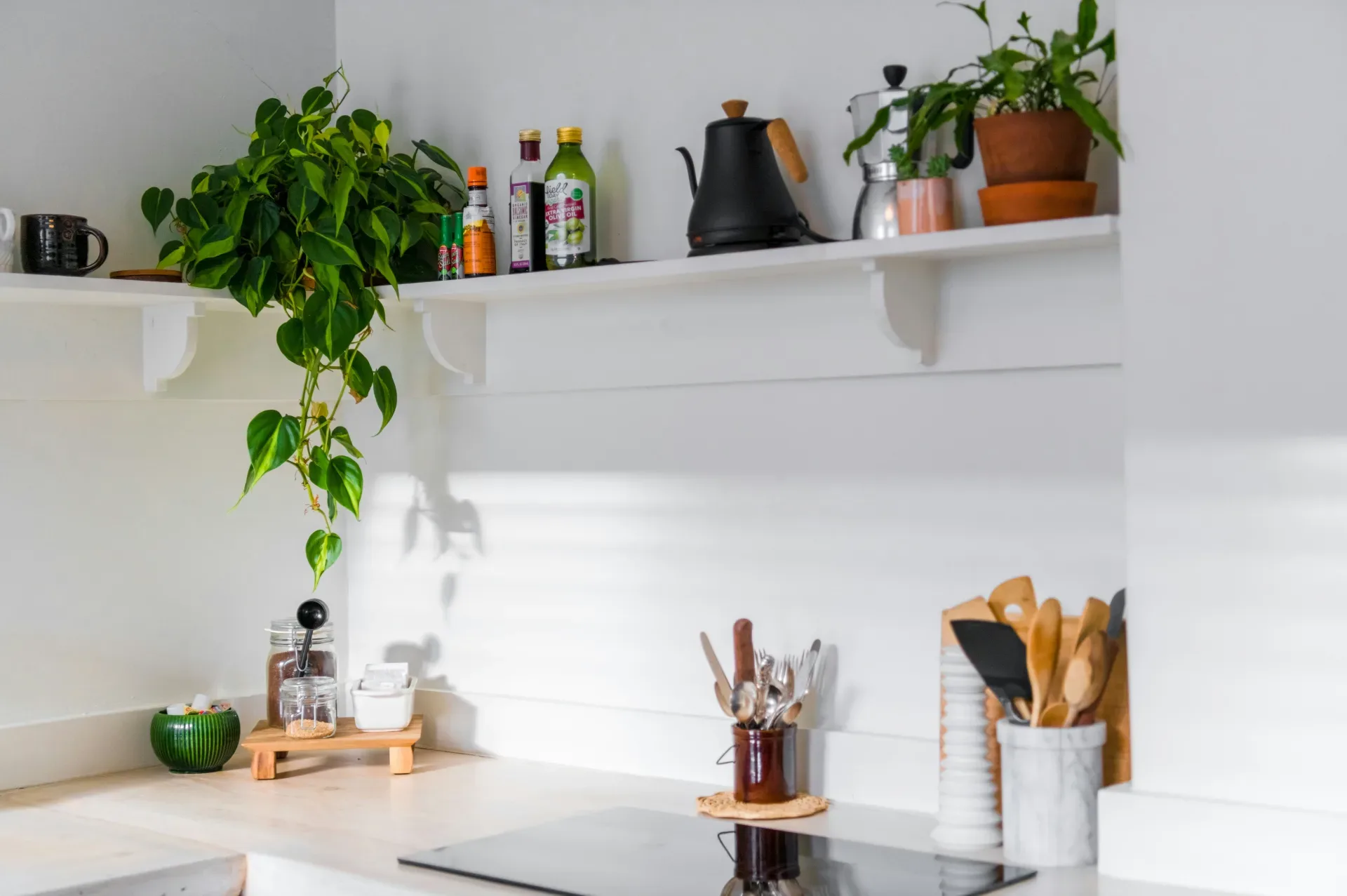
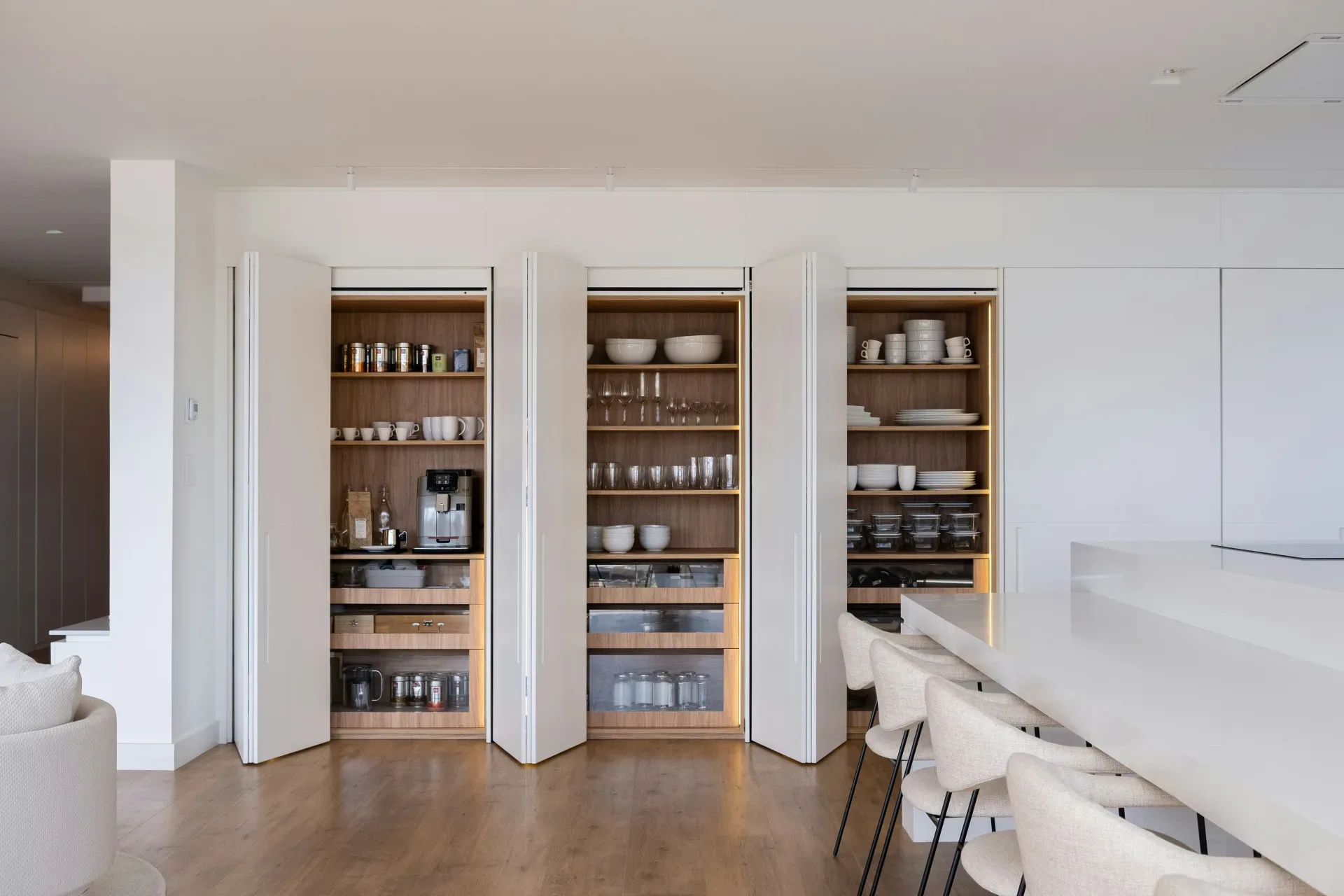
Replacing upper cabinet doors with open shelving is one of the most effective things you can do for a small kitchen — it makes the space feel immediately more open and airy, and it forces you to keep only what you actually use on display. Neat rows of matching dishes, glasses, and a few styled objects look genuinely beautiful and make the kitchen feel intentional rather than stuffed. The key is editing ruthlessly: open shelves only work when what’s on them is worth looking at. IKEA’s Boaxel and floating shelf systems make this affordable and renter-friendly when used with the right wall anchors.
Paint Everything One Light, Warm Color
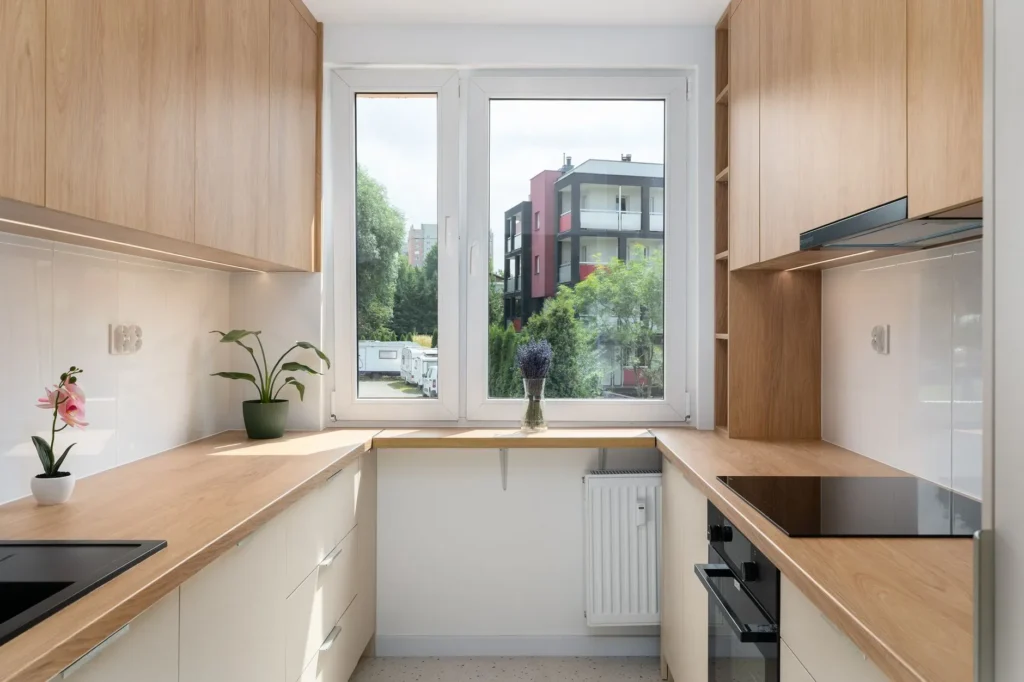
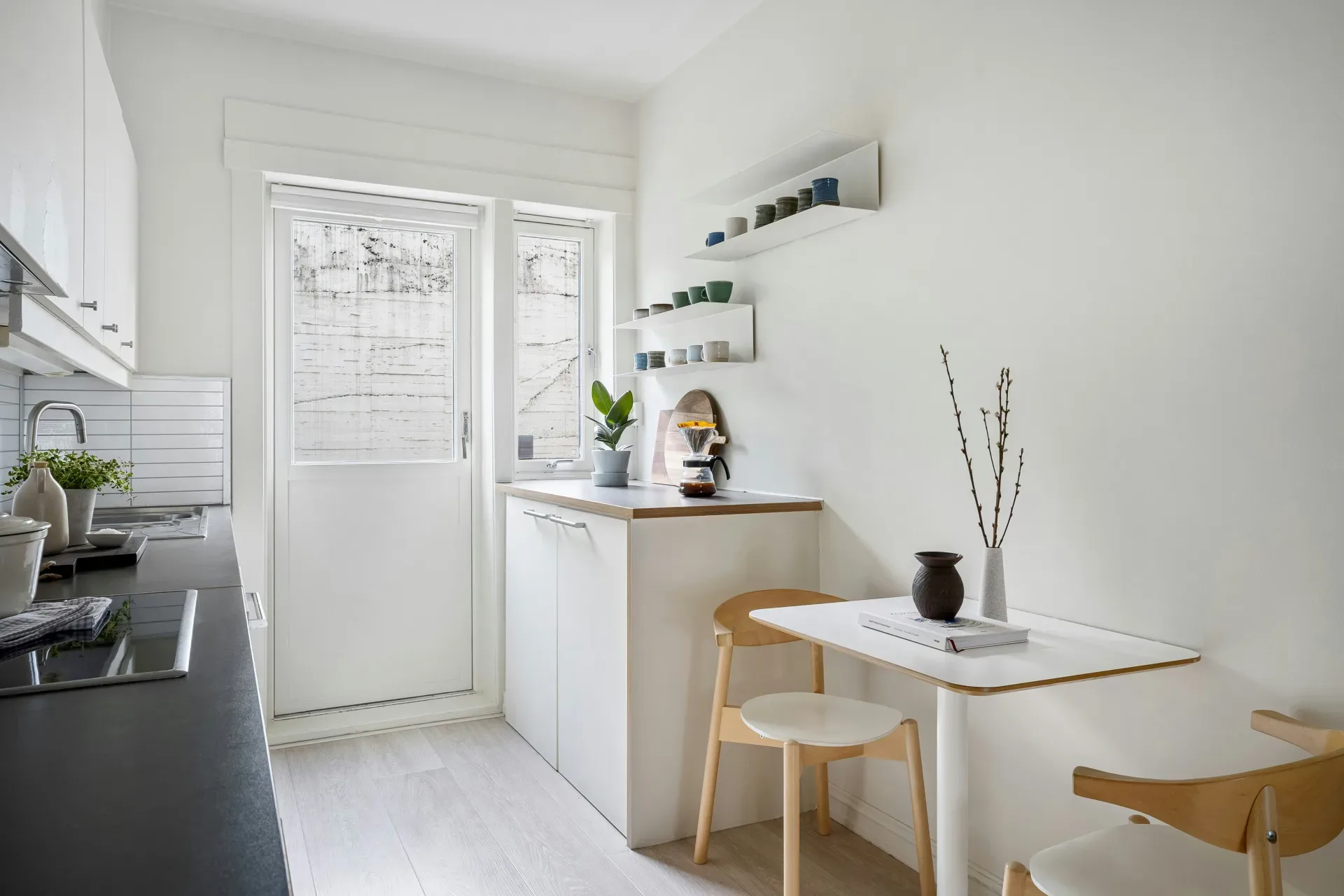
In a small kitchen, a consistent light palette does more visual work than almost any structural change. Painting the walls, cabinets, and even the ceiling the same soft white, warm cream, or pale sage green makes the boundaries of the room less defined — which makes it feel bigger. Contrast (dark cabinets against light walls, for example) highlights how small the space is by drawing attention to every corner and edge. A monochromatic light palette does the opposite — it blurs those boundaries and creates a calm, expansive feeling. Even just painting your existing cabinets a soft warm white can completely change how a small kitchen reads.
Mount a Magnetic Knife Strip on the Wall
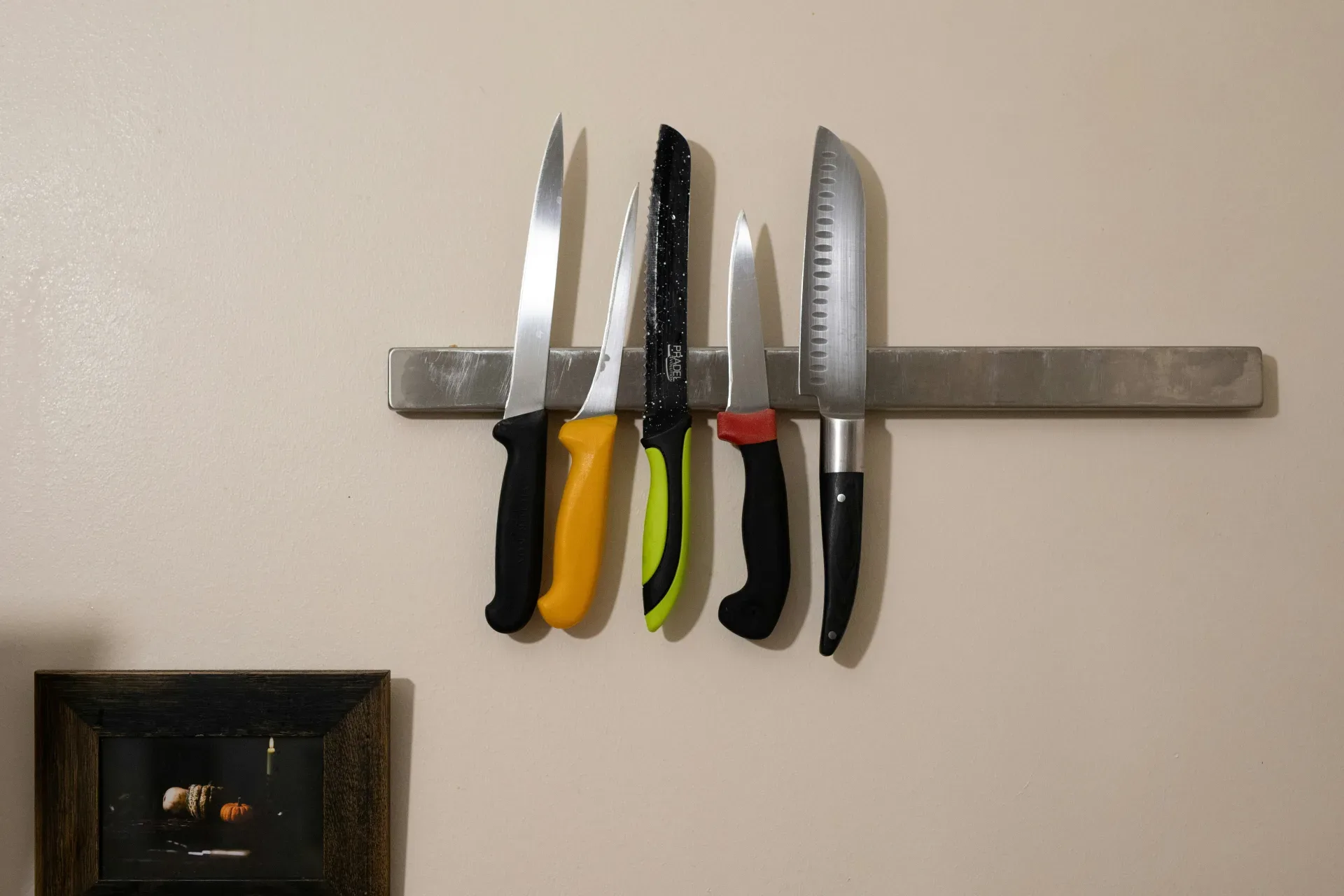
A knife block on the counter in a small kitchen takes up precious workspace that you can’t afford to lose. A magnetic knife strip mounted on the wall keeps your knives accessible, frees up counter space, and honestly looks really sleek and intentional. It’s one of those changes that costs under $20 and makes you wonder why you didn’t do it sooner. Mount it on the wall above the counter beside the stove or beside the prep area — wherever you chop most often. Stainless steel and wooden versions are both widely available online and at kitchen stores.
Use Every Inch of Cabinet Door Space
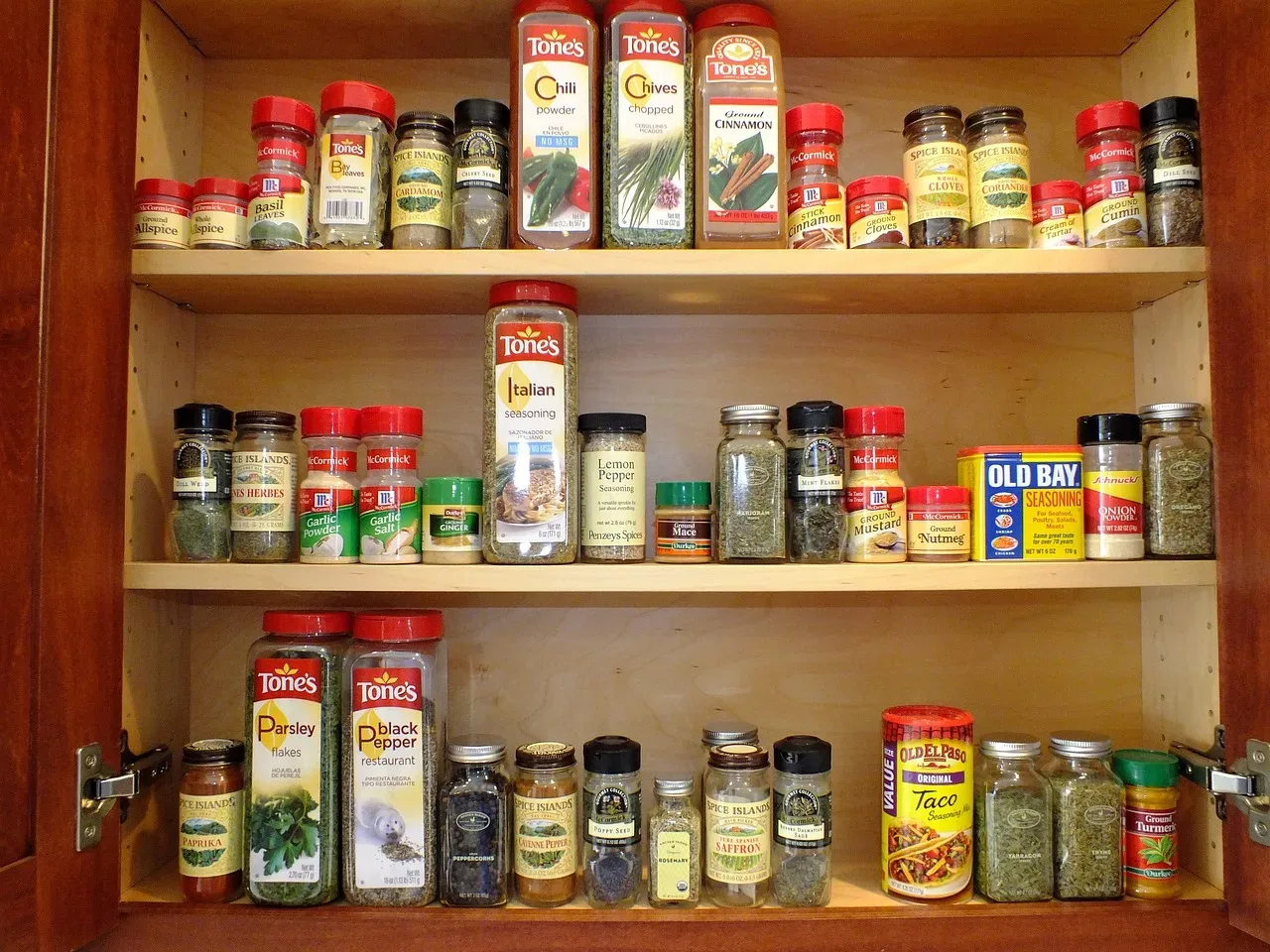
The inside of cabinet doors is some of the most underused storage space in a small kitchen — and it’s completely free real estate once you install the right organizers. Over-door racks hold pot lids, cleaning supplies, foil and cling wrap boxes, or spice jars. Command hooks on the inside of doors hold measuring cups, oven mitts, and small tools. A tension rod inside a cabinet creates an instant rack for hanging spray bottles upright. None of this is expensive — most over-door organizers start at $10–$20 — and together they can free up a surprising amount of shelf and drawer space inside the cabinets themselves.
Install a Pegboard on One Wall
A pegboard wall in a small kitchen is one of the most flexible storage solutions you can add — you can configure and reconfigure it as your needs change, and it keeps everything visible and within reach without taking up any counter or drawer space. Use it for utensils, pots and pans, cutting boards, spice jars in small baskets, even paper towel rolls. Paint it the same color as the wall behind it for a seamless, intentional look, or leave it natural wood for a warmer feel. Pegboard sheets are available at hardware stores and Amazon, starting around $15–$25, and a full set of hooks and accessories is another $15–$30.
Add Pull-Out Organizers to Deep Drawers
Deep kitchen drawers and cabinets are notorious for becoming black holes where things disappear and get forgotten — and the fix is simpler than you’d think. Pull-out drawer organizers and cabinet inserts turn those deep spaces into properly accessible, clearly organized storage. Stackable pull-out baskets inside lower cabinets make it easy to reach items at the back without emptying the whole shelf. Drawer dividers keep utensils, food storage lids, and small tools sorted and visible. These organizers are widely available on Amazon starting around $15–$30 each, and the time they save in daily kitchen use pays for itself immediately.
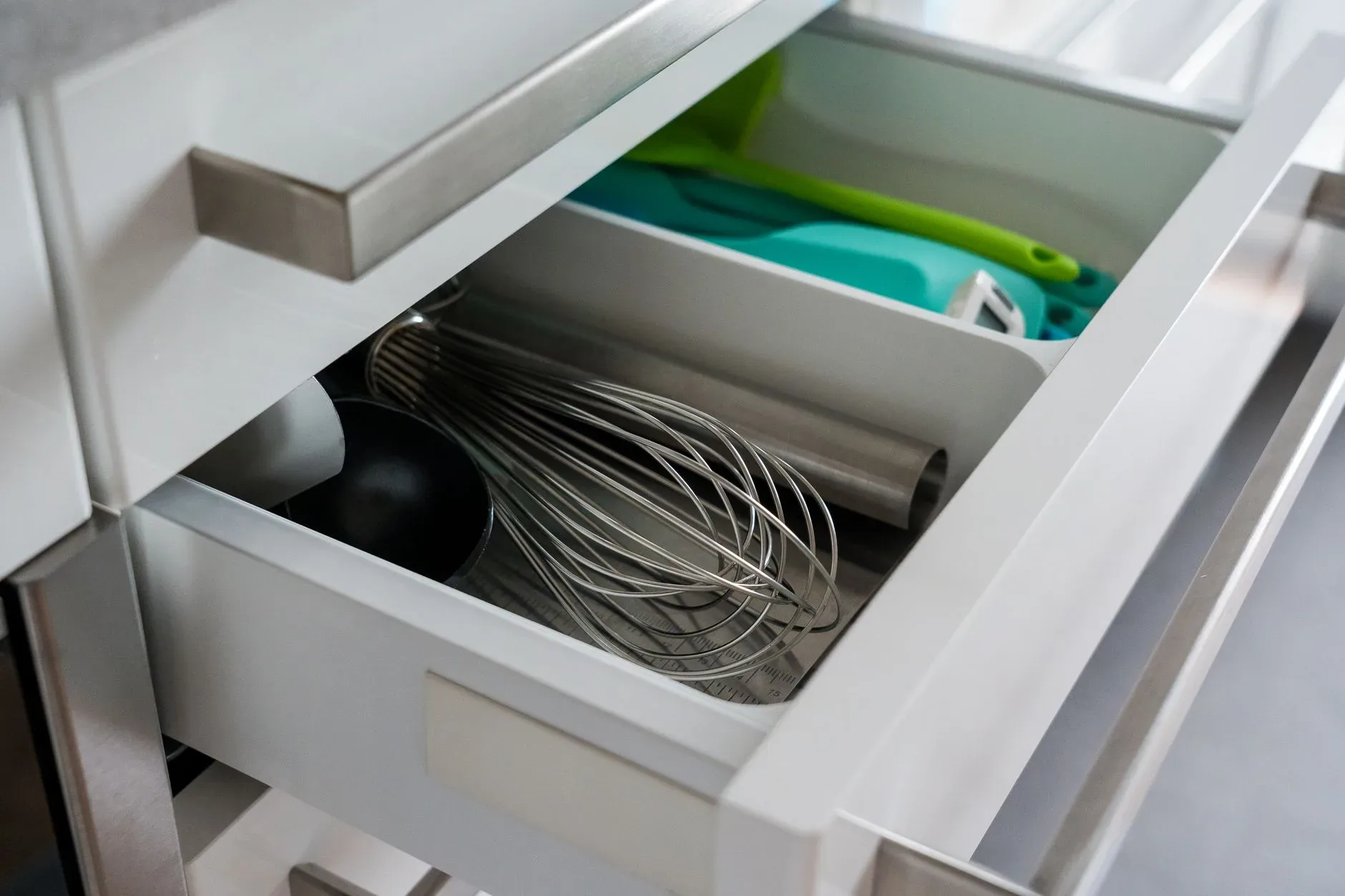
Hang Pots and Pans From the Ceiling or Wall
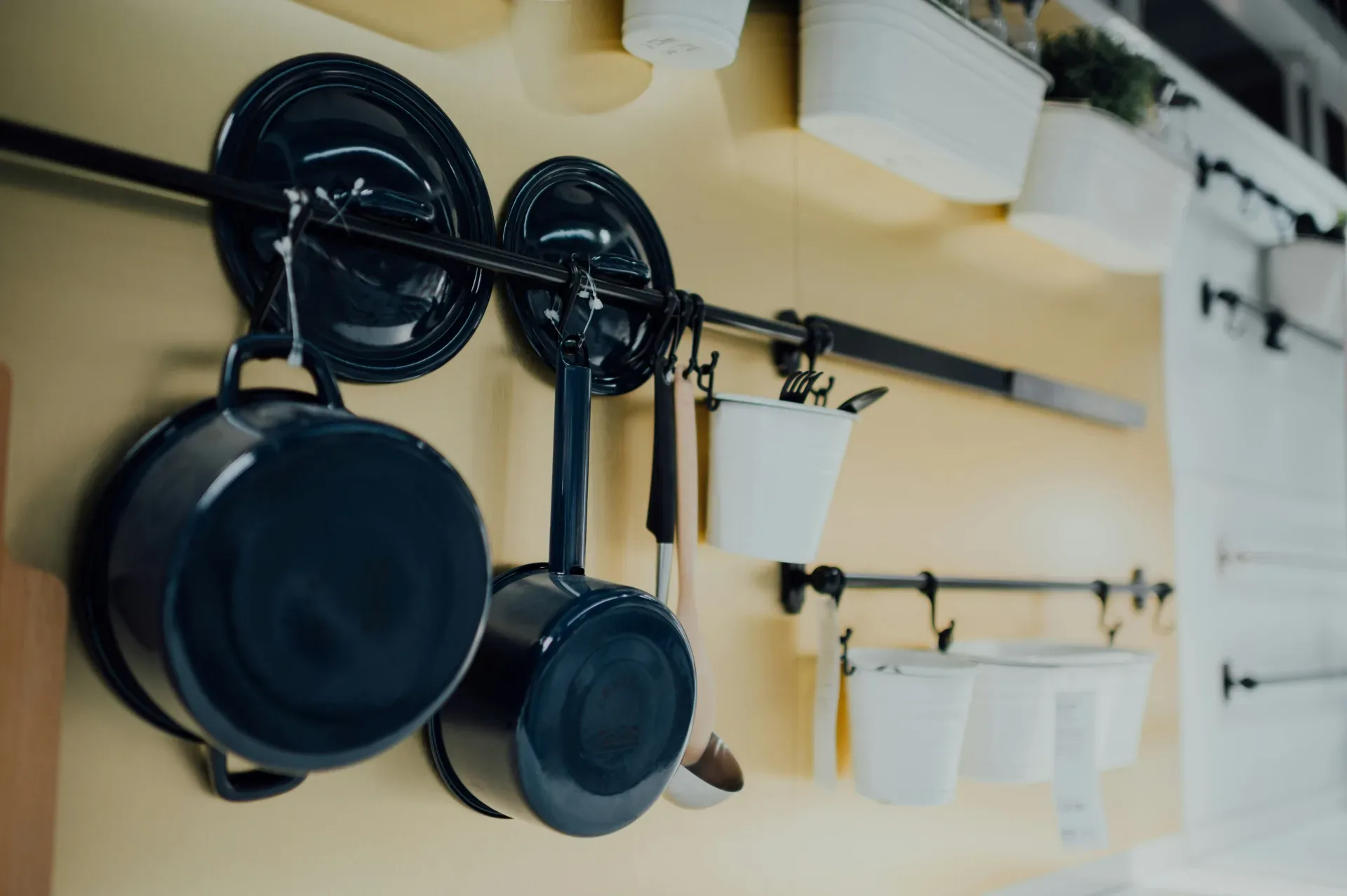
Pots and pans are some of the bulkiest items in any kitchen, and storing them in lower cabinets wastes an enormous amount of space — especially in a small kitchen where every cabinet counts. A wall-mounted pot rack or a ceiling-hung rail keeps them accessible and completely frees up those lower cabinets for other storage. It also looks genuinely beautiful in a kitchen, especially with copper or stainless steel cookware. Wall-mounted pot rails start at around $20–$40 and can be installed with basic tools. Ceiling-mounted versions require a bit more installation work but are worth it if your ceiling is the right height.
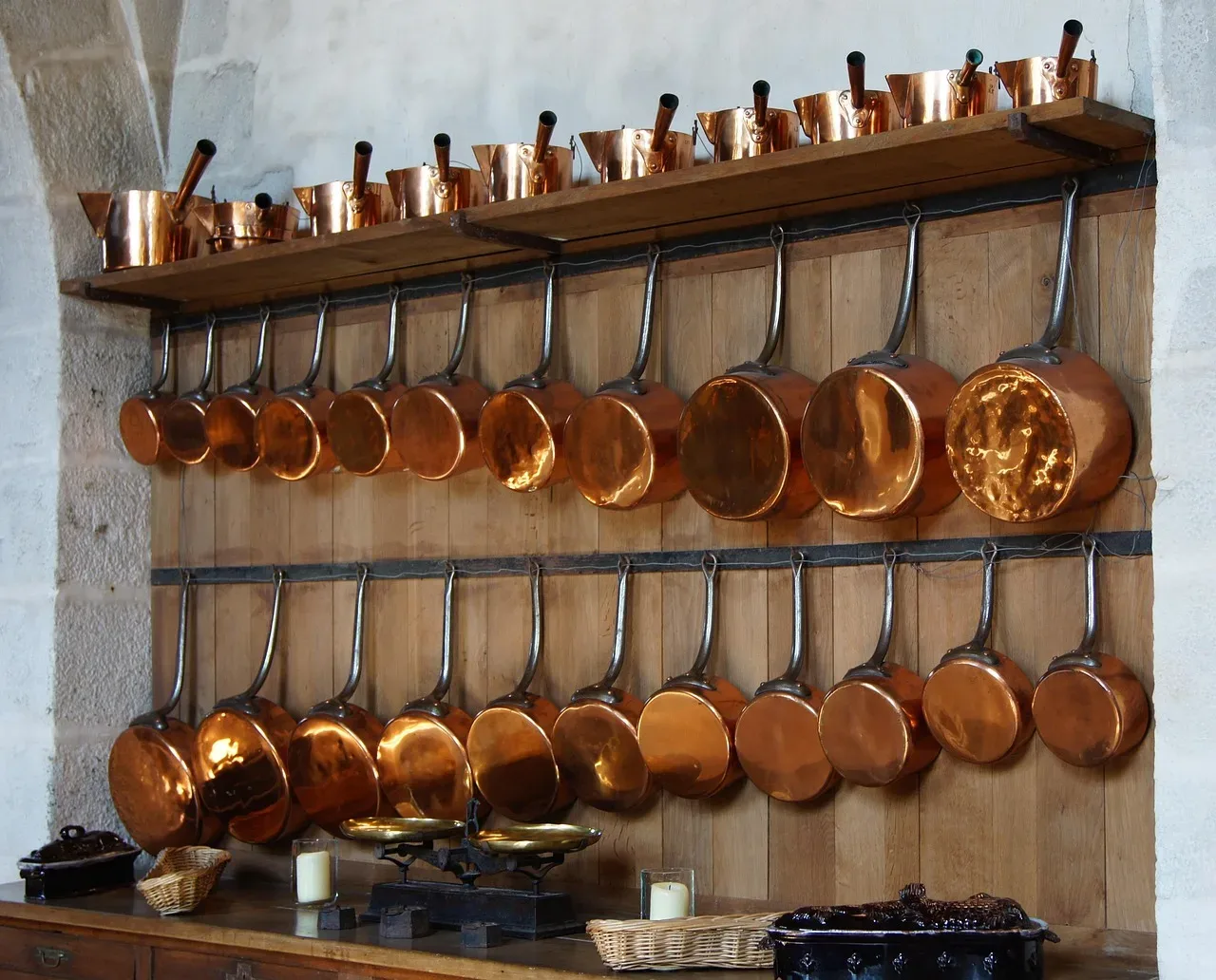
Replace Solid Cabinet Doors With Glass Fronts
Solid cabinet doors in a small kitchen create a wall of opacity that makes the space feel closed-in and heavy. Swapping even just the upper cabinet doors for glass-fronted versions — or removing the doors entirely — immediately lightens the kitchen and makes it feel more open. Glass cabinet doors also encourage you to keep what’s inside neatly organized, since everything is on display. If replacing whole cabinet doors feels like too big a project, glass inserts can be added to existing doors in many cabinet styles. This is a weekend DIY project that costs $50–$150 depending on the number of cabinets involved.
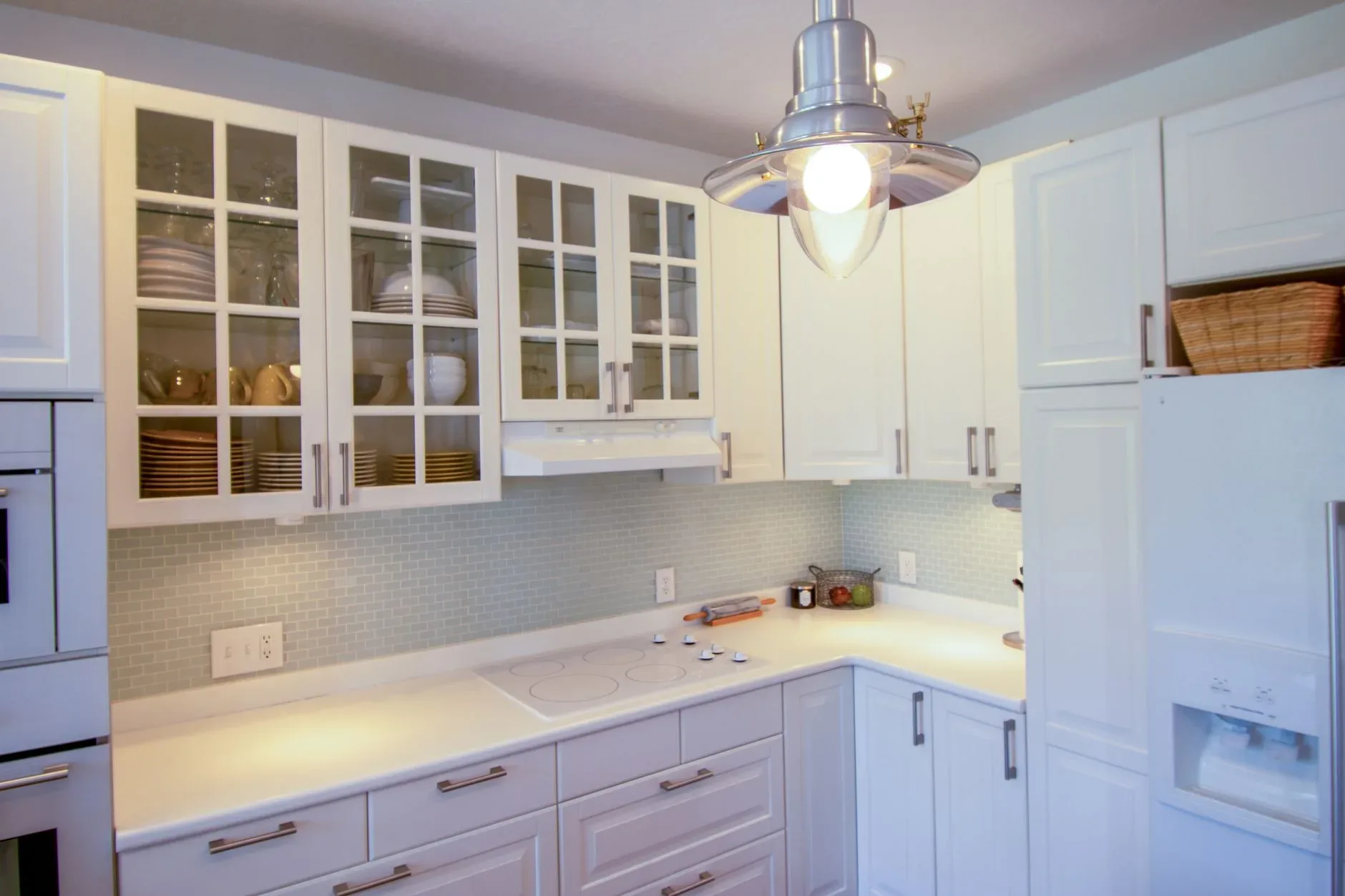
Bring in a Compact Kitchen Cart
A small butcher block kitchen cart or a compact rolling island adds counter space and storage without any permanent installation — which makes it perfect for renters and for kitchens where the layout just doesn’t have room for a fixed island. Use the top surface for extra prep space, hang hooks on the sides for utensils, and use the shelf underneath for small appliances, cookbooks, or extra storage baskets. When you need to move it out of the way, it rolls easily. Good compact kitchen carts are available on Amazon and at IKEA starting around $60–$100, and they’re one of the most practical investments for a small kitchen.
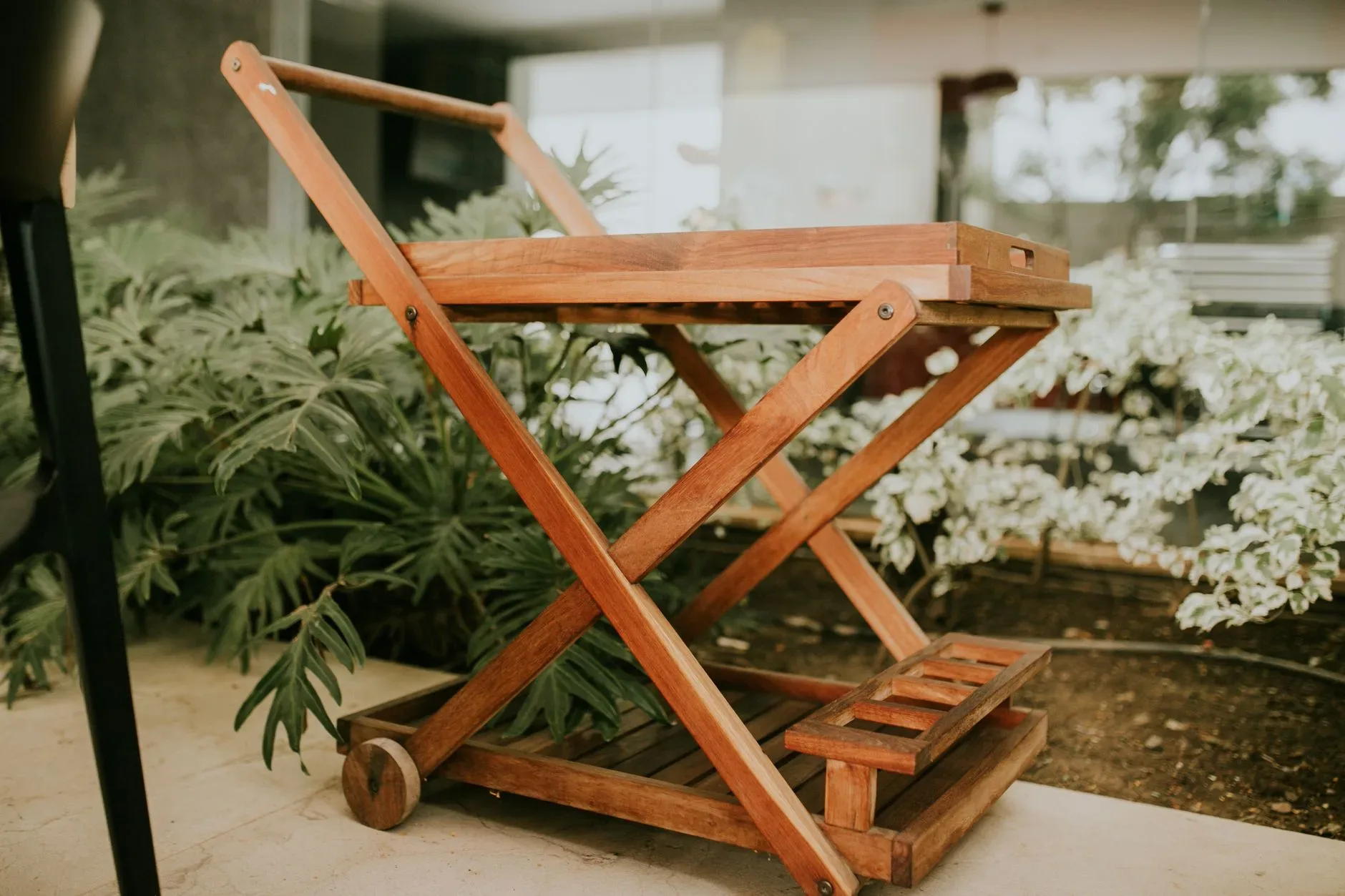
Think Vertically — Stack Storage Upward
In a small kitchen, the walls above the standard cabinet height are often completely empty — and that’s wasted space. Adding a second tier of shelving above your existing cabinets, mounting floating shelves up to the ceiling on a bare wall, or using tall freestanding shelving units instead of low ones makes use of vertical space that most kitchens ignore completely. Tall storage pulls the eye upward too, which makes ceilings feel higher and rooms feel bigger. Items stored at height should be things you use less frequently — seasonal equipment, bulk dry goods, large serving dishes — so you’re not climbing up and down constantly.
Organize Under the Sink Properly
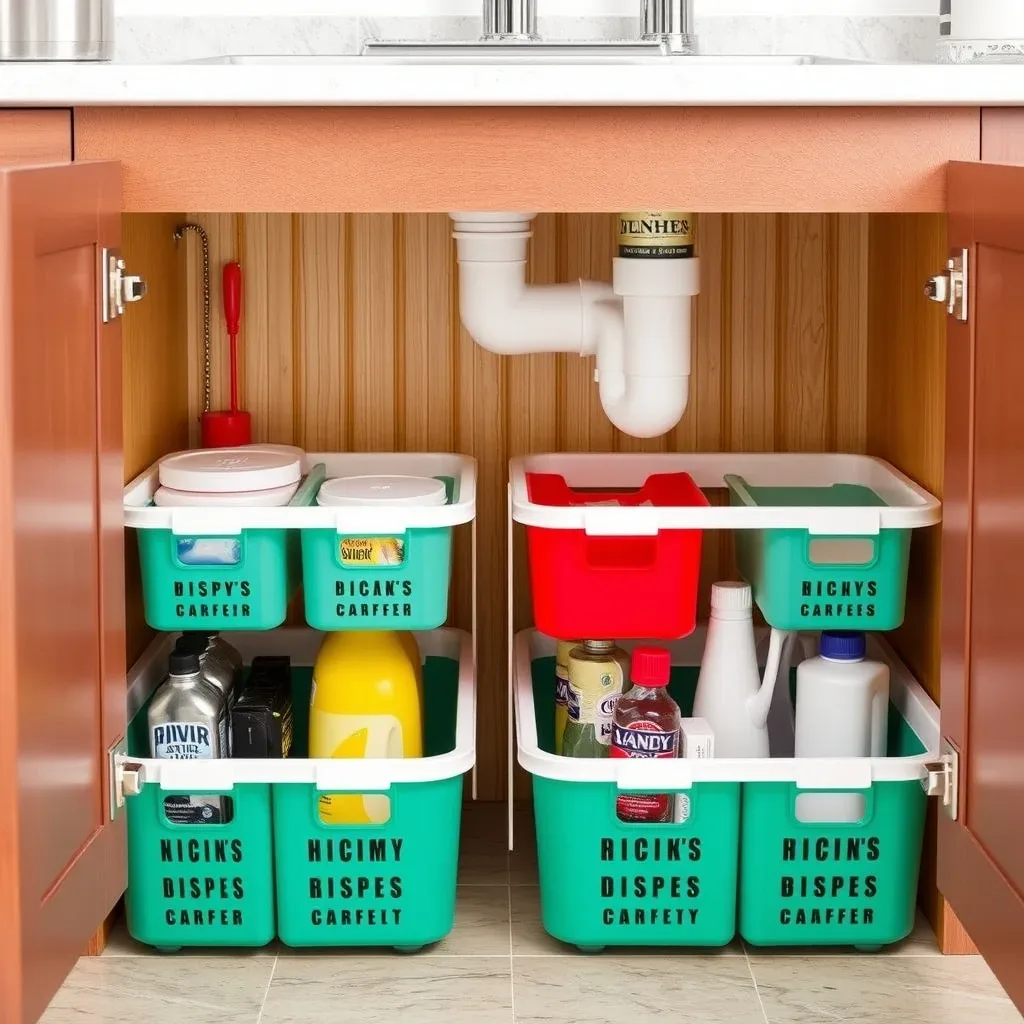
The under-sink cabinet is one of the most disorganized spots in most small kitchens — and it doesn’t have to be. A two-tier pull-out organizer, a set of stackable bins, or a simple tension rod across the middle (for hanging spray bottles upright) can turn the under-sink area from a chaotic jumble into genuinely usable storage. Label bins for cleaning supplies, dish soap backups, and trash bags so everything has a clear home. A well-organized under-sink area frees up other cabinets and drawers for the kitchen tools that actually need to be closer at hand. Most under-sink organizer sets cost $20–$40 on Amazon.
Use Toe-Kick Drawers for Hidden Storage
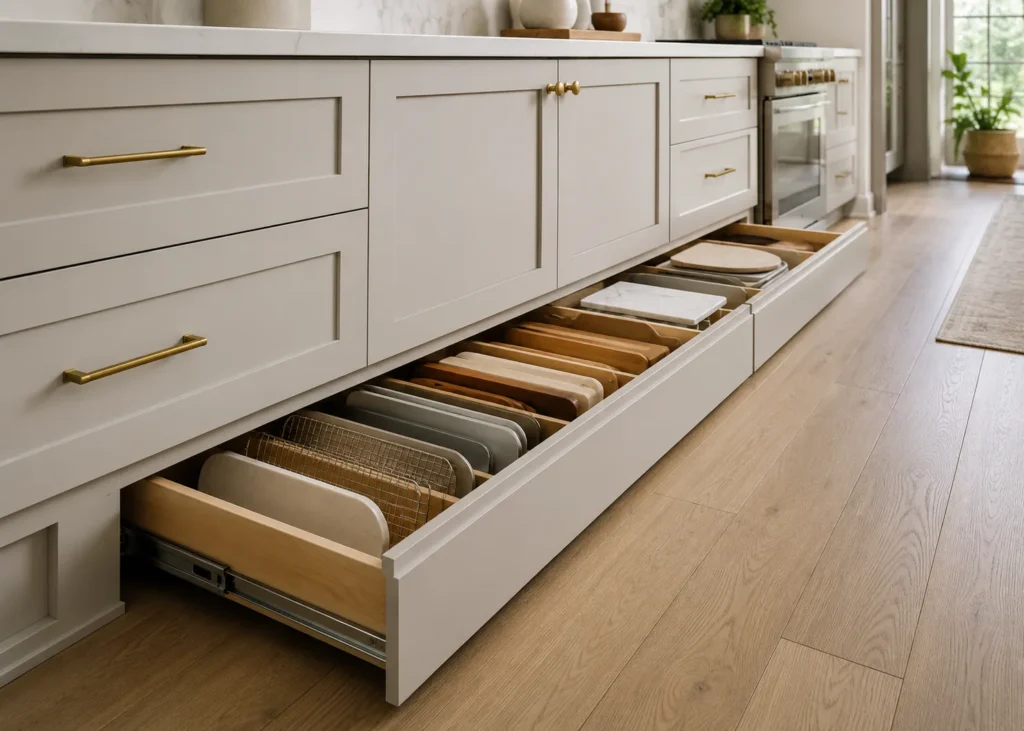
This is one of the most genuinely underused storage ideas in any kitchen — the toe-kick space at the base of your lower cabinets. Most kitchens have several inches of completely empty space behind those kickboards, and with the right shallow drawer inserts, it becomes real usable storage for flat items like baking sheets, serving platters, placemats, or even a step stool. Toe-kick drawer kits are available online and are a surprisingly manageable DIY project. It won’t hold a lot, but anything that clears out a full cabinet shelf elsewhere is worth doing in a small kitchen.
Decant Pantry Items Into Matching Containers
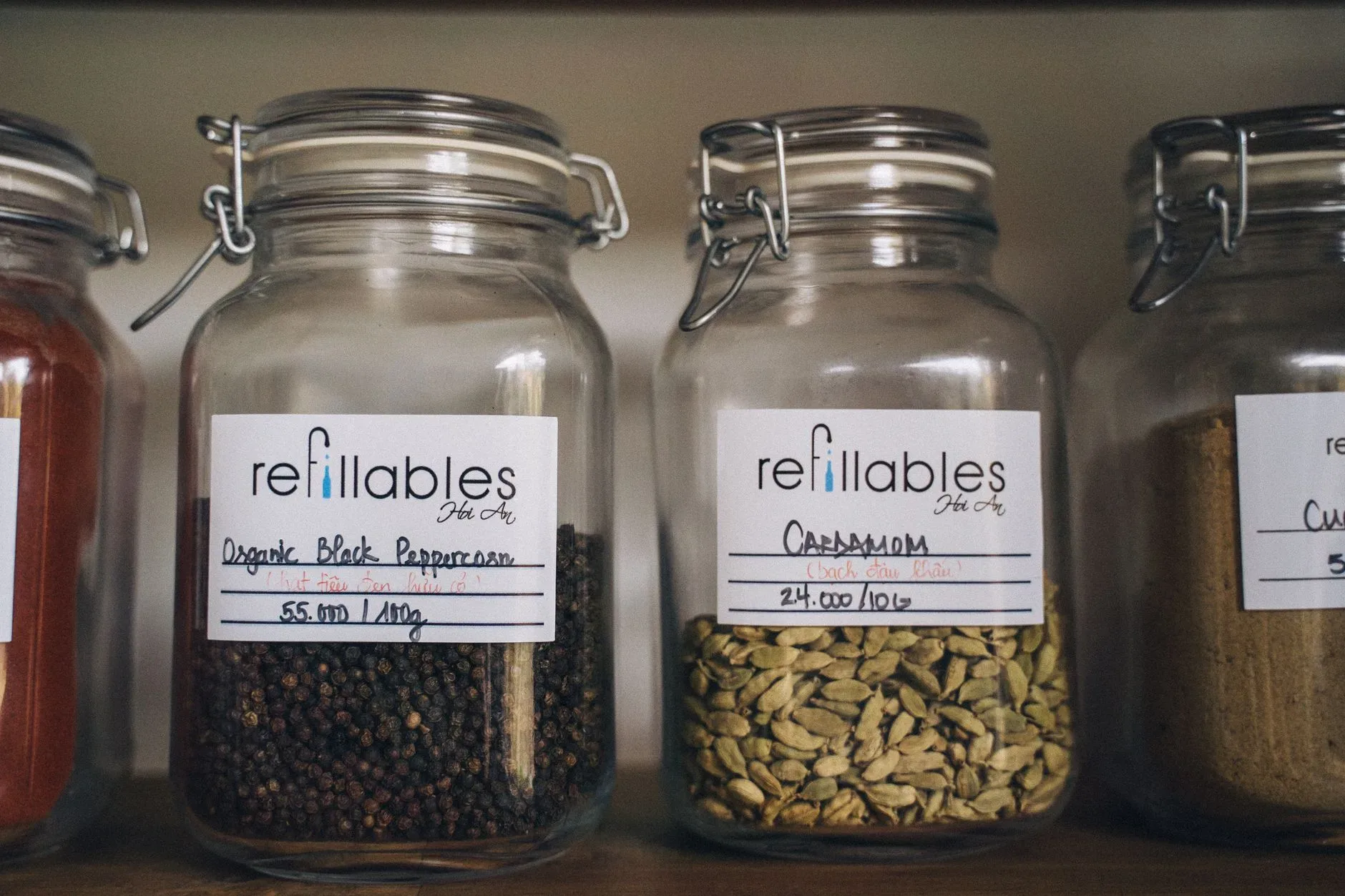
Swapping a collection of mismatched bags, boxes, and jars for a set of uniform, labeled containers makes a small kitchen look significantly more organized — and it actually is more organized, because you can see at a glance what you have and what needs restocking. Clear glass or acrylic containers work best because you can see the contents without opening anything. Store them on a shelf, in a pantry cupboard, or lined up on the counter for a clean, intentional look that photographs beautifully. A starter set of matching pantry containers is available on Amazon for around $25–$40, and the difference to how your kitchen looks and functions is immediate.
Add a Fold-Down or Drop-Leaf Dining Table
If your small kitchen doubles as a dining space but a full table takes up too much room, a fold-down wall-mounted table or a drop-leaf table is a genuinely elegant solution. Folded flat against the wall, it takes up almost no space at all — unfolded, it seats two to four people comfortably. IKEA’s Norbo wall-mounted drop-leaf table is a classic choice at around $50 and fits in spaces that no conventional table would. For renters, a drop-leaf table on legs that folds down on both sides achieves the same result without any wall installation.
![fold down drop leaf table small kitchen dining wall]](https://thepinkyvibes.com/wp-content/uploads/2026/06/fold-down-drop-leaf-table-small-kitchen-dining-wall-1024x819.webp)
Use a Light-Reflecting Backsplash
A glossy or reflective backsplash bounces light around a small kitchen in a way that makes the whole space feel brighter and more open — and it does it passively, without any additional lighting or fixtures. White or light-colored subway tiles with a glossy glaze, mirrored tile strips, or metallic mosaic tiles all work well for this. Even peel-and-stick backsplash panels in a glossy finish achieve the effect convincingly in a renter-friendly way. The light-bouncing quality of a reflective surface is especially useful in small kitchens that lack windows or get limited natural light during the day.
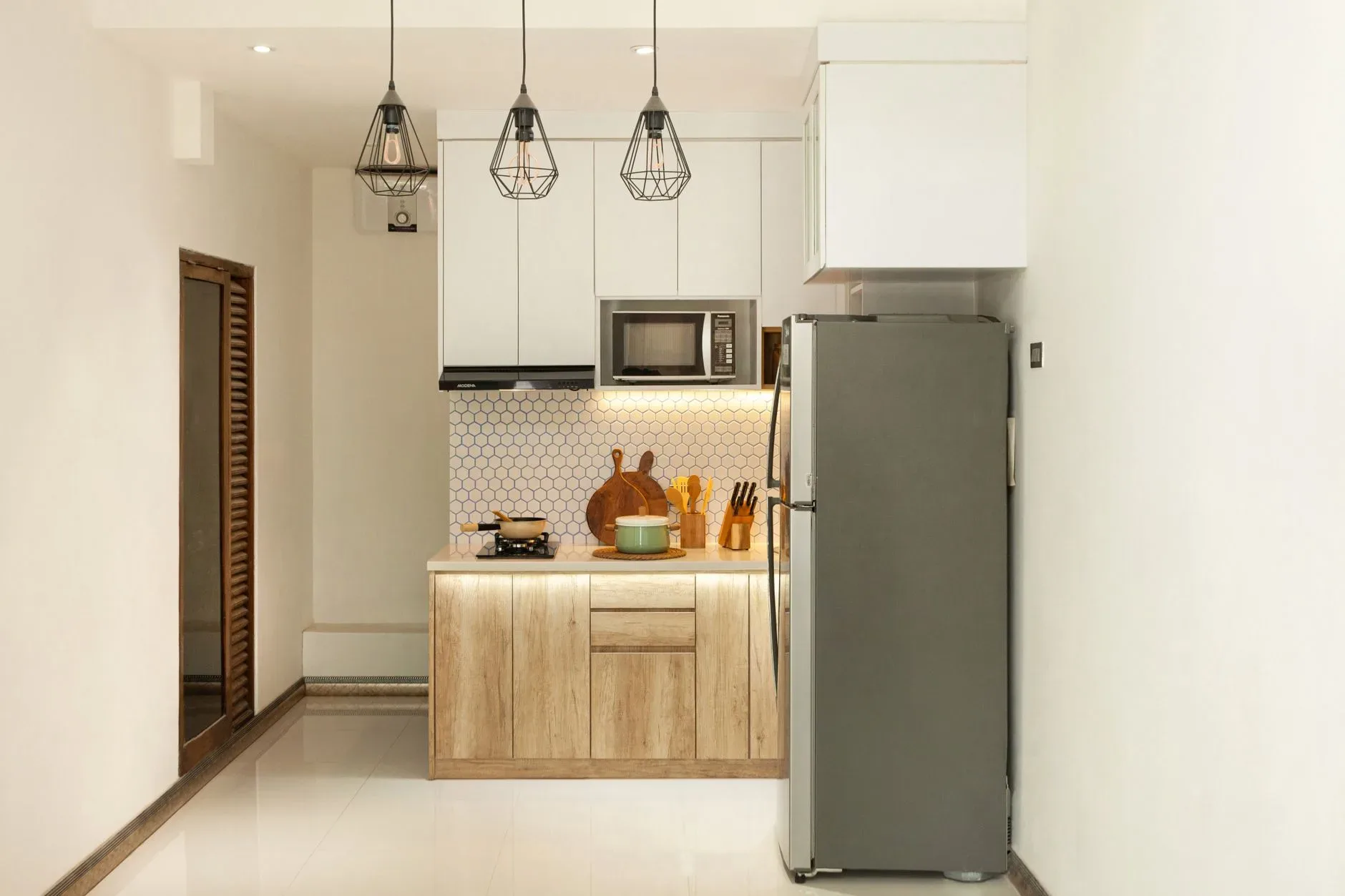
Keep a Consistent Color Palette Throughout
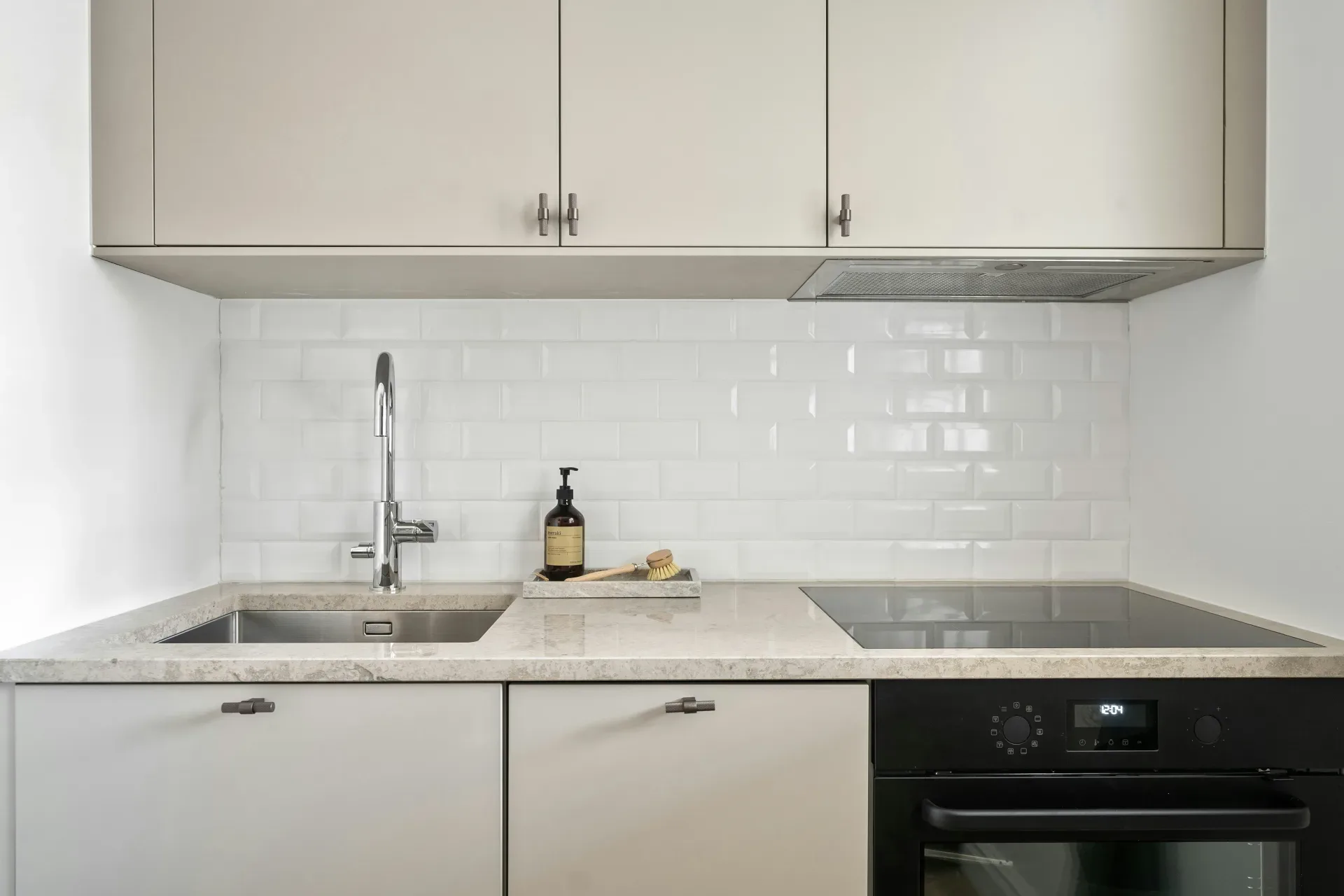
Visual clutter is just as space-shrinking as physical clutter in a small kitchen — and a hodgepodge of colors, finishes, and materials creates a lot of visual noise that makes a small space feel even smaller. Pulling everything into a consistent palette — even if it’s just keeping your appliances, containers, and dish rack in the same two or three tones — immediately makes the kitchen feel calmer and more cohesive. You don’t have to replace everything at once. Start with the things on the counter: matching your dish rack, soap dispenser, and small appliances in the same finish (all white, all black, all stainless) makes a notable difference.
Layer Your Lighting Properly
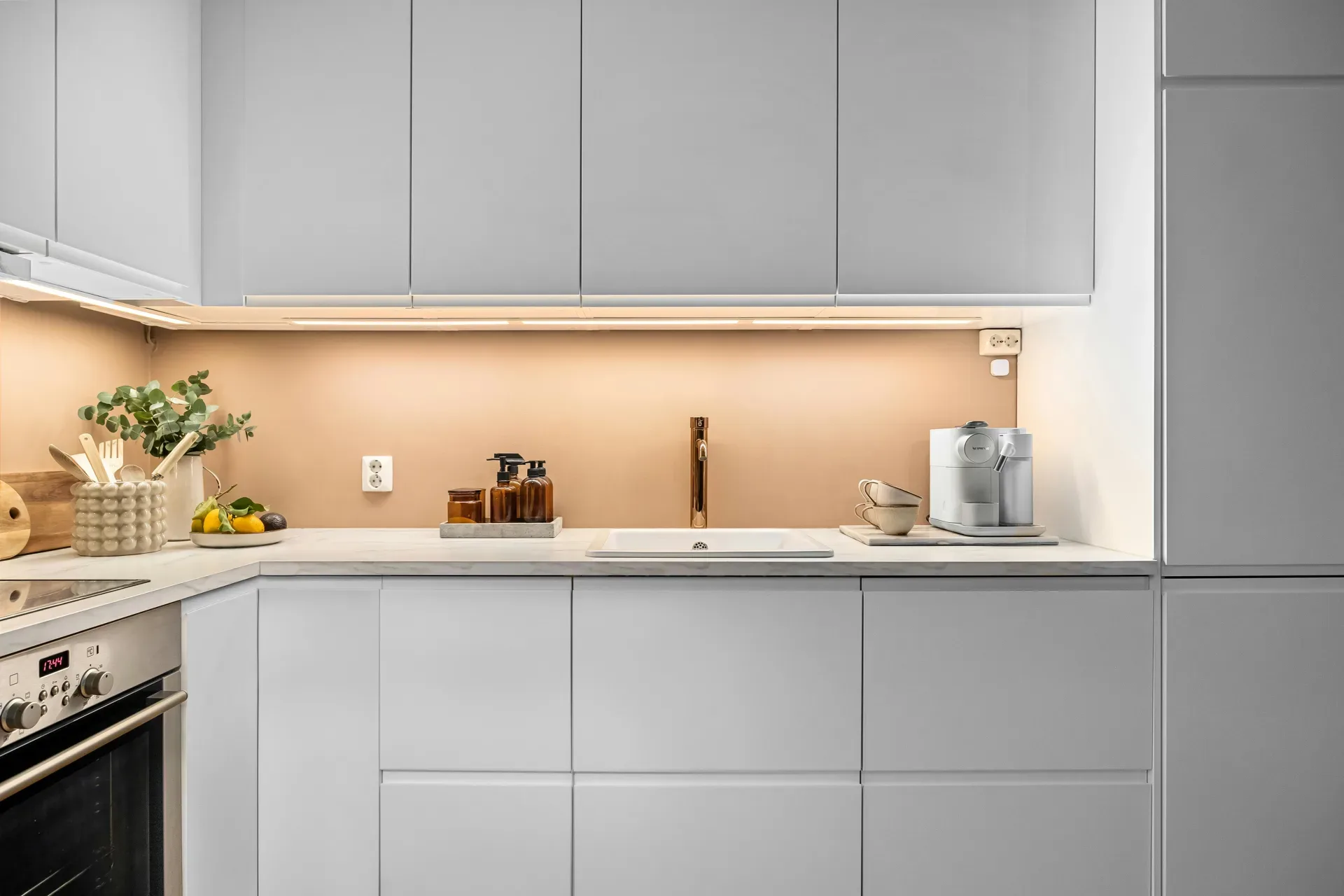
A single overhead light in a small kitchen creates flat, shadowless illumination that makes the space look smaller and less appealing — and it usually leaves the counter in your own shadow when you’re working. Layering in under-cabinet strip lights for task lighting, a pendant or two for warmth and style, and warm bulbs throughout changes the whole feel of the kitchen at any time of day. Good lighting in a small kitchen makes it look bigger, cleaner, and more inviting — it’s one of the most impactful upgrades you can make for relatively little money. Under-cabinet LED strips start at around $15–$25 for a full run.
Declutter the Counter — Completely
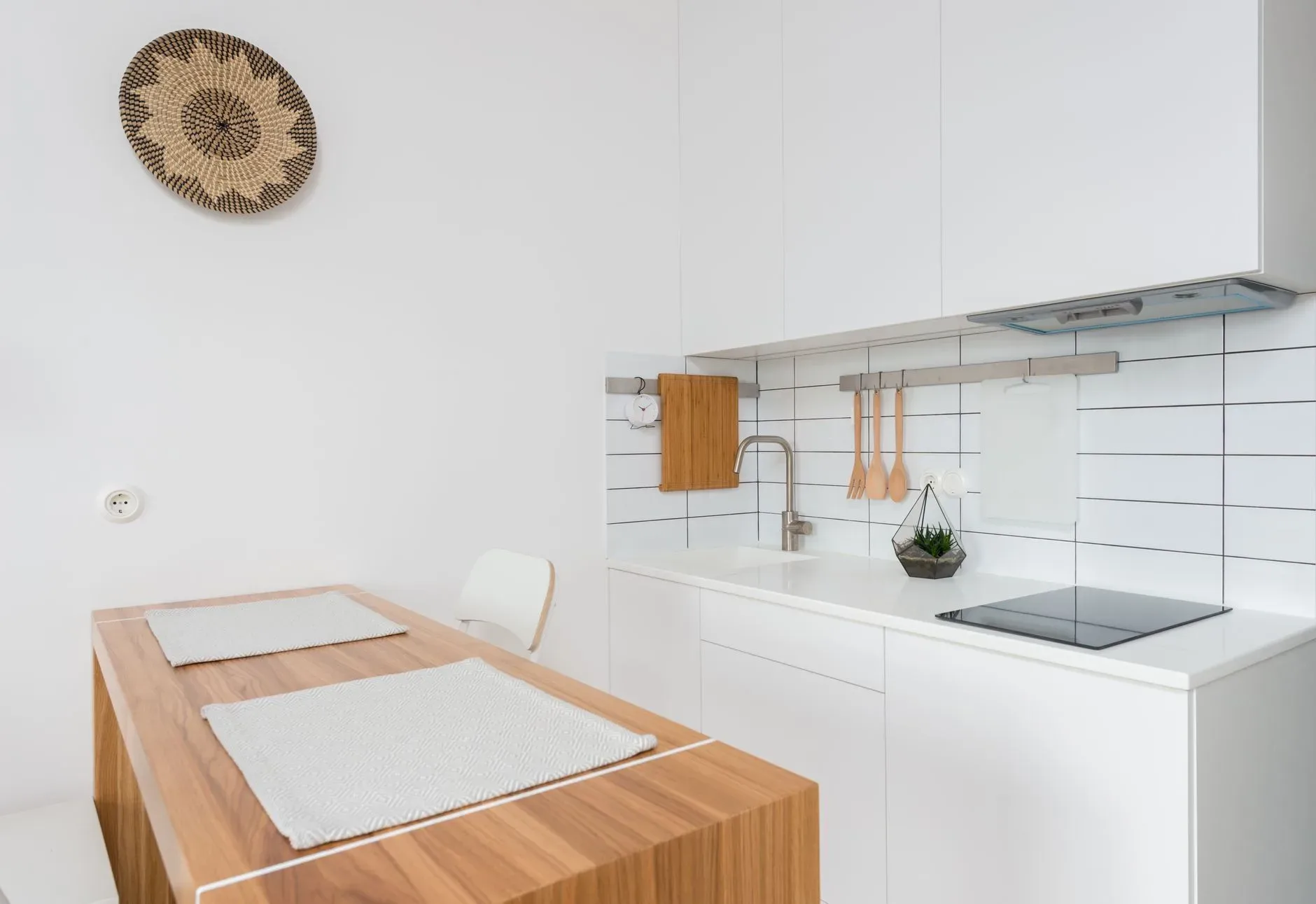
This is the hardest idea on the list and also the most effective: clear your counters of everything that doesn’t absolutely need to live there. The toaster, the coffee maker, the fruit bowl, the cookbook stand, the random utensil pot that’s been there for three years — if it doesn’t get used daily, it goes in a cabinet. A clear counter makes a small kitchen look dramatically larger, cleaner, and more functional — and it gives you actual working space when you cook. Keep only your most-used appliance out (most people choose the coffee maker or the kettle), and store everything else. You’ll adjust to it within a week and wonder how you lived any other way.
Quick Budget Guide
Under $25: Magnetic knife strip, over-door cabinet organizers, command hooks for door storage, warm bulb swap, declutter the counter (free).
$25–$75: Pegboard wall organizer with hooks, matching pantry containers, pull-out drawer organizers, under-sink organization system, peel-and-stick reflective backsplash panels.
$75–$150: Compact rolling kitchen cart, wall-mounted pot rack, fold-down wall table, glass cabinet door inserts, full LED under-cabinet strip lighting set.
Splurge-worthy: Open shelving installation to replace upper cabinet doors — materials plus installation runs $150–$400 depending on scope, but the visual impact on a small kitchen is genuinely dramatic and makes the space feel twice the size.
Why This Actually Works
Most small kitchen problems come down to one of two things: too much stuff for the space, or storage that’s too hard to use. Both are solvable — but they require different approaches. The organization ideas in this list (pegboards, door organizers, pull-out drawers, vertical storage) solve the second problem: making the storage you already have work harder and more accessibly. The design ideas (light palette, open shelves, glass cabinets, reflective surfaces) solve the first problem visually by making the space feel less crowded even when it isn’t.
Light is the secret weapon in a small kitchen. Every idea on this list that increases brightness — the light-colored palette, the reflective backsplash, the layered lighting, the open shelving — works because light makes space feel expansive. A dark, dim kitchen always feels smaller than its square footage. A bright, well-lit kitchen always feels larger. It’s not about the actual dimensions — it’s about what your eye reads. This is why painting a small kitchen white or cream is so reliably effective: it’s not just a color choice, it’s a light-maximizing strategy.
The hardest principle to internalize in a small kitchen is that less really is more. Every item on the counter, every appliance taking up shelf space, every cabinet stuffed beyond its comfortable capacity makes the kitchen harder to use and harder to love. The most beautifully functional small kitchens are the ones that have been ruthlessly edited — where everything has a proper place, and what’s on display is there because it’s either beautiful or daily-essential. Getting to that point takes time, but the difference in how the kitchen feels to cook and live in is worth every decision.
Final Thoughts
A small kitchen doesn’t have to feel like a compromise. With the right storage, the right lighting, and a consistent visual approach, even the tiniest kitchen can feel genuinely functional and pleasant to spend time in. You don’t need to tackle all 18 ideas at once — pick the two or three that address your biggest daily frustrations and start there. Usually, solving one or two root problems makes the whole space feel significantly better.
Save this post for your next kitchen organization session, and if you try one of these small kitchen ideas and it actually makes a difference, I’d love to hear about it — drop a comment below and tell me which one worked best for your space!