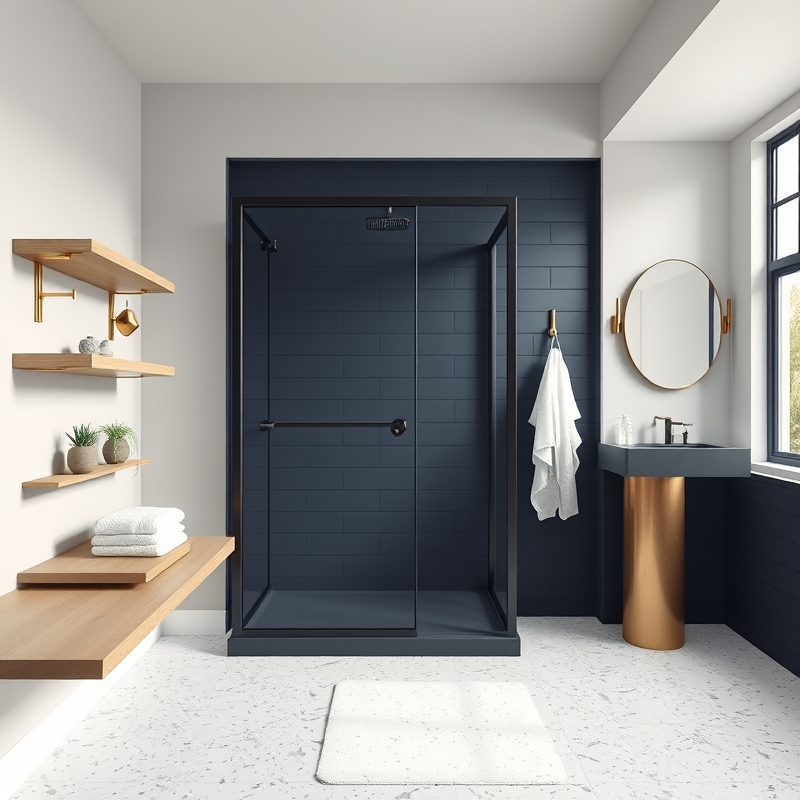
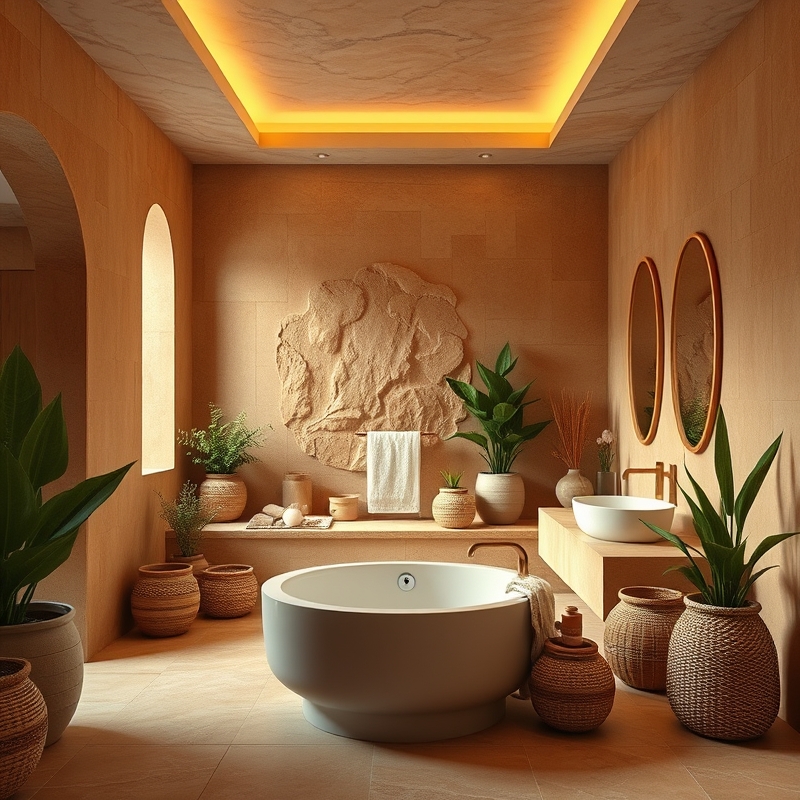
A cramped bathroom doesn’t mean you have to sacrifice style. Small bathroom ideas that designers actually use focus on smart layouts, strategic materials, and visual tricks that make tight spaces feel intentional and luxurious. This guide reveals five powerful design moves from professional decorators who specialize in transforming modest powder rooms into retreats you’ll actually enjoy using. Whether you’re working with a 5×7 footprint or something even tighter, these strategies prove that limitation breeds creativity.
1. Frameless Glass Shower Enclosure for Visual Flow

Removing the visual barrier of a framed shower instantly expands your small bathroom ideas by eliminating visual clutter. A 36-inch frameless glass enclosure creates an unbroken sightline across the entire space, making even a 5×8 bathroom feel more open. The clean edge of tempered glass reads as luxury without taking up extra square footage. Pair it with 12×24-inch large-format tiles on the walls to amplify the seamless effect. Designers consistently choose frameless enclosures over frames because they transform the shower from an obstacle into an architectural feature.
2. Vertical Shiplap to Draw Eyes Upward

Vertical wood shiplap guides the eye up and creates instant height in compact spaces. Paint it soft white or warm cream to keep walls bright while adding textured depth. This technique works especially well on one accent wall behind a floating vanity or toilet. The horizontal lines of shiplap boards actually read as vertical when installed this way, psychologically stretching the room. Many interior designers layer shiplap with recessed lighting to enhance the upward pull without adding visual weight to the space itself.
3. Wall-Hung Toilet for Extra Floor Space

Swapping a floor-mounted toilet for a wall-hung model instantly reclaims 8 to 10 inches of precious floor space. The tank hides inside the wall cavity, leaving only the slim bowl and seat visible. This simple swap makes a dramatic difference in small bathroom ideas because it opens up the floor plan visually and physically. You’ll gain actual cleaning space underneath, and the bathroom feels less crowded immediately. Professional designers rely on wall-hung toilets as one of their first moves in tight layouts because the ROI on comfort and style is immediate.
4. Large-Format Tiles for Seamless Small Bathroom Ideas

Using 12×24-inch or 18×36-inch tiles instead of standard 6×12 cuts grout lines in half, making the space feel more cohesive and spacious. Fewer grout lines mean fewer visual breaks in a compact bathroom. Light gray marble or large-format porcelain in neutral tones work best. These tiles reduce the grid effect that smaller tiles create, which can make cramped rooms feel more cluttered. According to interior design trends on Houzz, large-format tiles have become the signature move for designers tackling small bathroom projects because they fundamentally shift how the eye perceives the room’s proportions.
5. Monochromatic Color Scheme to Expand Perception
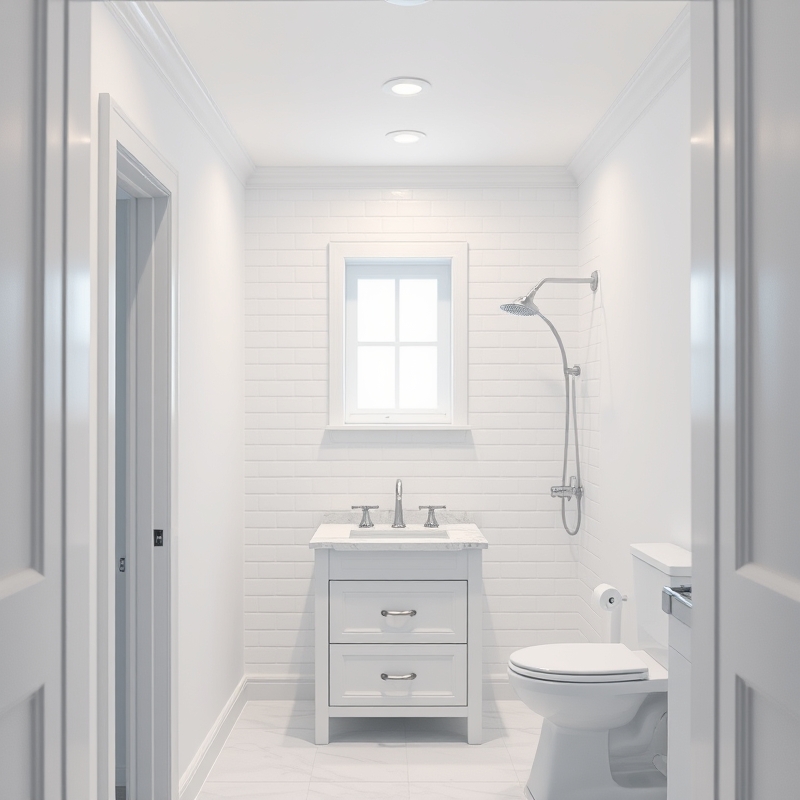
Sticking to a single color family—whites, creams, soft grays—eliminates visual confusion and makes compact spaces feel larger. The eye moves through the bathroom without stopping at color transitions, creating an illusion of flow. Add depth with texture instead: matte paint, glossy tile, natural wood, or woven baskets. A monochromatic scheme doesn’t mean boring; it means intentional. Designers use this approach constantly in small bathroom ideas because it’s psychologically proven to make enclosed spaces feel open and restful without requiring structural changes or expensive renovations.
6. Pocket Door to Reclaim Usable Square Footage

A standard hinged door steals 15 to 20 inches of floor space every time it swings open. Pocket doors slide invisibly into the wall, eliminating that wasted footprint entirely. Plus, you gain the psychological benefit of a fully open entrance without a barrier in the middle of the room. Install a soft-close mechanism to prevent slamming in tight spaces. This single hardware swap transforms how you move through a compact bathroom, making it feel less like a closet and more like an actual room designed with intention.
7. Recessed Medicine Cabinet with Integrated Lighting

Here’s the thing — a recessed medicine cabinet tucks storage directly into the wall cavity instead of protruding into the room. Integrated LED lighting inside the cabinet serves double duty: storage and vanity lighting. Choose a brushed nickel or matte black frame to match your fixtures. This approach eliminates the need for a separate over-mirror light, saving space and simplifying your small bathroom ideas. The lighting inside the cabinet bounces out softly, creating ambient illumination that feels more sophisticated than a standard bathroom vanity light mounted above.
8. Corner Vanity for Awkward Small Bathroom Layouts

When your bathroom has an awkward footprint, a corner vanity works with the architecture instead of against it. Position a 24-inch corner sink unit diagonally to capitalize on dead space. Even better, floating corner vanities open up floor area underneath, making the layout feel less cramped. Pair it with a single chrome faucet to keep the corner uncluttered. Designers favor corner vanities for tight bathrooms because they transform wasted corner space into functional elegance while maintaining an open floor plan that makes the room breathable.
9. Mirrored Wall Panel Behind Vanity Area

A full-height mirrored wall panel behind your vanity doesn’t just reflect your face—it doubles the perceived depth of the entire room. Install a frameless 30 or 36-inch-wide mirror in a matte or brushed finish to avoid overwhelming the space. What really works is positioning it to catch natural light from windows, amplifying brightness throughout. This strategic placement is crucial for small bathroom ideas because mirrors manipulate light and space without adding physical dimensions. The reflection creates an optical illusion of a room twice as large, and the vanity becomes an architectural focal point rather than a functional necessity tucked away.
10. Open Shelving with Decorative Baskets

Open shelving above the toilet or beside the vanity creates storage without the visual heaviness of cabinets. Install two or three floating shelves at 12-inch intervals using 1-inch-thick white oak or painted MDF. Woven seagrass and wire baskets contain clutter while adding organic texture. This approach works brilliantly for small bathroom ideas because the negative space between shelves keeps the room feeling open. Stack rolled white towels, add small potted plants, and reserve baskets for supplies you’d rather hide. The key is editing ruthlessly—open shelving only works when every item earns its place visually.
11. Skylight or Solar Tube for Natural Light
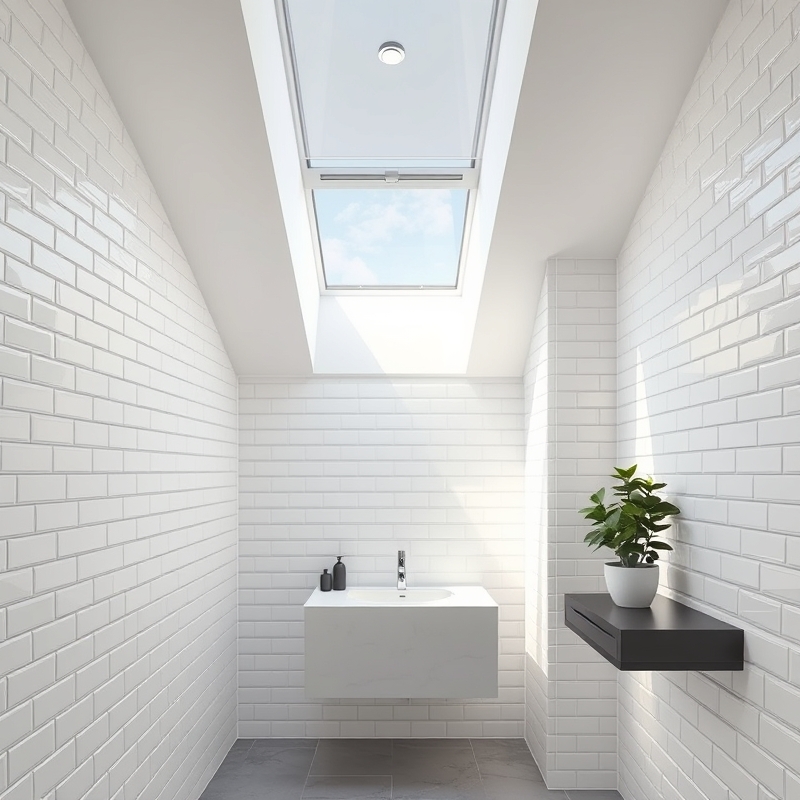
Here’s what makes this work — even a small 2×2-foot skylight or solar tube floods a compact bathroom with daylight that makes everything feel bigger and more luxurious. Natural light eliminates the cave-like feeling that tight bathrooms often have. A solar tube, which pipes light from the roof through reflective ducting, works brilliantly in bathrooms without direct roof access. Install it centered in the ceiling to maximize even distribution. This single upgrade transforms how you experience the space throughout the day, and morning light bouncing off white tile creates an energizing start that artificial lighting simply cannot replicate.
12. Pedestal Sink with Vintage Brass Fixtures

The real difference is that a pedestal sink exposes the floor beneath it, making even a 5×7 bathroom feel more spacious than a floating vanity with a bulky base. Choose a classic white ceramic pedestal paired with unlacquered brass fixtures for timeless elegance. Unlacquered brass develops a warm patina over time, adding character that polished chrome cannot match. This combination feels intentional and collected, like your small bathroom ideas reflect personal taste rather than budget constraints. The pedestal silhouette is inherently leggy and minimal, which psychologically signals openness and air rather than visual weight.
13. Glossy Ceiling Paint to Reflect Light Down

Painting your ceiling with high-gloss or semi-gloss white paint instead of flat matte is one of the easiest tricks designers use to amplify light in compact spaces. Glossy finishes reflect both natural and artificial light downward, bouncing illumination throughout the room. Use Benjamin Moore’s Swiss Coffee or Sherwin-Williams Alabaster in gloss finish for a subtle warmth that doesn’t feel clinical. According to architectural design experts, this subtle finish change costs less than fifty dollars but delivers disproportionate impact on perceived brightness and height. The reflective surface literally lifts the eye upward, making low ceilings feel less confining and amplifying whatever light source you have available.
14. Slim Console Table as Vanity Alternative

A slim 36 to 42-inch console table works beautifully as a vanity alternative in ultra-tight bathrooms. Mount the faucet directly on the wall behind it to save space and create a gallery-like aesthetic. Choose natural wood or a painted finish that complements your tile. This approach works wonderfully for small bathroom ideas because it feels residential and collected rather than strictly utilitarian. The open legs expose floor, and the narrow depth keeps traffic flowing naturally. Plus, you can swap it out later if your style evolves, unlike a permanent built-in vanity.
15. Vertical Garden Wall with Air Plants

Air plants mounted on one accent wall introduce living greenery without demanding soil, pots, or heavy shelving. Tillandsia varieties thrive in humid bathroom conditions and require only weekly misting. Mount them on thin wooden slats or cork backing using fishing line or small brackets. This vertical garden adds organic texture and improves air quality while occupying zero floor space. Designers love this trick for small bathroom ideas because it transforms a plain wall into a living focal point that feels sophisticated and intentional without visual clutter or maintenance burden.
16. Oversized Frameless Mirror Leaning on Wall
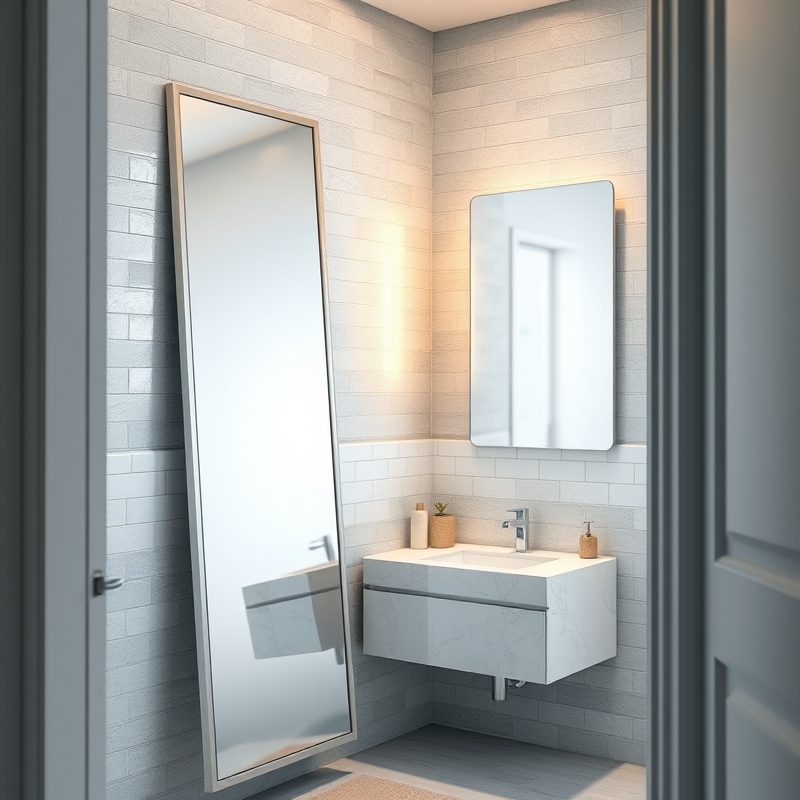
A 36 to 48-inch frameless mirror leaning against the wall beside your vanity creates unexpected dimensionality while remaining mobile if you need to adjust. The lean-against style feels more collected and flexible than a permanently mounted mirror. Light bounces off the glass surface at an angle, creating visual depth that mounted mirrors cannot achieve. Choose a mirror with polished or beveled edges for subtle sophistication. This styling approach appeals to designers because it feels intentional and design-forward, transforming what could be a purely functional element into a decorative statement piece within small bathroom ideas.
17. Underfloor Heating for Luxurious Comfort

Underfloor heating transforms the entire experience of a small bathroom by delivering warmth directly through tile. Install a thin electric mat system beneath ceramic or porcelain tile for a spa-like feel without adding visible bulk. Set the thermostat to 75 to 78 degrees for comfort without overheating. This upgrade doesn’t take up any visual or functional space, making it perfect for compact layouts. While it requires some investment, underfloor heating elevates small bathroom ideas from purely functional to genuinely luxurious, making morning routines feel indulgent rather than rushed through a cold, cramped space.
Final Thoughts
These seventeen small bathroom ideas prove that confined spaces don’t limit style—they inspire it. From frameless glass enclosures and large-format tiles to pocket doors and mirrored walls, each strategy works with your layout instead of against it. Monochromatic color schemes, vertical design elements, and thoughtful lighting multiply the impact of every square inch. Your bathroom deserves the same intentional design treatment as your main living spaces.
Start with one or two ideas that resonate most with your space, then layer in others as your budget and timeline allow.
Frequently Asked Questions
How can I make my small bathroom look bigger?
Use large-format tiles, frameless glass shower enclosures, and monochromatic color schemes to eliminate visual breaks. Install wall-hung toilets and floating vanities to expose floor space. Add mirrors strategically to bounce light and create depth. Incorporate glossy ceiling paint and recessed lighting. Vertical design elements like shiplap and air plants draw the eye upward, making ceilings feel higher.
What colors work best for small bathrooms?
Monochromatic palettes in whites, soft grays, and warm creams create unity and openness. Light, neutral tones reflect light naturally and make compact spaces feel airier. Add depth through texture rather than color variation—matte paint, glossy tile, natural wood, and woven baskets maintain cohesion while preventing monotony. Avoid dark accent walls unless paired with ample lighting.
Can I use dark colors in a small bathroom?
Yes, but carefully. Dark tile or paint works best on lower walls or a single accent wall paired with light ceiling and upper walls. Ensure abundant lighting—recessed fixtures, vanity lights, and skylights. Glossy finishes in dark colors reflect light better than matte. Dark small bathroom ideas work when balanced with mirrors and strategic lighting to prevent the space from feeling cave-like.
Which type of vanity is best for a small bathroom?
Floating vanities and wall-mounted options expose floor space, making bathrooms feel larger. Corner vanities optimize awkward layouts. Pedestal sinks maintain an open aesthetic while providing storage limitations. Console tables offer flexibility and collected charm. Choose narrow depths—18 to 24 inches—to preserve traffic flow. Avoid floor-mounted vanities with closed bases, which visually shrink the space.
Is it possible to have a bathtub in a small bathroom?
Yes, with strategic planning. A corner soaking tub or small freestanding tub works better than a full alcove tub. Consider a shower-tub combination to maximize functionality. Ensure adequate ventilation and lighting around tub placement. Visually expand the space with frameless glass enclosures and light colors. Prioritize your needs—many people find a quality shower with a large showerhead more practical in tiny bathrooms than a rarely-used tub.