A tired, cookie-cutter kitchen drains your home’s potential and your daily mood. Sage green kitchen ideas offer the perfect antidote: a natural, sophisticated color that feels both current and timeless. Whether you’re drawn to soft, muted tones or deeper jewel-like hues, this versatile shade works with marble, wood, brass, and modern finishes alike. In this collection, you’ll discover how to layer sage green into cabinets, walls, islands, and accents that elevate your space without requiring a full gut renovation. Ready to explore how color psychology shapes your kitchen experience? Let’s uncover fifteen approaches that deliver elegance and calm.
1. Sage Green Cabinets Paired with Brass Hardware
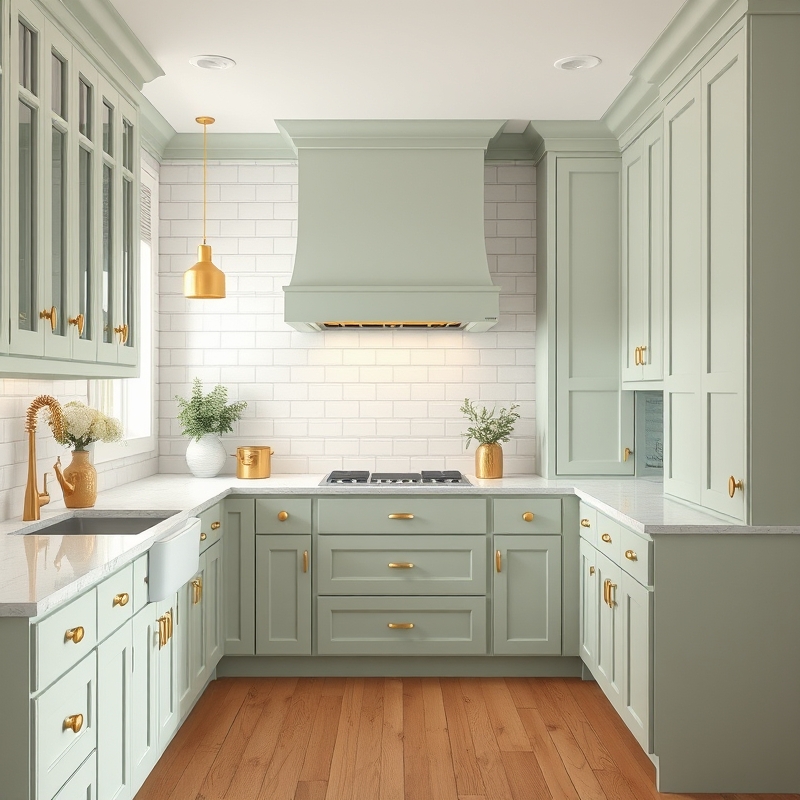
Brass hardware elevates sage green cabinets from pretty to purposeful. The warm metallic finish—whether polished or brushed—creates a luxurious contrast against the cool-toned green, adding depth without visual clutter. A 36-inch cabinet run with 2-inch brass cup pulls becomes an instant focal point. This pairing works beautifully in sage green kitchen ideas that blend farmhouse and contemporary styles. The combination feels intentional and collected, never trendy.Quality brass develops a gentle patina over years, adding character.
2. Sage Green Kitchen Ideas for Small Galley Spaces
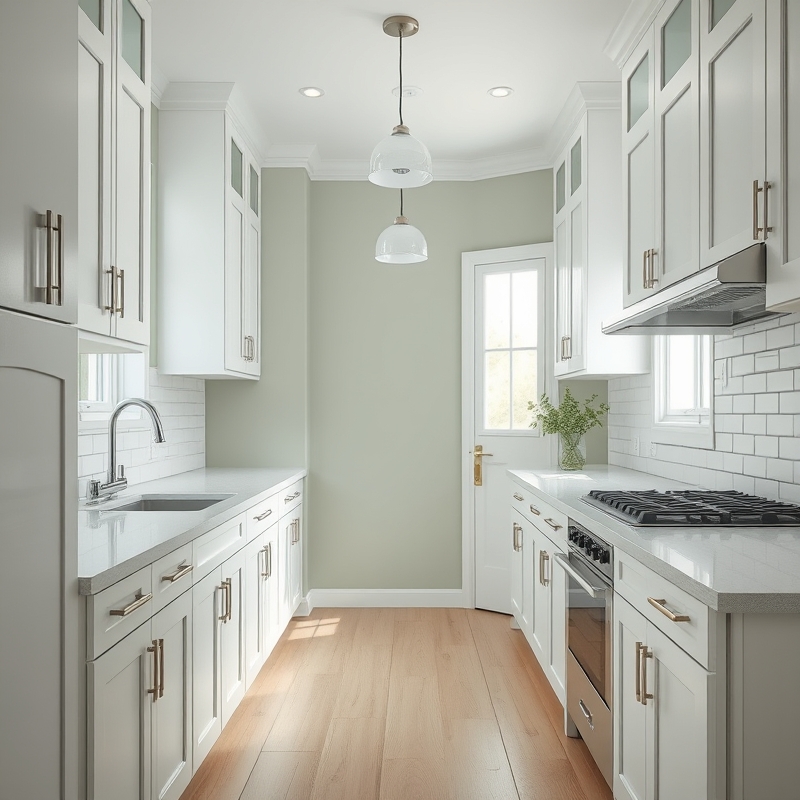
In tight galley layouts, sage green walls paired with white or cream cabinetry keeps the space feeling open and airy. The soft hue reflects light without demanding attention, making 8-foot-wide corridors feel less cramped. Paint walls rather than cabinets in small kitchens—it’s reversible, affordable, and delivers maximum visual impact. Layer in brushed nickel or chrome fixtures to maintain a clean, modern edge. A single glass shelf or open floating cabinet in white wood adds function without visual weight. This approach to sage green kitchen ideas proves that small spaces deserve thoughtful color, not default white.
3. Marble Countertops Against Soft Sage Walls
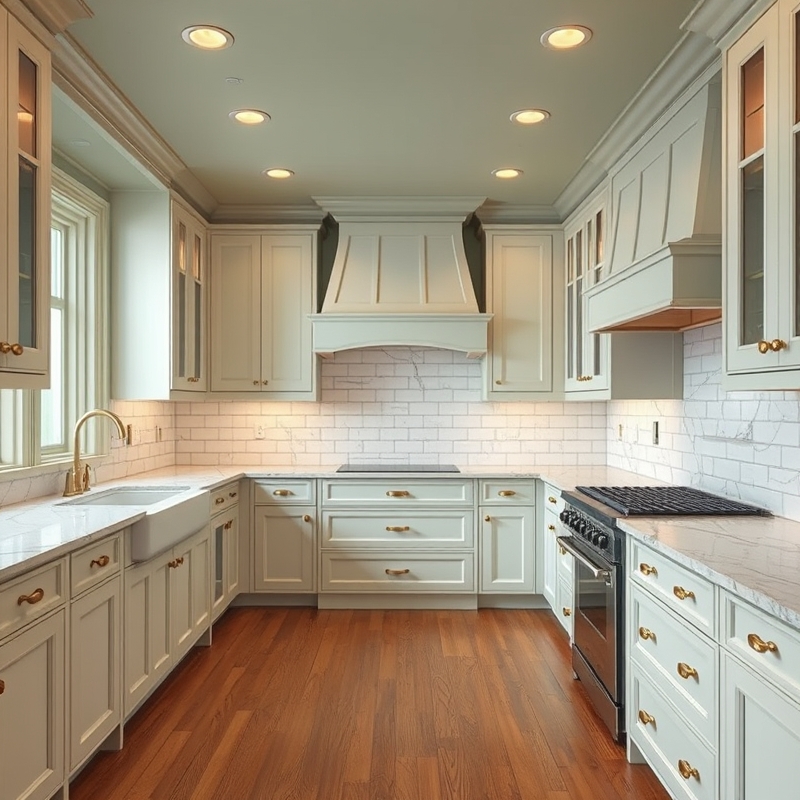
White and gray Carrara marble countertops sing against soft sage walls, creating an understated elegance that reads expensive and calm. The cool gray veining in marble echoes the green undertones in the walls, tying the palette together naturally. A 25-square-foot island or perimeter run of marble becomes a sculptural element that doesn’t compete with wall color. This pairing suits traditional, transitional, and modern farmhouse kitchens equally well. Seal marble properly to protect against staining and etching. The combination feels timeless because it relies on natural materials and soft color rather than trendy finishes.
4. Sage Green Island with Butcher Block Contrast
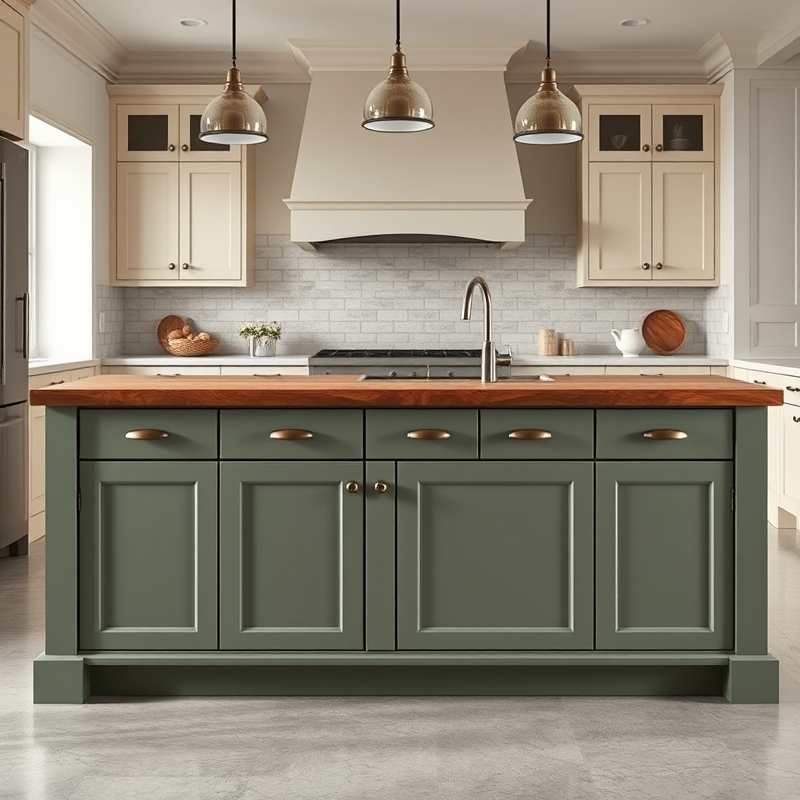
A sage green island base topped with thick, warm butcher block creates a stunning focal point that grounds the entire kitchen. The warm honey tones of the wood—typically 1.5 to 2 inches thick—soften the green while adding texture and functionality. This approach works in islands ranging from 4 feet to 8 feet long, offering prep space and visual interest. Oil the butcher block every month to maintain its rich patina. The contrast between cool cabinetry and warm wood feels balanced and intentional, avoiding the monotone flatness of matching finishes throughout.
5. Open Shelving Against Sage Green Backsplash Tile
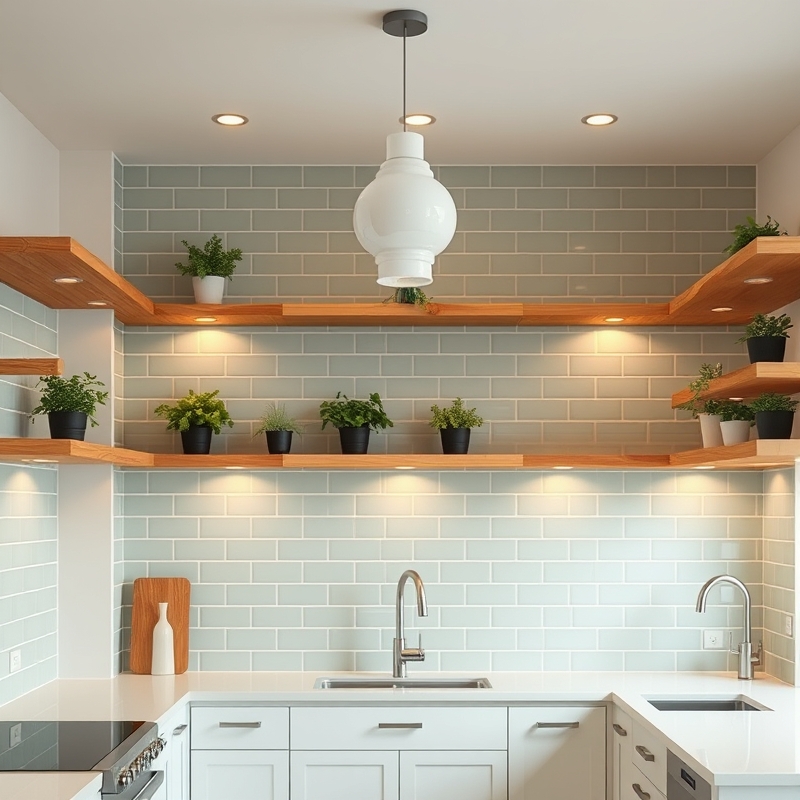
Open shelving paired with a sage green backsplash creates visual lightness while the tile anchors the design. Floating shelves in natural wood or white finish showcase everyday dishes and glassware without competing for attention. Four-inch by eight-inch sage green subway tiles laid horizontally extend the eye and soften hard lines. The combination invites you to display curated collections rather than hide them away. What really works is treating open shelves as styling opportunities—group ceramics by height, add potted herbs, and leave breathing room. This approach to sage green kitchen ideas suits modern farmhouse and Scandinavian aesthetics beautifully.
6. Sage Green Shiplap for Farmhouse Kitchen Charm
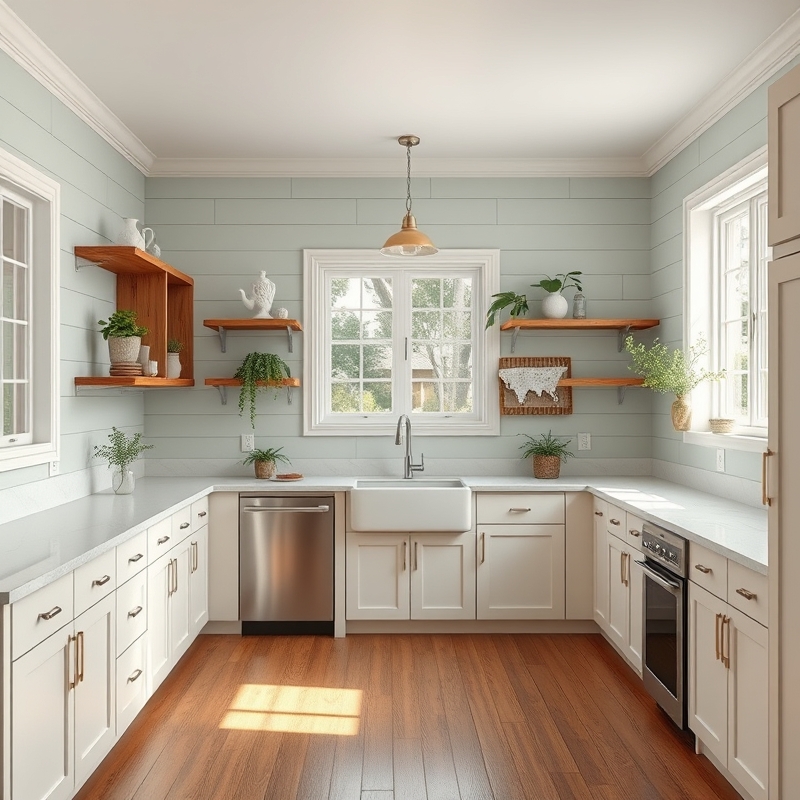
Sage green shiplap on a single accent wall brings authentic farmhouse warmth without overwhelming the space. The horizontal wood pattern—typically five-inch planks with subtle texture—adds depth and movement that flat drywall can’t match. Paint the shiplap a soft, muted sage rather than bold jewel tones to maintain approachability. Pair it with white or cream cabinets and vintage-inspired hardware for maximum charm. Even better, install shiplap around a window or behind open shelving to create intentional focus. The result feels collected and lived-in, never overly styled.
7. Two-Tone Sage Lower Cabinets and White Uppers
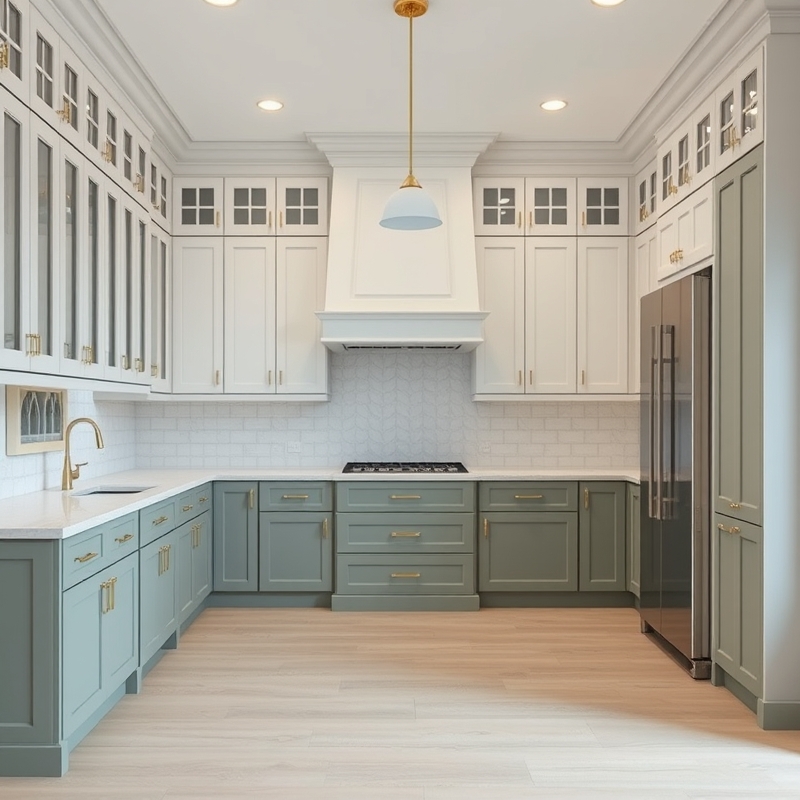
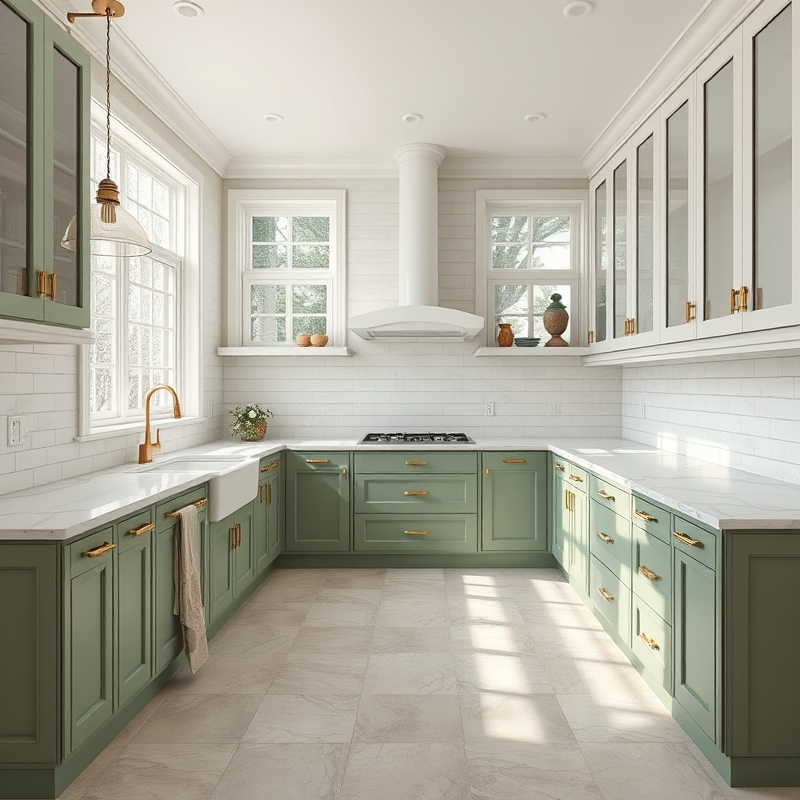
Two-tone cabinetry balances visual weight and allows each color to breathe independently. Soft sage on lower cabinets grounds the kitchen while crisp white uppers keep it feeling open and bright. This split-finish approach works in kitchens between 100 and 250 square feet, preventing the space from feeling monochromatic. Plus, the contrast creates natural visual separation that makes the room feel larger. Choose matching hardware across both tones—brushed brass or satin chrome unifies the palette. Two-tone sage green kitchen ideas have proven staying power because they avoid the flatness of single-color schemes while remaining timeless.
8. Dark Sage Green for a Moody Evening Ambiance
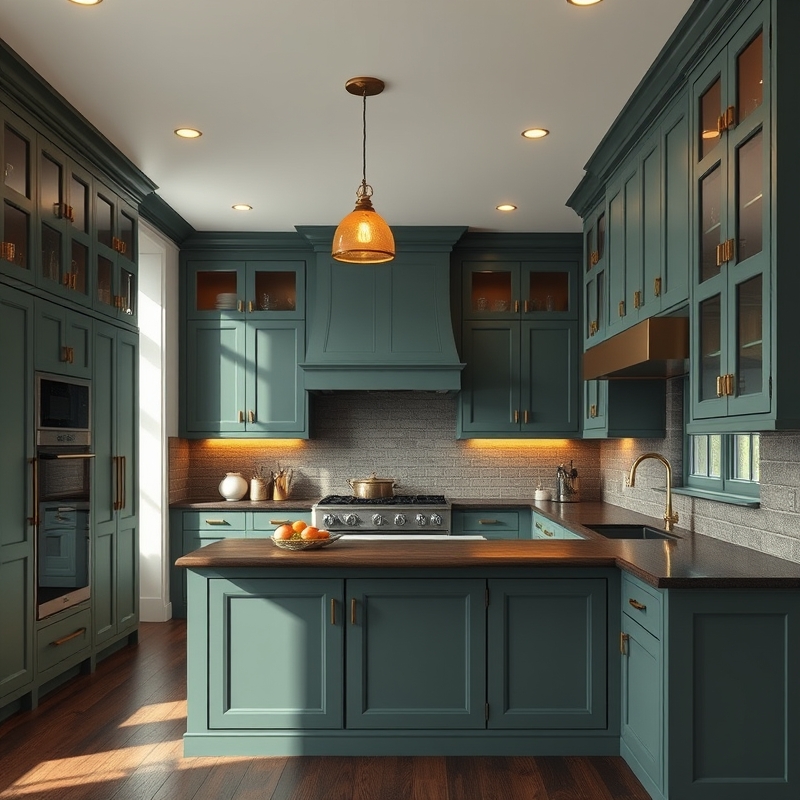
Deep, forest-like sage green creates sophisticated drama when paired with warm lighting and rich finishes. This darker shade—closer to hunter green with green undertones—demands quality brass or aged gold fixtures and warm-toned countertops like walnut or dark quartz. Pendant lights in brushed brass with warm bulbs (2700K) add intimate ambiance that makes evening cooking feel intentional rather than purely functional. Here’s the thing—dark sage requires adequate natural light during the day to avoid feeling cave-like, so position it near windows when possible. The result is a kitchen that transforms from bright workspace to moody retreat.
9. Sage Green Kitchen Ideas with Vintage Copper Accents
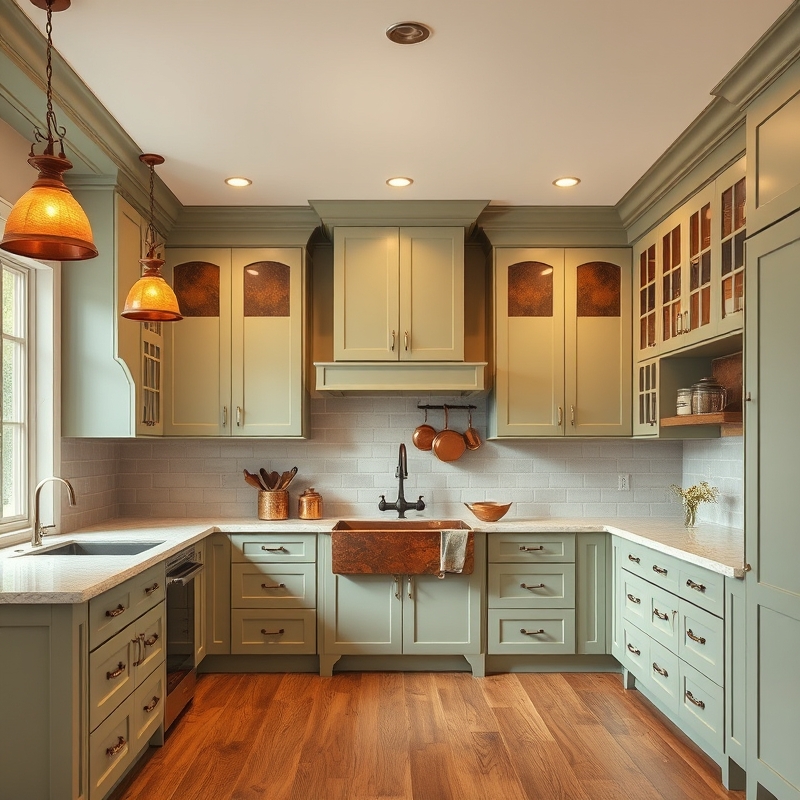
Vintage copper develops a natural patina that deepens the elegance of sage green cabinets. Here’s what makes this work—antique copper fixtures with aged finishes read richer and more refined than shiny brass. Install a single-basin copper apron sink (36 inches wide) as your anchor, then layer in vintage copper pendant lights and wall-mounted cookware racks. The cool green of cabinetry and the warm, aged copper create a balanced tension that feels collected and intentional. Architectural Digest showcases numerous examples of this pairing in farmhouse and eclectic kitchens. This approach to sage green kitchen ideas celebrates vintage character without sacrificing modern functionality.
10. Sage Green Beadboard for a Cottagecore Feel
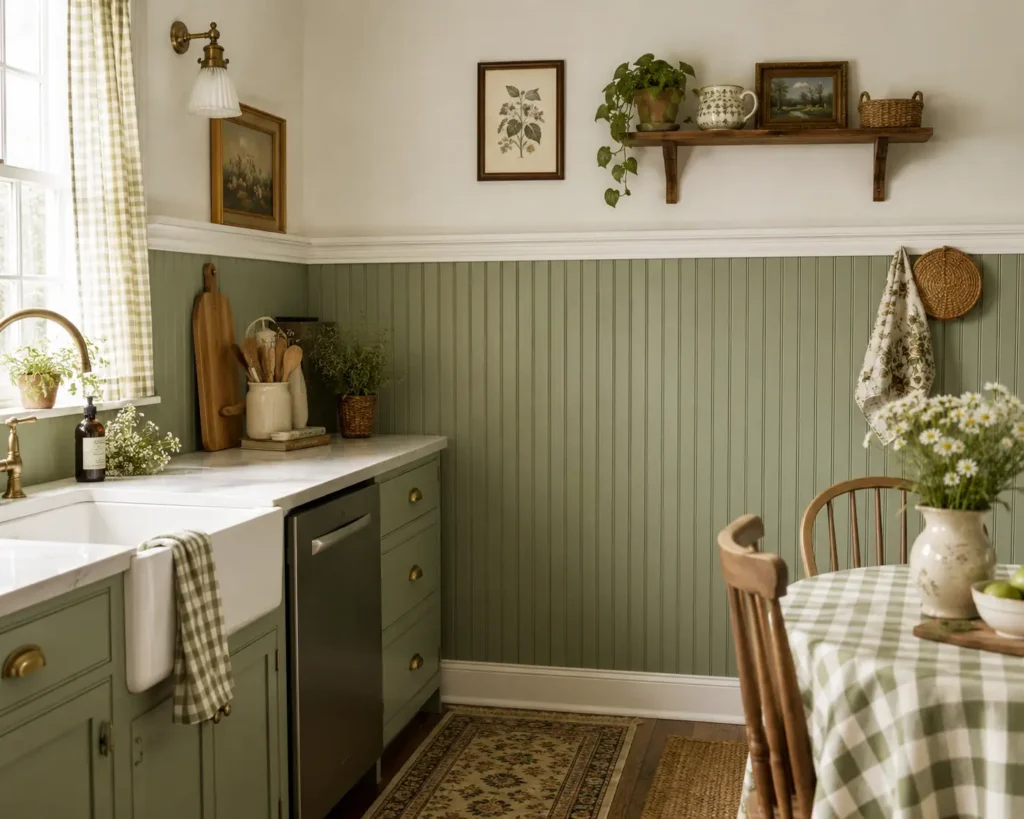
Sage green beadboard wainscoting creates textured charm that flat paint simply cannot achieve. The vertical grooves—typically 3 to 4 inches apart—catch light and shadow, adding dimensionality to lower walls while leaving upper walls white or soft neutral. Install beadboard 36 to 42 inches from the floor, capped with white trim for a classic cottage aesthetic. The material is durable and easy to wipe clean, making it practical for kitchens. What most people overlook is how beadboard softens the hard edges of cabinetry and creates visual interest in modest spaces. Pair with vintage-style hardware and checkered textiles for authentic cottagecore energy.
11. Matte Sage Appliances in a Retro Kitchen
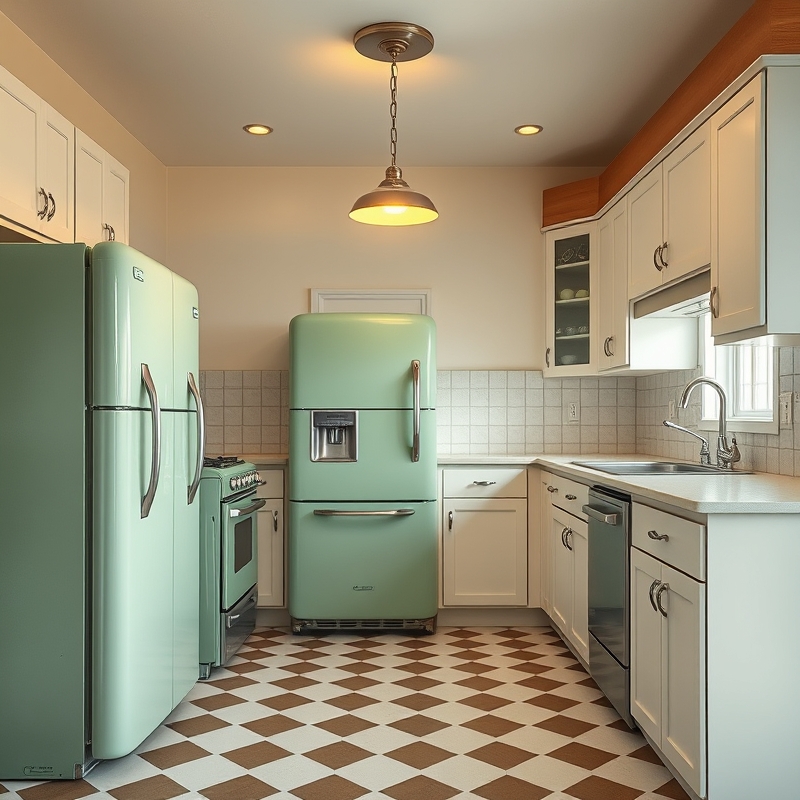
Matte sage green appliances in a coordinated suite transform a kitchen into a unified, curated space that feels intentional and nostalgic. Major manufacturers now offer sage or muted green finishes on refrigerators, ranges, and dishwashers—a departure from stainless steel monotony. A 36-inch refrigerator, 30-inch slide-in range, and matching dishwasher in matte sage cost roughly 15 to 20 percent more than standard finishes but anchor the entire design. And the best part? The matte finish hides fingerprints better than gloss, keeping appliances looking pristine. Pair with white or cream cabinetry and chrome hardware to let the appliances shine as sculptural focal points.
12. Sage Green Pantry Door as a Focal Point
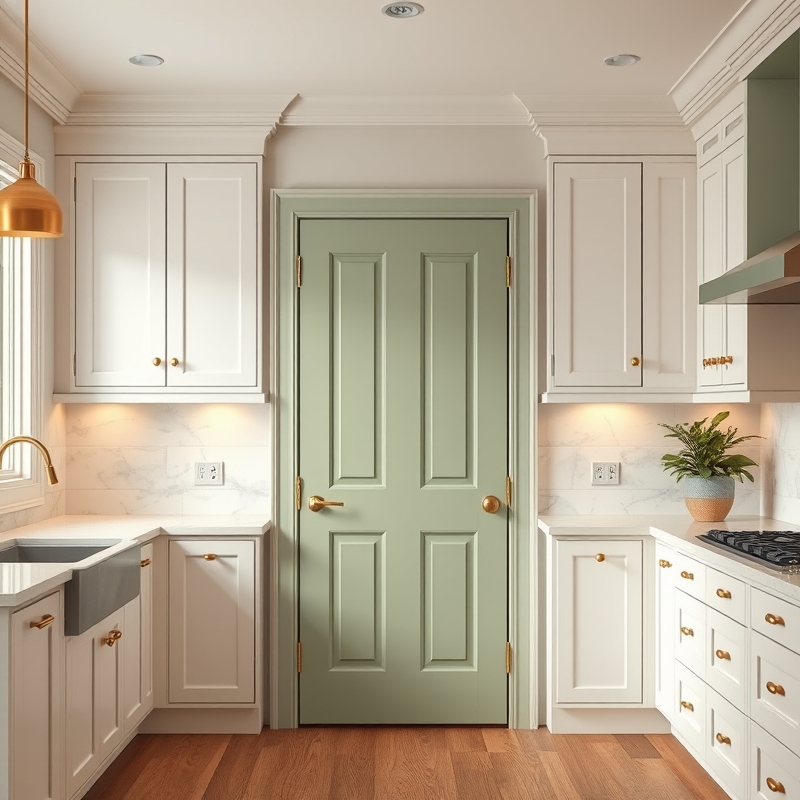
A single sage green pantry door creates dramatic impact without overwhelming white or neutral surrounding cabinetry. The real difference is treating one element as intentional color rather than painting entire walls—a 32-inch-wide five-panel door becomes sculpture. Choose a matte finish to avoid glare and pair with brushed brass or vintage brass hardware that echoes the green’s warmth. Interior shelving painted white keeps the pantry feeling open when the door opens. Position the pantry where it catches natural or pendant light to showcase the color’s depth. This understated approach delivers personality and interest while maintaining flexibility if your taste evolves.
13. Light Sage Cabinets with Soapstone Countertops
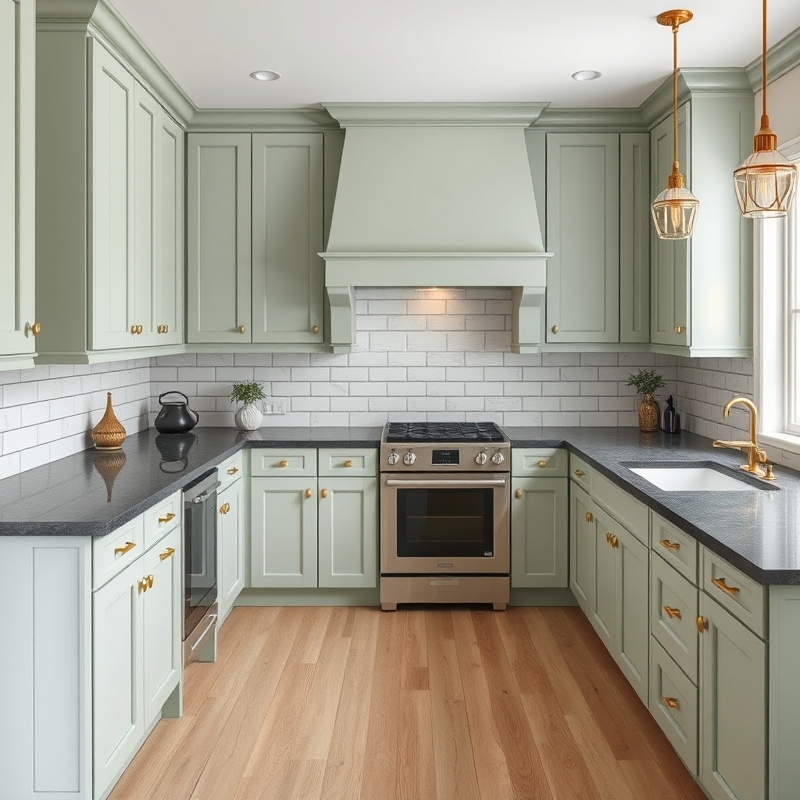
Light sage cabinets paired with dark soapstone countertops create striking visual contrast and a naturally sophisticated palette. Soapstone’s deep charcoal gray with subtle veining anchors pale green cabinetry without competing for attention. The stone develops a soft patina over time, adding character and warmth. A 20-foot run of soapstone creates depth and grounds the entire kitchen. This combination suits contemporary and transitional spaces equally well. The durability of soapstone—scratch and stain-resistant—makes it practical for active households. Light sage green kitchen ideas shine brightest when paired with substantial, grounded countertop materials like this.
14. Sage Green Window Trim for Subtle Elegance
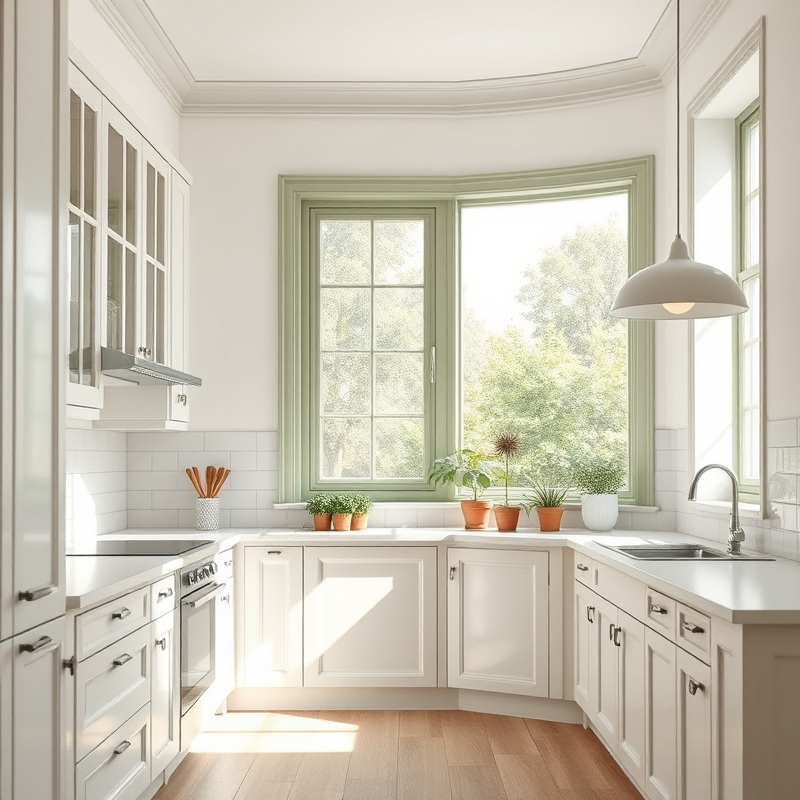
Painting window trim in soft sage creates unexpected elegance without committing to full cabinet color. A single 36-inch-wide window with sage-painted frame and trim becomes an architectural focal point that draws the eye outdoors. The narrow band of color—typically two to three inches—adds personality while keeping walls neutral and flexible. This approach works beautifully in kitchens with limited natural light or in spaces where permanent color feels risky. Pair sage trim with white or cream walls for maximum subtlety. The technique proves that thoughtful color placement matters more than volume—sometimes a whisper outshines a shout.
15. Sage Green Herringbone Floor Tile Pattern
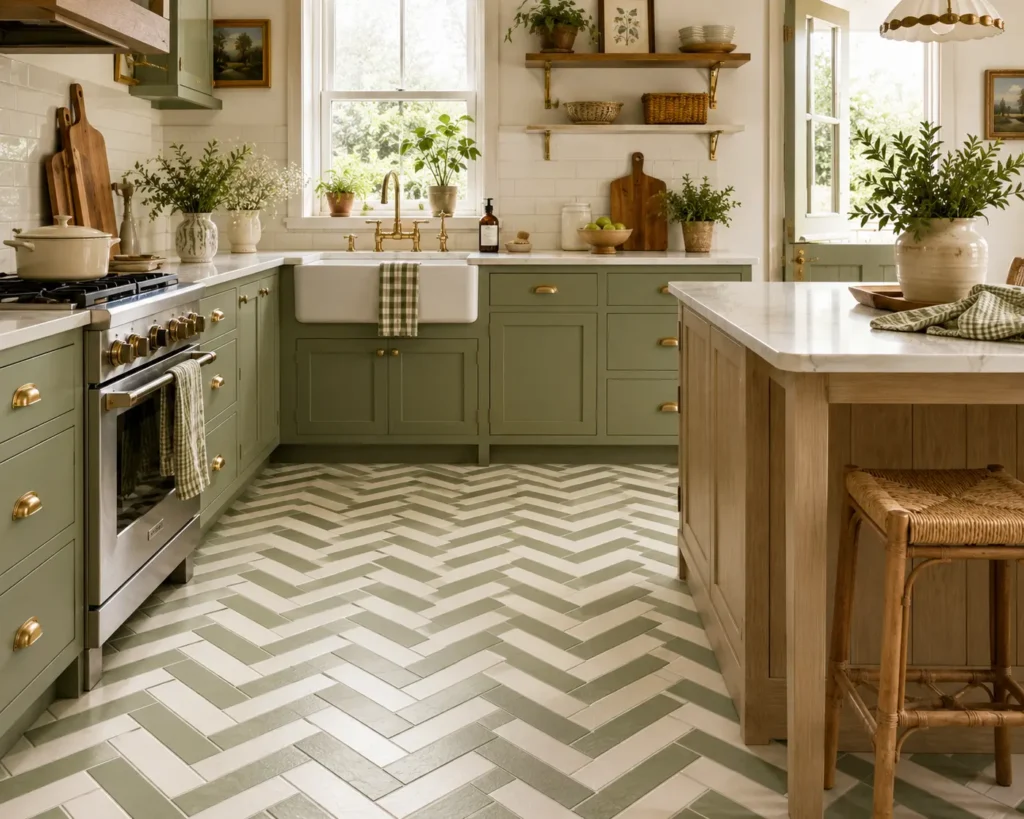
A sage green and white herringbone floor pattern anchors the entire kitchen with movement and visual interest underfoot. The zigzag layout—typically 2×4 inch tiles—creates dynamic flow that draws the eye through the space. Sage tiles alternating with white creates balance, preventing the palette from feeling too green or too neutral. Herringbone installation costs roughly 20 percent more than standard layouts due to cutting and precision, but the payoff is substantial. Pair with soft cabinetry above to let the floor shine. This approach to sage green kitchen ideas proves that color and pattern work hardest where we least expect them.
Final Thoughts
These fifteen sage green kitchen ideas demonstrate how a single, nature-inspired color can anchor everything from cabinetry and walls to accents and flooring. Whether you choose soft pale hues with soapstone or deep forest tones with warm lighting, sage green offers timeless elegance without trend fatigue. The ideas range from bold (dark sage cabinets with vintage copper) to understated (sage window trim, herringbone floors), ensuring every style preference finds a home.
Your kitchen deserves to feel like a retreat, not a showroom. Start with the one sage green kitchen idea that resonates most—then layer in supporting colors and materials that reflect your daily life.
Frequently Asked Questions
What colors go well with sage green kitchen cabinets?
Sage green pairs beautifully with warm neutrals like cream, white, and soft gray. Layer in brass, copper, or vintage gold hardware for warmth. Dark countertops (soapstone, walnut, dark quartz) create grounding contrast. White or light marble backsplashes keep the space feeling open. Navy, burgundy, and charcoal accents add sophistication without overwhelming sage’s gentle nature.
How can I make a sage green kitchen feel more modern?
Choose matte sage finishes over glossy, pair with minimalist hardware in brushed nickel or black, and opt for clean-lined cabinetry without decorative details. Incorporate stainless steel appliances or modern matte finishes. Keep backsplashes simple—subway tile or large-format slabs work beautifully. Modern lighting with geometric pendants and sleek countertops in quartz or concrete complete the contemporary sage green kitchen ideas aesthetic.
Is sage green a timeless choice for a kitchen remodel?
Yes. Sage green has appeared in kitchens for decades because it’s rooted in nature rather than trends. The color feels fresh without being trendy, calming without being dated. Unlike bold jewel tones or stark whites, sage green maintains relevance across style shifts. It works in farmhouse, contemporary, transitional, and eclectic kitchens equally well, ensuring your investment stays relevant for ten-plus years.
Which backsplash tile looks best with sage green cabinets?
White subway tile is the safest, most versatile choice—timeless and clean. Light marble (Carrara or Calacatta) adds luxury without competing. Sage green herringbone or patterned tiles in matching or deeper shades create visual interest. Soft gray or warm cream tiles complement sage beautifully. Avoid busy patterns or contrasting bold colors that fight sage green kitchen ideas for attention. Let the cabinetry be the hero.
Can sage green work in a north-facing kitchen with low light?
Yes, with intentional lighting design. North-facing kitchens receive cool, indirect light, so sage can feel slightly gray or muted during day hours. Combat this with warm-toned lighting (2700K bulbs) in pendant fixtures, under-cabinet lights, and recessed cans. Glossy or semi-gloss finishes reflect light better than mattes. Pair sage with light countertops and backsplashes to maximize reflection. Consider lighter sage shades over deep forest greens in dim spaces.