A cluttered sewing space kills creativity before you even thread a needle. The right sewing room ideas transform chaos into inspiration, making you eager to start every project. Whether you’re working in a corner closet or a dedicated studio, smart design choices unlock your full creative potential. This guide covers organizational systems, lighting solutions, color psychology, and furniture hacks that make sewing spaces both beautiful and functional. These aren’t complicated renovations—they’re practical tweaks that deliver immediate impact. Discover how professional sewers and hobbyists alike are organizing their creative spaces with intention and style.
1. Wall-Mounted Pegboard for Thread Organization
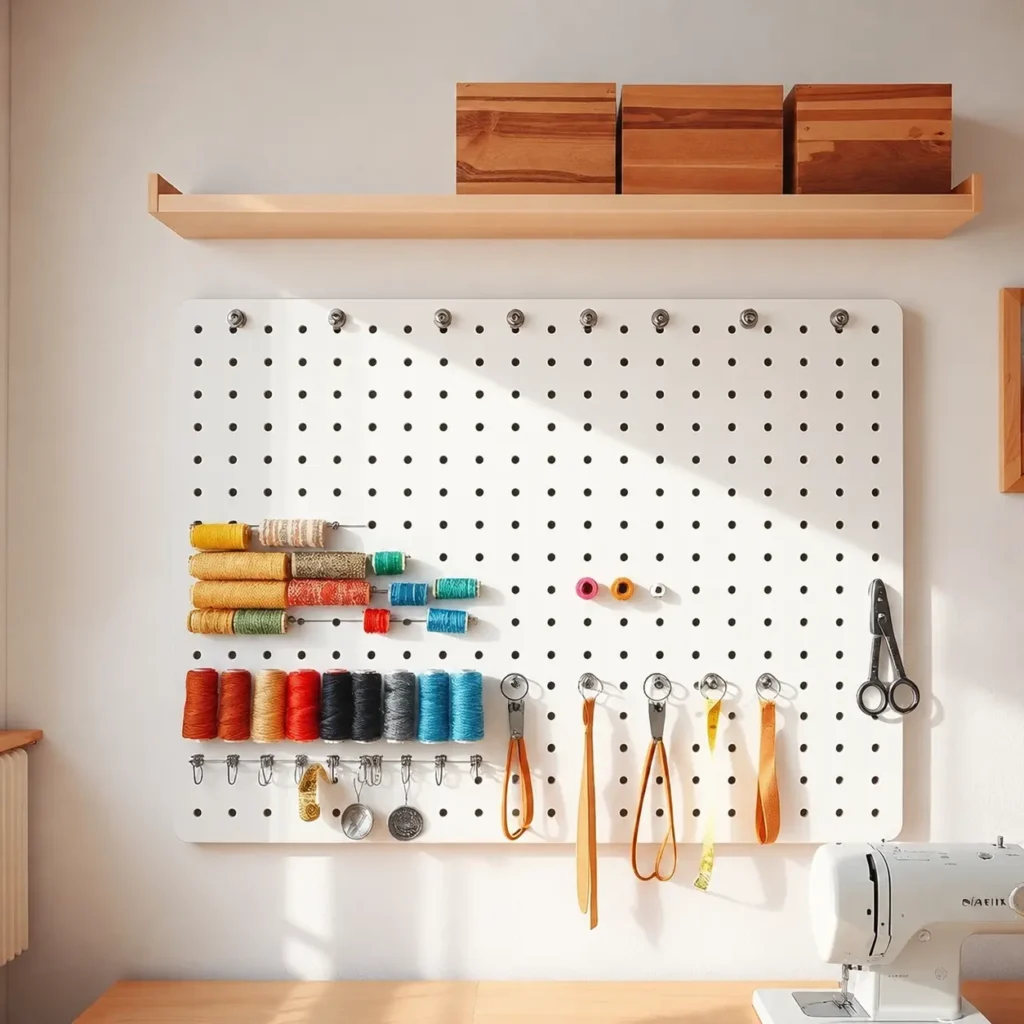
A pegboard transforms wall space into active storage that keeps thread visible and within arm’s reach. Mount a 32-by-40-inch white or black pegboard above your cutting table or main workstation for maximum visibility. Thread spools stand out beautifully when arranged by color family—warm tones on one side, cool on the other. Add small metal hooks for scissors, bobbins, and measuring tapes. Pegboards cost $20 to $50 and install in minutes without permanent damage. Design-forward sewers use pegboards as functional art, combining practical storage with visual appeal that inspires daily creativity.
2. Repurposed Vintage Desk as Cutting Table
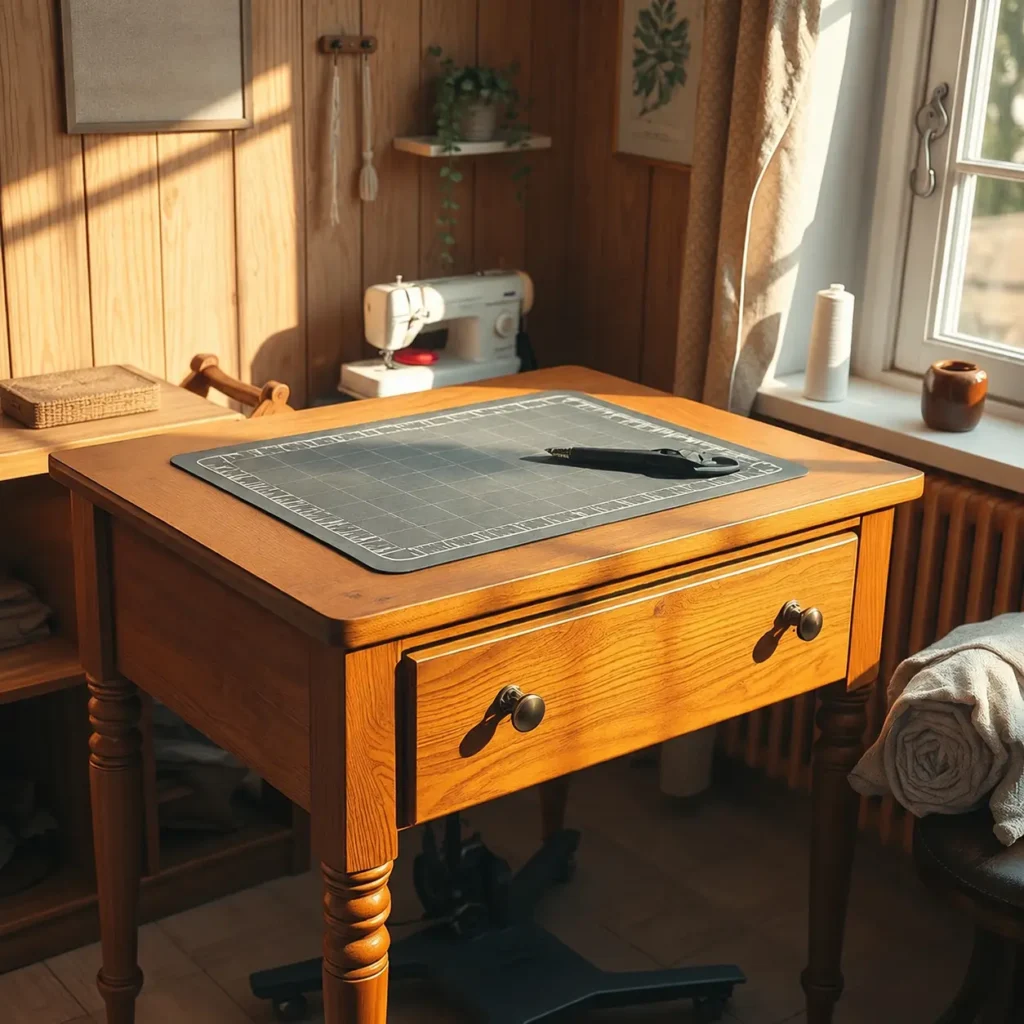
Skip expensive cutting tables and find a solid vintage desk at estate sales or Facebook Marketplace. A 48-inch-wide desk provides enough surface for most fabric cuts while adding character that mass-produced furniture can’t match. Top it with a self-healing cutting mat sized to the desktop for protection. Vintage desks typically feature deep drawers perfect for storing pattern collections, stabilizers, and elastic. The height matches standard sewing machines when paired properly. Repurposing an older piece costs $30 to $100 and creates sewing room ideas that feel authentically yours while supporting sustainable design practices.
3. Floor-to-Ceiling Fabric Storage Shelves
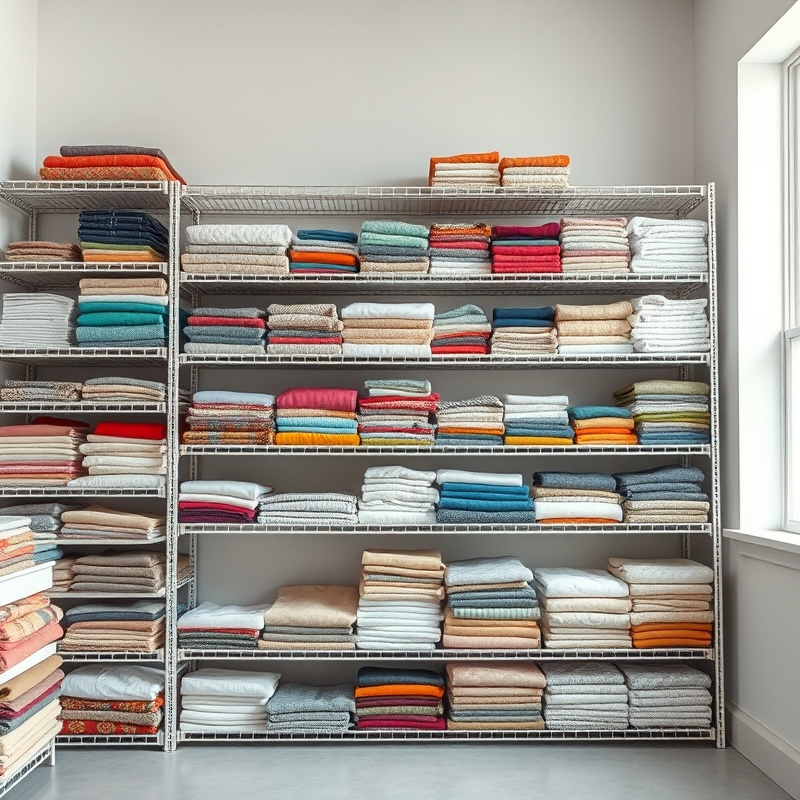
Vertical storage maximizes small rooms and keeps fabric visible, which inspires spontaneous design combinations. Install adjustable shelving units or floating shelves in white, natural wood, or black metal finishes. Fold fabrics neatly into thirds and stack by color family or fiber content. This system works beautifully for cotton prints, linen, wool, and specialty materials. Shelving units cost $100 to $400 depending on materials and size. Clear labeling with material type and yardage prevents duplicate purchases. Floor-to-ceiling organization transforms a wall into a personal fabric library that elevates your entire sewing room while keeping everything accessible and beautifully displayed.
4. Inspiring Mood Board Wall Above Machine
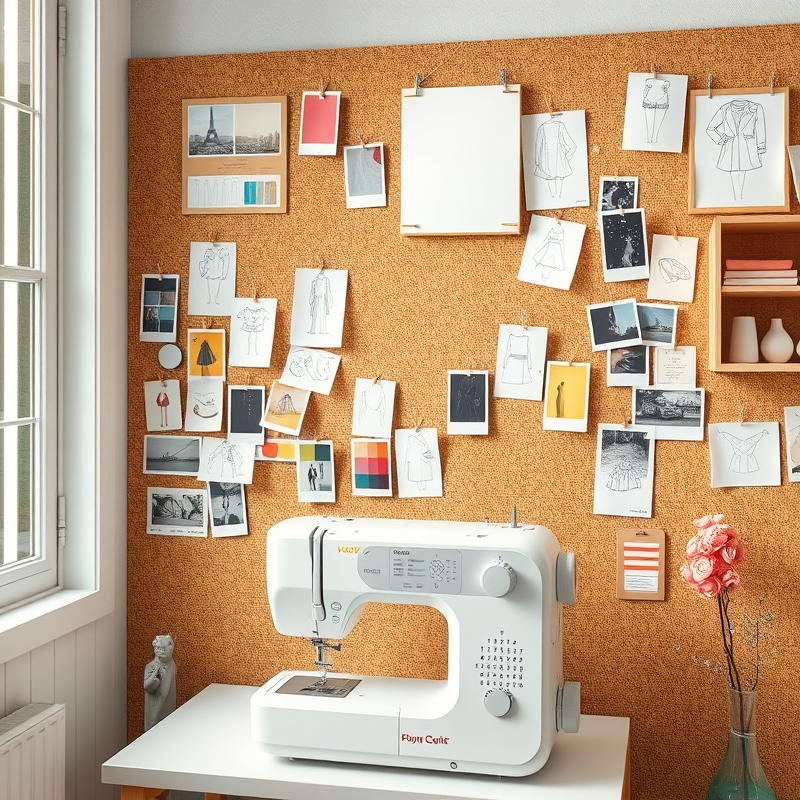
Position a mood board directly behind your main machine to spark ideas during every sewing session. Pin fabric swatches, color chips, fashion sketches, and hand-drawn designs within your sightline. Refresh the board monthly to stay inspired and prevent creative stagnation. Cork, linen, or painted plywood works equally well as backing materials. Some sewers use magnetic paint and steel fabric swatches for easy rearrangement. A dedicated inspiration wall keeps your sewing room ideas flowing and reminds you why you started each project. This simple addition costs under $30 and transforms a blank wall into your personal creative catalyst.
5. Soft Pastel Color Palette for Calm Focus
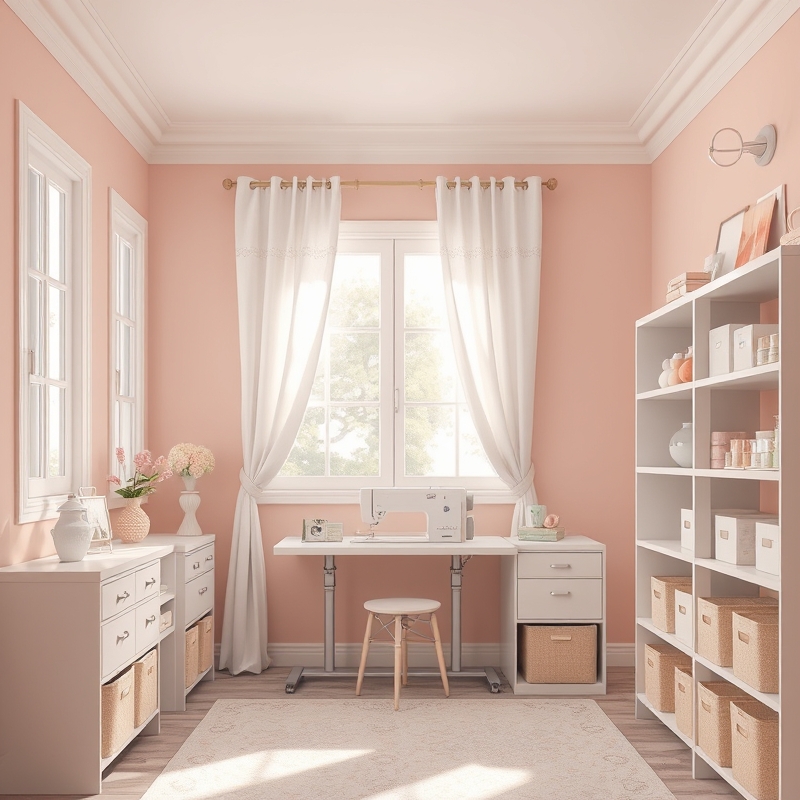
Color psychology proves that soft pastels reduce stress while maintaining creative energy. Paint walls in blush pink, sage green, soft lavender, or butter cream for an instantly calming space. Pair wall color with white or natural wood furniture and accessories. Pastel throw blankets, curtains, and storage boxes reinforce the cohesive palette without overwhelming the room. These gentle hues make small spaces feel larger while encouraging longer, more focused sewing sessions. Unlike bold accent colors that fatigue the eye, pastels create a nurturing environment where your sewing room ideas develop naturally. The psychological benefit of soft color schemes directly improves concentration and creative output.
6. Adjustable Task Lighting Over Your Workstation
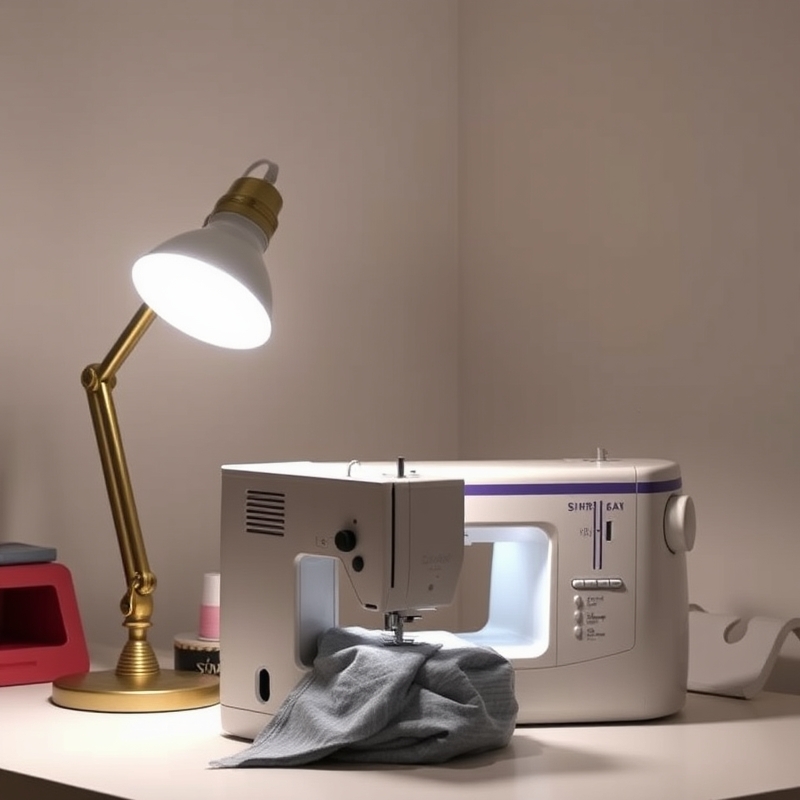
A three-tier rolling cart slides anywhere you need it, perfect for sewers without dedicated studio space. Choose a sturdy cart with locking wheels in white, natural wood, or black metal finishes. Stock the top tier with frequently used thread, the middle with current projects and patterns, and the bottom with tools and notions. Carts cost $40 to $150 depending on material quality and wheel mechanism. Plus, rolling storage becomes a design statement when styled thoughtfully. This portable approach to sewing room ideas works equally well in apartments, spare bedrooms, or shared spaces where flexibility matters more than permanent fixture installation.
8. Baskets and Bins for Hidden Clutter Control
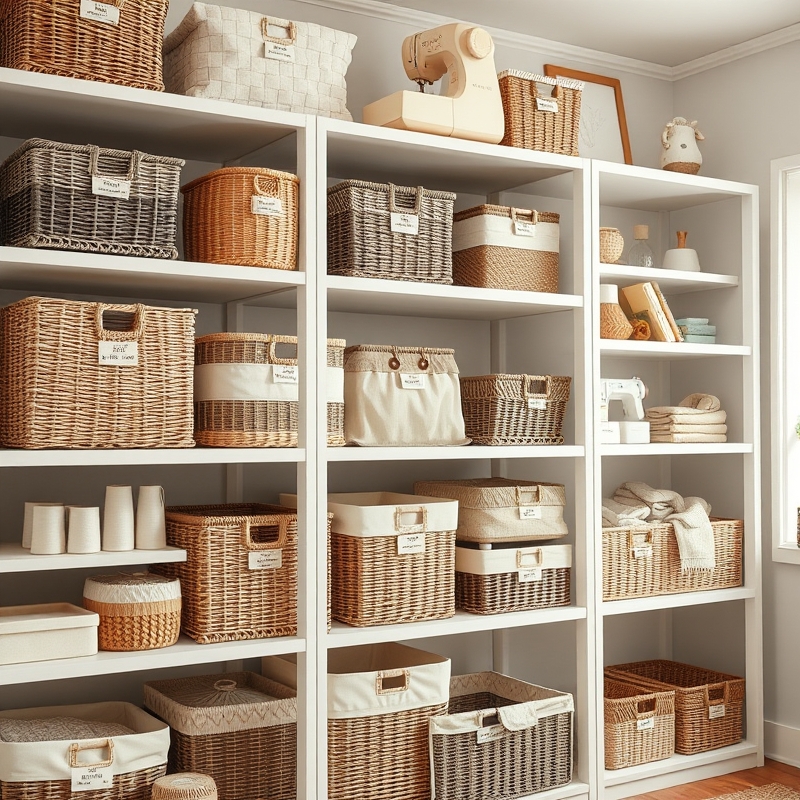
Hidden storage keeps visual chaos at bay while making supplies instantly retrievable when you need them. Woven wicker baskets, canvas bins, and fabric organizers disguise bobbins, stabilizers, and elastic without screaming “storage.” Label each container with printed tags or painted wood labels for quick identification. Mix basket sizes and heights for a curated, intentional look rather than random stuffing. Baskets range from $5 to $40 each depending on material and size. Even better, this layered storage approach makes small sewing rooms feel expansive because the eye isn’t overwhelmed by visible thread, buttons, and notions scattered across surfaces.
9. Gallery Wall of Past Finished Projects
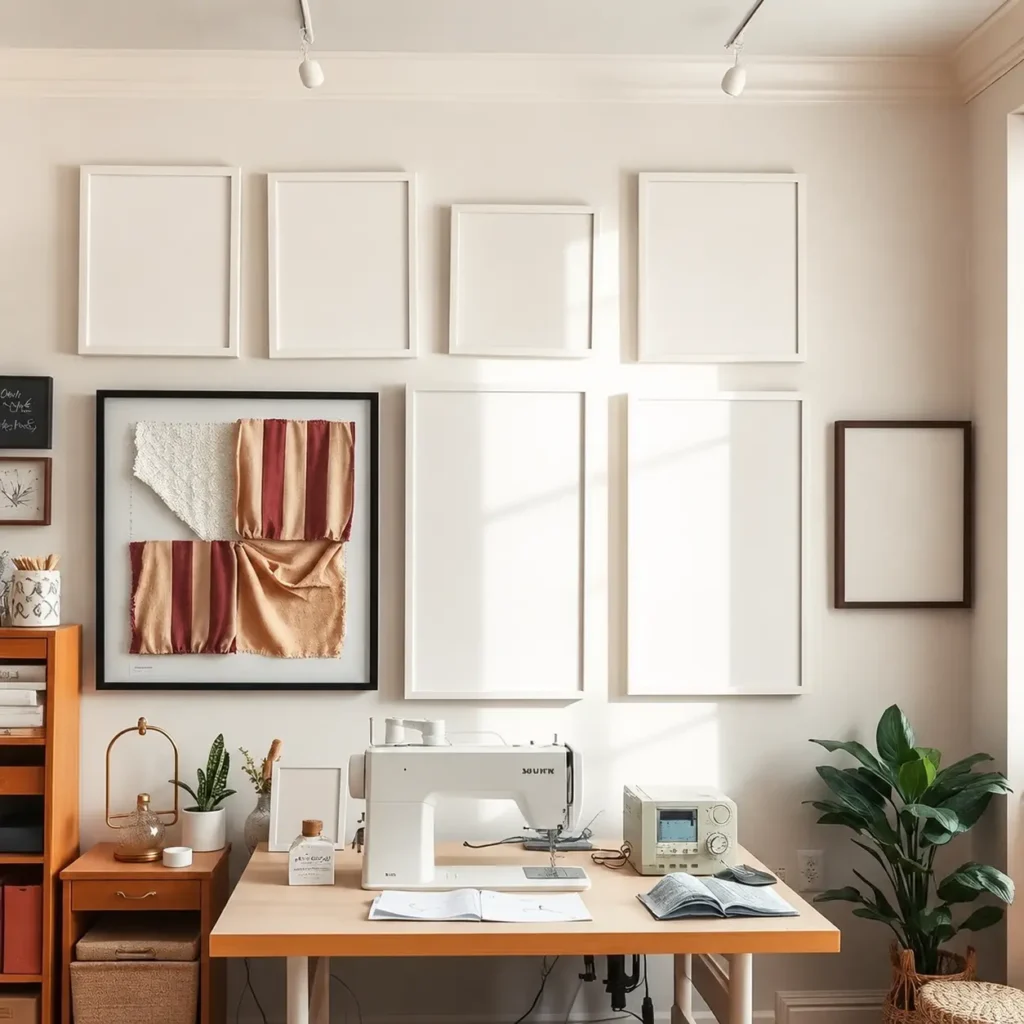
Display your completed garments and projects as a visual celebration of your skills and growth. Mount framed fabric swatches, project photographs on white matte board, and design sketches in a salon-style gallery wall arrangement. Vary frame sizes and finishes—white, black, natural wood—for visual interest. This permanent reminder of accomplishments boosts confidence when tackling ambitious new projects. Frame sizes typically range from 4-by-6 inches to 11-by-14 inches depending on your wall space. Here’s the thing: a gallery of finished work transforms self-doubt into motivation, and reinforces that ambitious sewing room ideas actually come to life through persistent, joyful creation.
10. Large Mirror to Reflect Natural Light
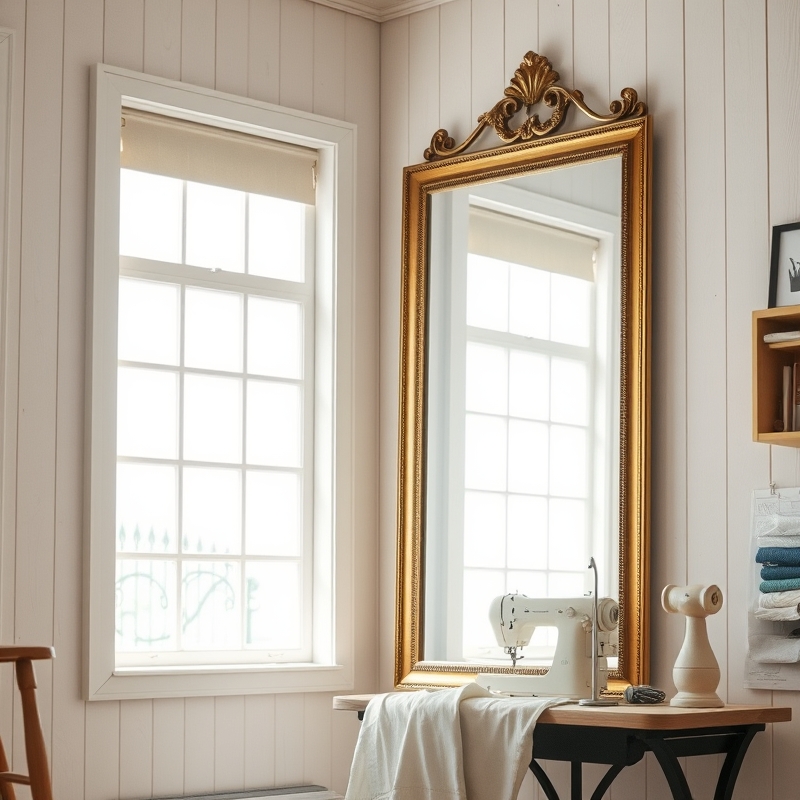
Position a large mirror opposite your primary window to double available light and make cramped spaces feel dramatically bigger. A 30-by-40-inch mirror with a brushed brass or black metal frame works beautifully in most sewing spaces. Reflected daylight reduces eye strain and eliminates harsh shadows across your cutting and sewing surfaces. Mirrors also bounce natural light into interior corners, making dim alcoves suddenly usable for small hand-stitching projects. Quality mirrors cost $60 to $200 depending on frame finish. What really works is pairing this simple addition with adjustable task lighting to create layered illumination that adapts to any time of day or weather condition.
11. Comfortable Accent Chair for Hand-Stitching
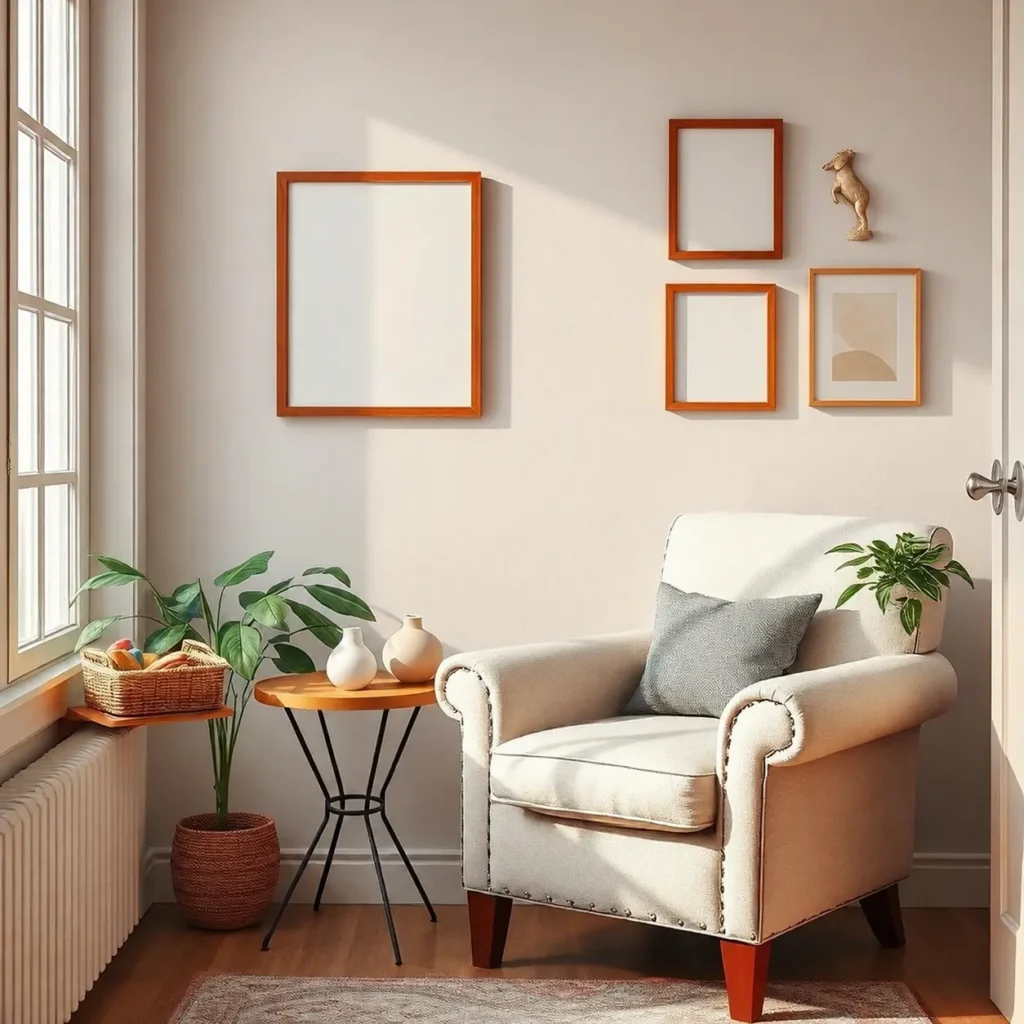
Hand embroidery and detail work demand comfortable seating that encourages longer creative sessions. Choose an upholstered accent chair in soft linen, cotton, or performance fabric in neutral tones that complement your sewing room palette. A 30-inch-wide chair with rolled arms provides support without dominating small spaces. Position it near a small side table for your hand-stitching supplies and morning coffee. Quality accent chairs range from $200 to $600 depending on brand and materials. Plus, a dedicated comfort zone separates hand-work from machine sewing, creating psychological space for different creative activities. This investment pays dividends through healthier posture and genuine enjoyment of meditative stitching practices.
12. Ironing Station with Fold-Down Wall Table
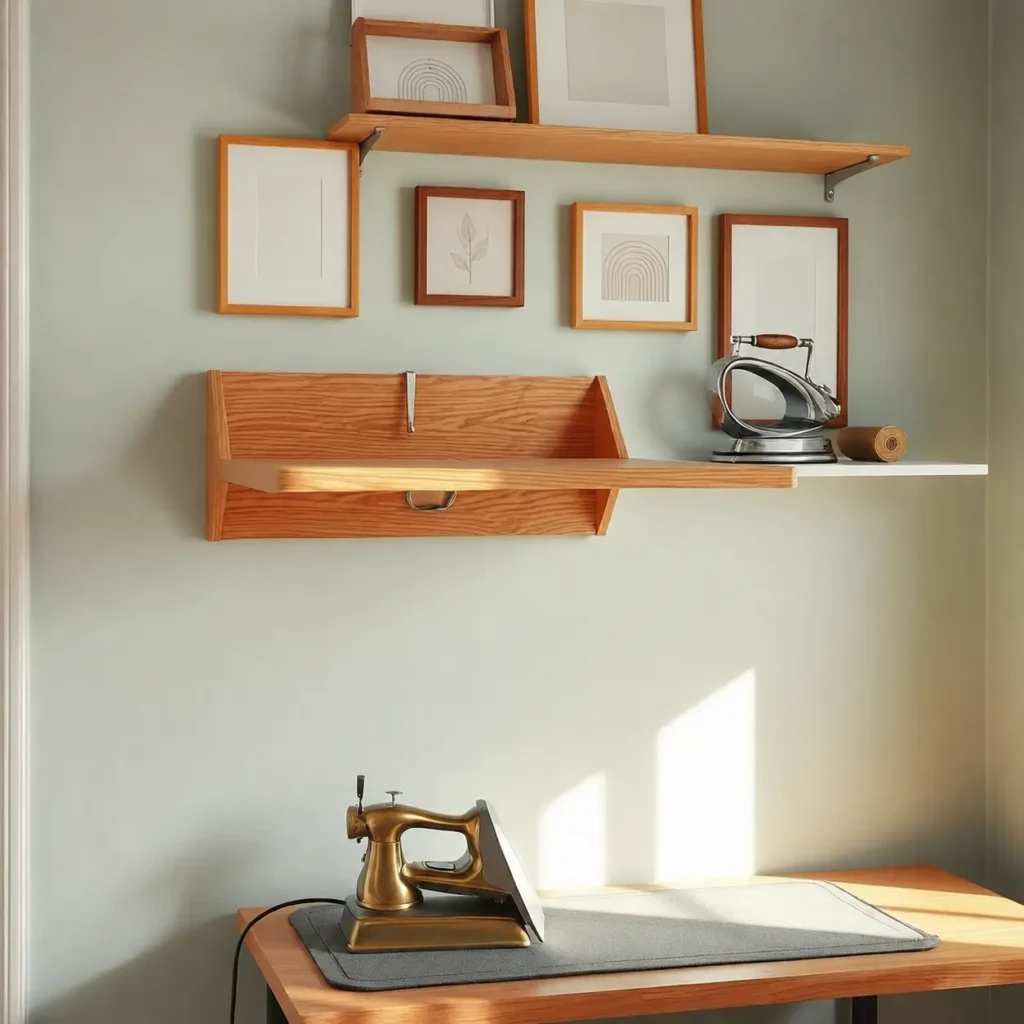
A fold-down wall table saves floor space while keeping pressing supplies instantly accessible during sewing sessions. Mount a 24-by-18-inch natural wood or white table at comfortable working height—typically 36 inches from the floor. Pair it with a small heat-resistant mat and hooks for storing your iron and pressing tools. When closed, the table completely disappears against the wall. Quality fold-down tables cost $50 to $120 installed. Even better, having pressing integrated into your sewing space means you finish seams immediately rather than postponing pressing tasks. This seamless workflow prevents small wrinkles from becoming set problems, and keeps your sewing room ideas moving forward without interruption or extra trips elsewhere in your home.
13. Clear Jars for Button and Trim Display
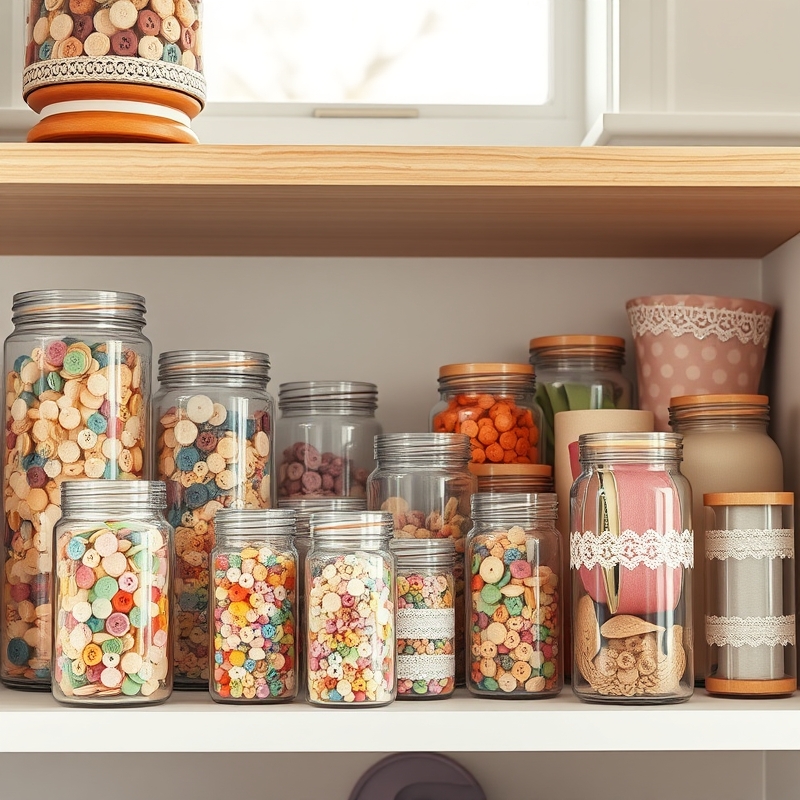
Transparent storage transforms small supplies into decorative elements that inspire project combinations. Fill clear glass jars—Mason jars, apothecary containers, or vintage canning jars—with buttons organized by color family, metallic finish, and size. Display ribbon, lace trim, and elastic in separate containers so you can easily spot the perfect accent for upcoming projects. Clear glass costs nothing if you repurpose jars from kitchen items, or $1 to $3 each new. Arrange containers in graduating heights on floating shelves or a windowsill where natural light shines through. This approach to sewing room ideas turns notions into gallery-worthy displays that keep supplies visible while protecting them from dust.
14. Hanging Rod for WIP Garment Storage
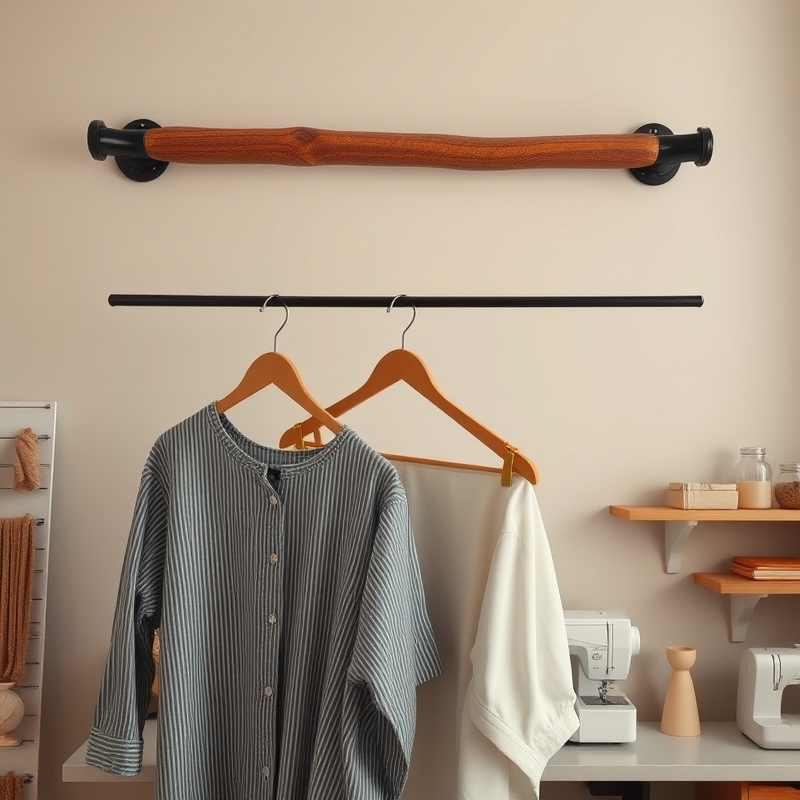
Keep work-in-progress garments visible and protected from dust by hanging them on a dedicated rod mounted at eye level or higher. Install a sturdy wooden dowel or black metal rod using heavy-duty brackets rated for at least 25 pounds. Use wooden hangers and brass clips to suspend garments without creating wrinkles or stress on delicate seams. This system lets you assess fit and construction details without flattening pieces in drawers. A 48-inch rod costs $30 to $60 installed. Here’s what makes this work: seeing your projects literally hanging there motivates you to keep stitching, and the vertical display reminds you to finish pieces before starting new ones.
15. Bold Accent Wall in Your Sewing Room Ideas
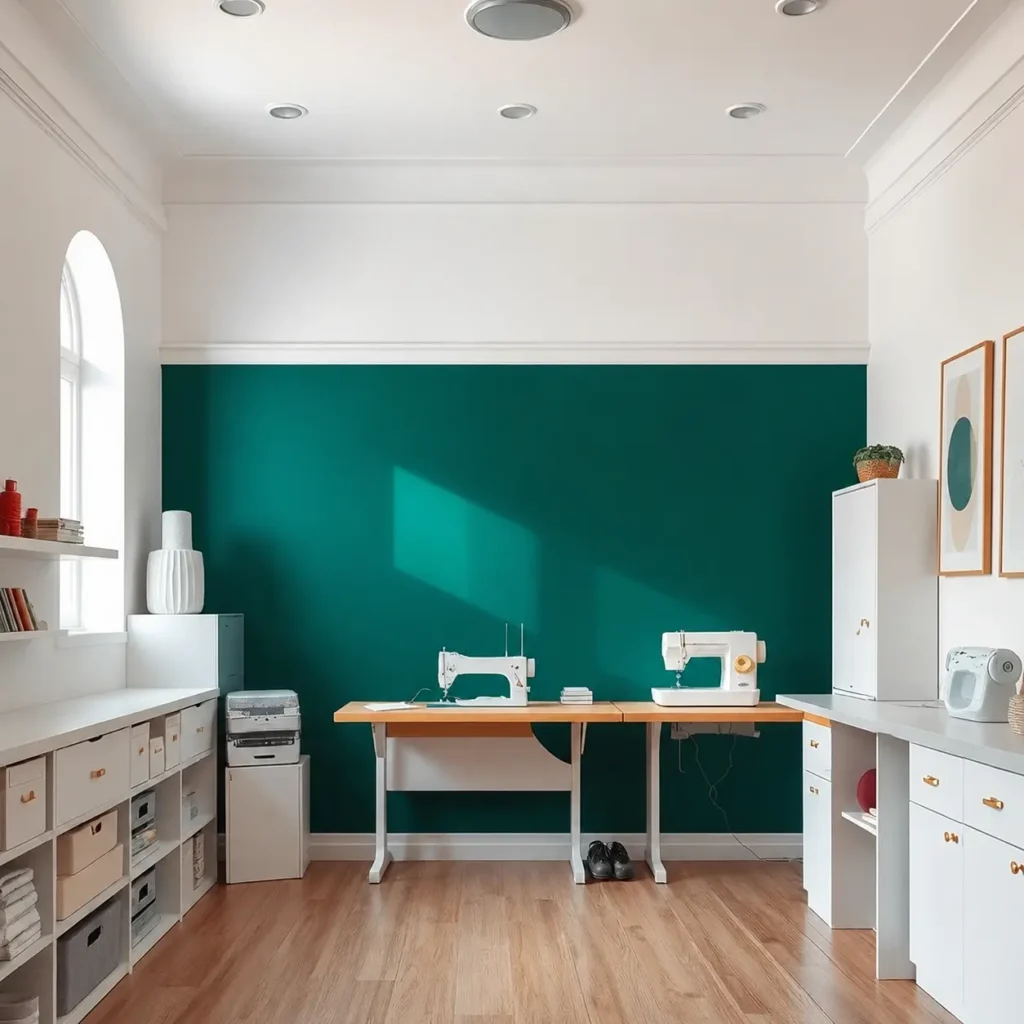
A single bold wall energizes creative work without overwhelming a small space or making darker colors oppressive. Choose one rich jewel tone—deep emerald, navy blue, moody plum, or forest green—and paint just the wall behind your main workspace. Keep other walls neutral white or soft cream to balance the intensity. This approach works beautifully behind shelving, pegboards, or fabric storage where the color amplifies organizational systems. Quality paint costs $30 to $50 per gallon. The real difference is that a bold backdrop makes white storage containers pop visually while creating a professional, intentional space that feels nothing like a spare bedroom. This sewing room ideas technique proves that color boldness and functional organization can coexist beautifully.
16. Repurposed Bookshelf as Pattern Library
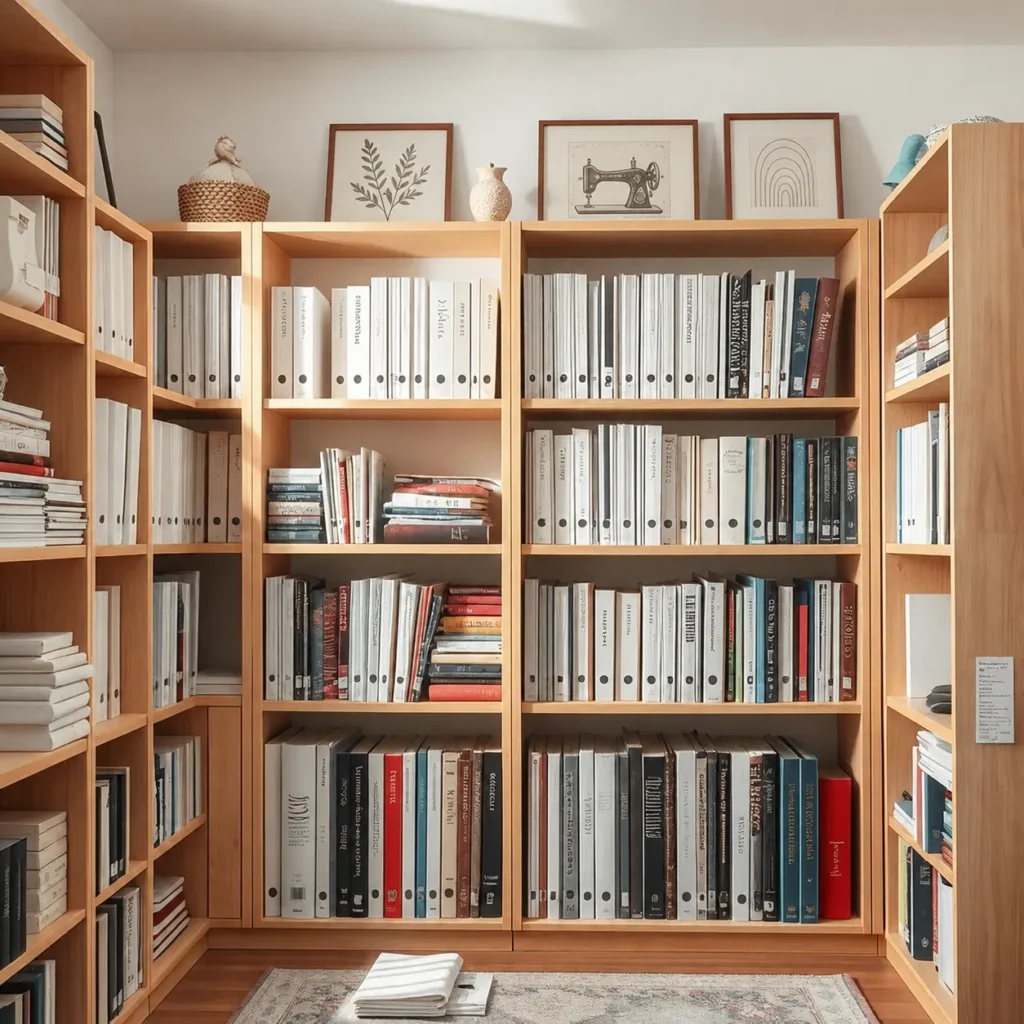
Organize pattern envelopes like a library using vertical dividers, labels, and bookshelf space normally reserved for books. Stand patterns upright in categories—dresses, blouses, pants, skirts, children’s wear—with printed labels on dividers. File instruction books, sewing technique guides, and design reference materials on the same shelves. Bookcase dividers cost $10 to $25 and keep patterns from toppling. Add a small label maker to identify sections clearly. This system makes pattern selection intuitive and prevents losing vintage or specialty patterns in a drawer. Better Homes and Gardens design experts recommend treating pattern storage like library curation, making your collection accessible and visually organized for quick inspiration during project planning.
17. Fresh Eucalyptus Greenery for Airy Vibe
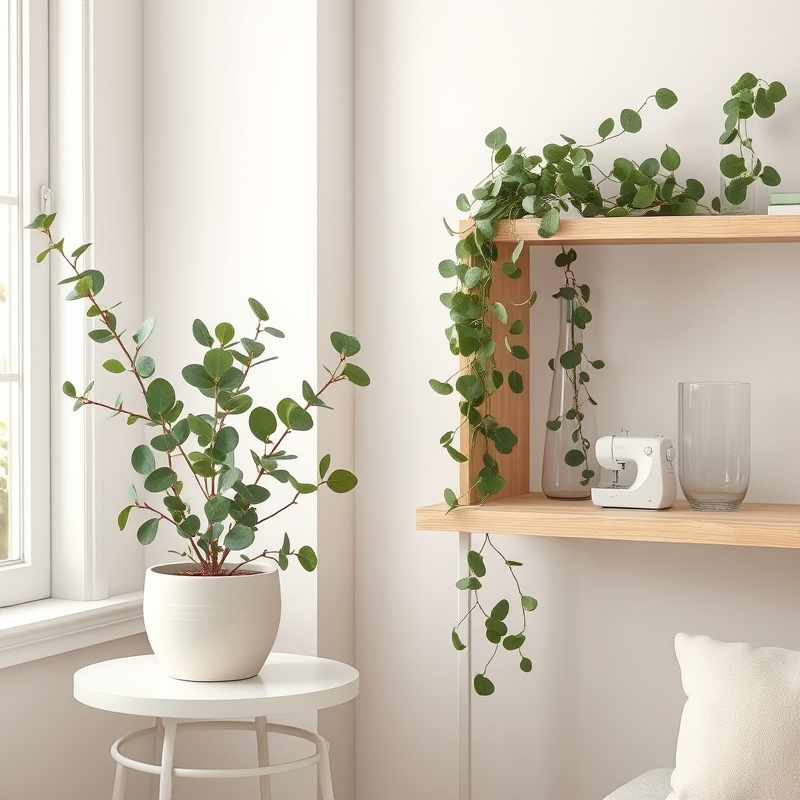
Living plants transform a sewing space into a calm, creative sanctuary that feels less clinical and more naturally inspiring. Eucalyptus thrives in bright indoor spaces and releases a subtle, focusing scent that many sewers find mentally clarifying. Place potted eucalyptus on a windowsill or corner table, and arrange fresh cuttings in a clear glass vase on your shelf. Eucalyptus stays fresh for weeks and costs $3 to $8 per bunch from grocery stores or florists. And the best part? Greenery softens hard shelving edges, adds color variation without paint, and reminds you that creativity mirrors natural growth—organic, patient, and always unfolding. This simple addition creates an emotional shift in your daily sewing practice.
18. Sliding Barn Door for Small Space Division
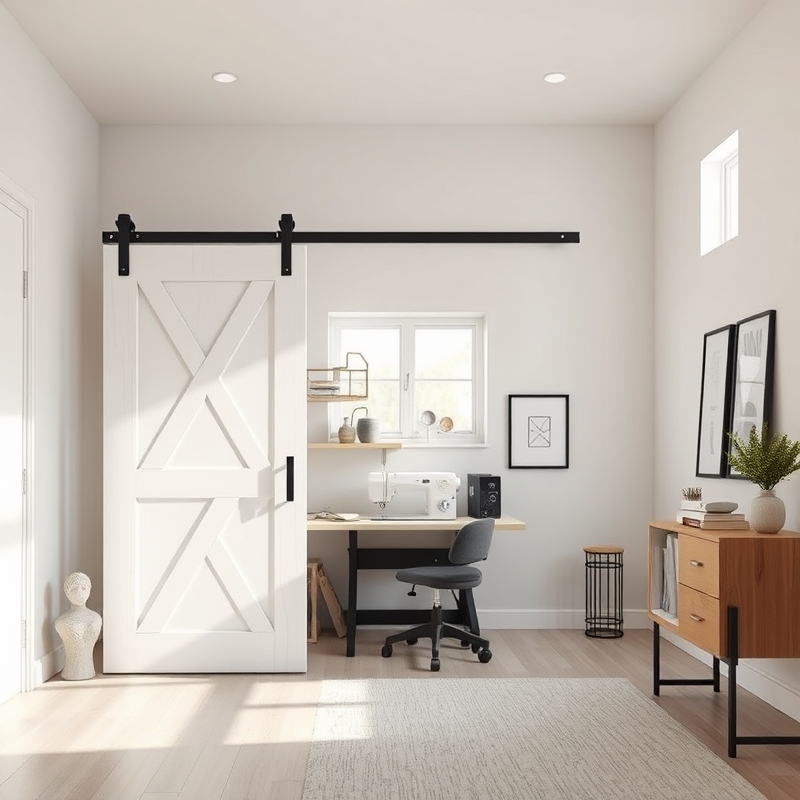
A sliding barn door creates visual separation without permanent walls, perfect for sewers sharing bedrooms or studio apartments. Install a white or natural wood barn door on a sturdy black metal track system rated for the door weight. Barn door hardware kits cost $60 to $150 and mount easily to existing door frames or walls. When closed, the door hides sewing clutter from guests or provides privacy during focused work sessions. Partially open, it maintains connection to shared spaces while defining your creative zone. What most people overlook is that barn doors solve the dual-purpose room problem elegantly—you get a genuine sewing space that vanishes when needed, transforming chaotic bedrooms into peaceful sleeping areas without expensive renovation or permanent structural changes.
19. Upcycled Mason Jar Pincushion Collection
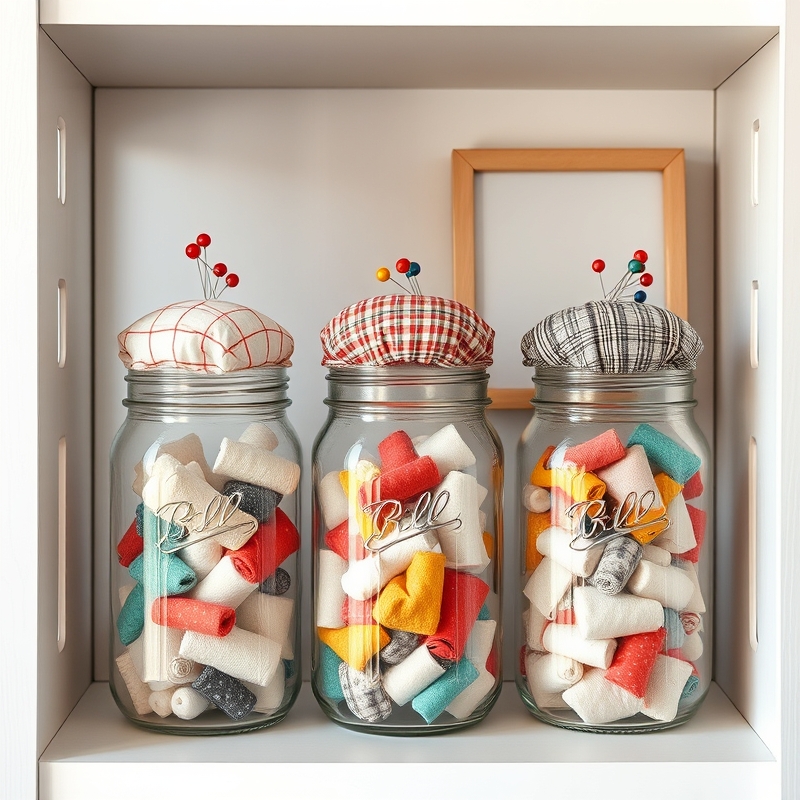
Mason jars transform into functional pincushions while storing fabric scraps and small threads. Fill clean jars halfway with colorful fabric scraps, then top with a sewn fabric cushion filled with fiberfill. Screw the pincushion ring onto the jar rim for a finished, intentional look. Each jar costs nothing if repurposed, or $1 to $2 for new jars. This dual-purpose approach keeps scraps organized while creating charming workspace décor. Display finished jars on shelves or your main workstation where pins stay accessible and the visual becomes part of your sewing room ideas toolkit.
20. Washi Tape Grid for Design Wall
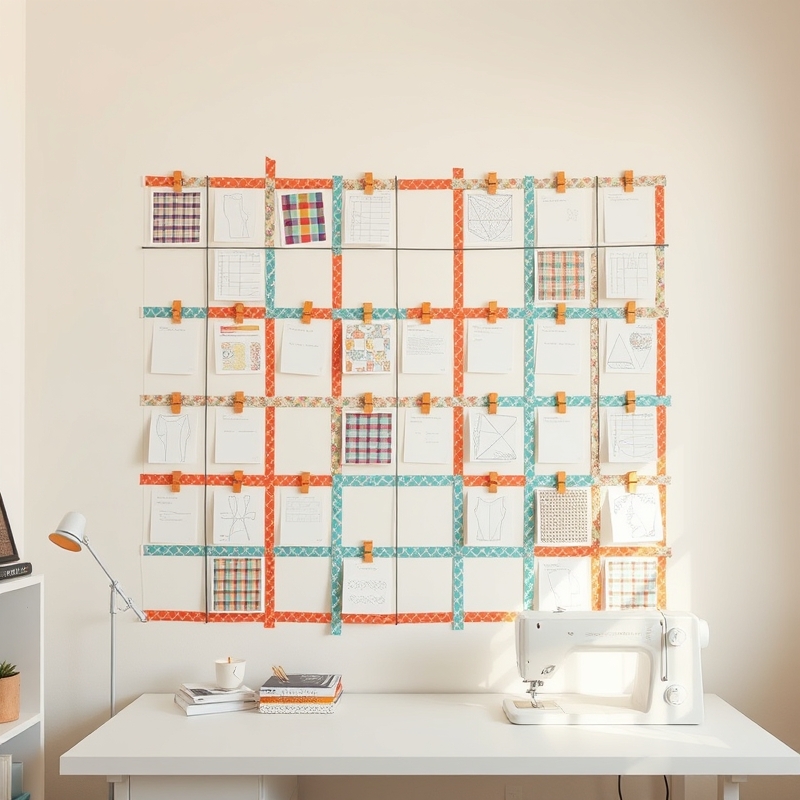
Washi tape creates a removable design grid that holds inspiration without wall damage or permanent installation. Apply washi tape in a simple grid pattern across a section of wall, spacing lines 6 to 8 inches apart. Use small clips or tape to attach fabric swatches, sketches, and color combinations at grid intersections. Washi tape costs $2 to $6 per roll and removes cleanly without damage. This flexible system adapts as projects evolve—rearrange quickly without tools. The tactile, colorful grid transforms blank walls into active creative surfaces where sewing room ideas literally take shape before you start cutting fabric.
21. Music Speaker Hidden on Open Shelving
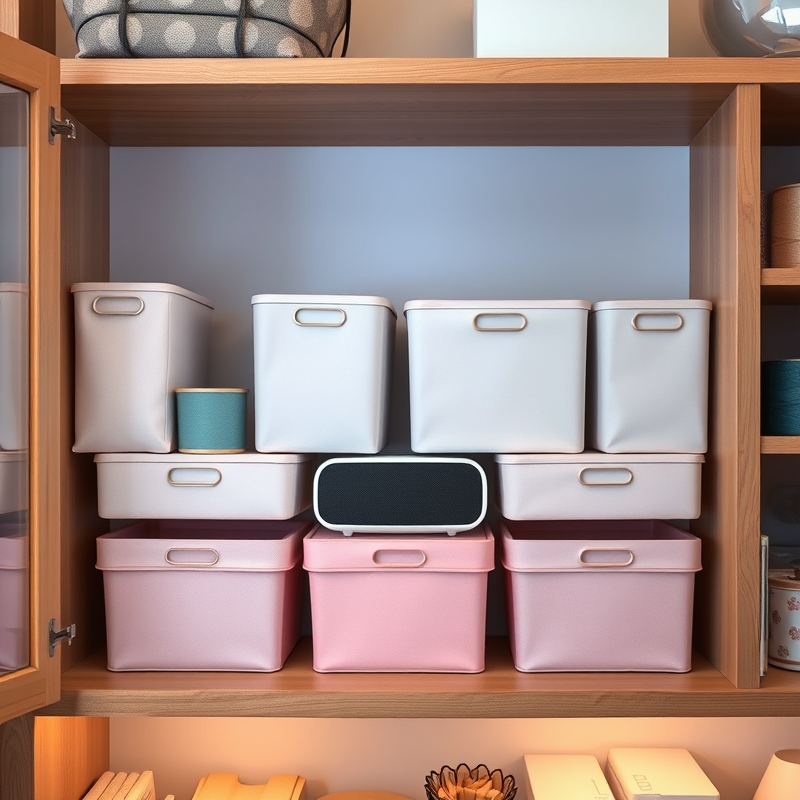
Music transforms focused sewing time into joyful creative practice—tuck a small Bluetooth speaker between storage boxes for ambient sound without cluttering shelves. Choose a compact speaker in black, white, or natural wood that blends with your décor while remaining accessible. Position it on a middle shelf at ear level for balanced sound. Quality small speakers cost $30 to $80 and pair wirelessly with phones or tablets. Podcasts, audiobooks, and playlists keep your hands busy and mind engaged during long stitching sessions. This simple integration proves that sewing room ideas thrive when you layer sensory experiences—combining visual organization with sound creates rhythm that naturally extends your creative time.
22. Dual-Purpose Guest Bed with Storage Underneath
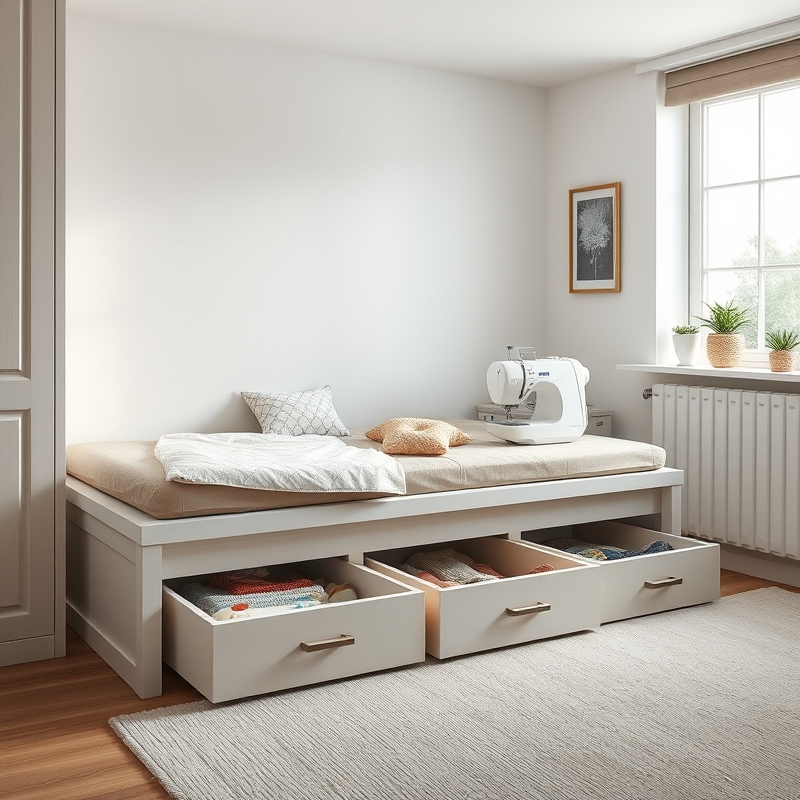
Platform beds with under-storage solve the guest room dilemma by hiding fabric and supplies while providing sleeping space. Choose a low-profile bed frame with rolling drawers or lift-up storage access. Store folded fabric, pattern boxes, and bulky supplies underneath, keeping them protected and accessible. This setup works beautifully in studio apartments and shared bedrooms where square footage is premium. Beds with storage cost $300 to $800 depending on quality and materials. The dual functionality means your creative space stays organized even when hosting overnight guests—everything essential slides neatly out of sight, transforming your sewing room into a guest bedroom in minutes.
23. Skylight Installation for True Daylight Sewing
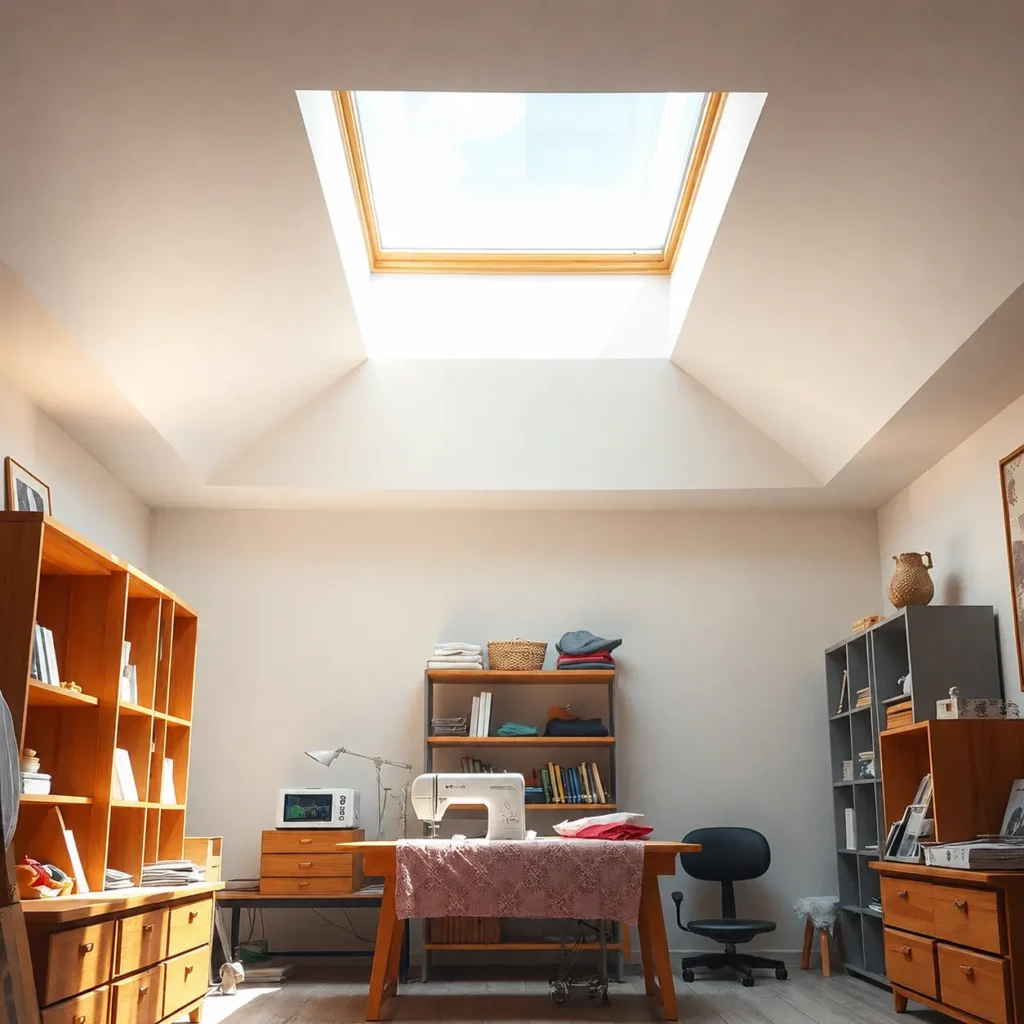
True daylight transforms fabric color matching and seam quality in ways artificial lighting cannot replicate. Skylight installation costs $500 to $2,500 depending on roof access and size, but provides permanent natural illumination that reduces eye strain during long sewing sessions. Choose fixed skylights for light without ventilation, or operable skylights to add airflow on warm days. Professional installation takes one day and requires roof access. Paired with adjustable task lighting, a skylight creates ideal working conditions for matching thread colors, inspecting seams, and appreciating fabric details. This investment in true daylight elevates the entire sewing experience from functional necessity to a genuinely pleasurable creative practice.
Final Thoughts
These 23 sewing room ideas prove that thoughtful design directly fuels creativity and focus. From pegboards and vintage desks that organize essentials, to mirrors and skylights that amplify natural light, to bold accent walls and comfortable seating that inspire longer sessions—every element works together to create a space uniquely yours. Your sewing room becomes more than functional storage; it becomes the physical manifestation of your creative identity and commitment to the craft.
Start with one or two ideas that resonate most, then layer in others as your space evolves.
Frequently Asked Questions
How can I make my small sewing room look bigger?
Use vertical storage to draw the eye upward, install mirrors opposite windows to reflect light and expand visual space, and choose a neutral wall color with one bold accent. Keep surfaces clear and organized so the room feels intentional rather than cramped. Floating shelves, pegboards, and wall-mounted storage eliminate visual bulk while maximizing usable workspace in limited square footage.
What is the best lighting for a sewing room?
Layer natural daylight with adjustable task lighting positioned directly over your machine and cutting surface. Aim for 1,000 to 1,500 lumens of brightness with warm white LED bulbs that don’t create harsh shadows. Supplement with overhead ambient lighting and a skylight if possible. This multi-layered approach eliminates eye strain and ensures accurate color matching and seam quality during extended sewing sessions.