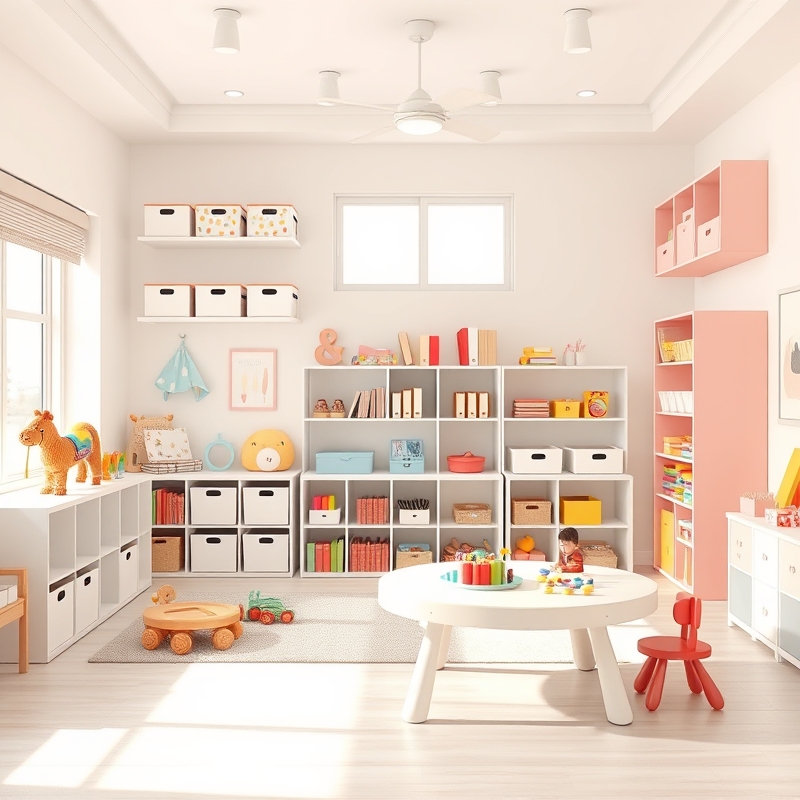
Playrooms filled with toys and tangled messes drain both creativity and your patience—but intentional design changes everything. These kids playroom ideas balance open exploration space with smart organization systems that children can actually maintain. You’ll discover how rotating toys, vertical storage, and dedicated zones prevent overwhelm while sparking genuine imaginative play. When kids know where things belong and can access materials independently, creativity flourishes naturally.
1. Low Open Shelving for Rotating Toys
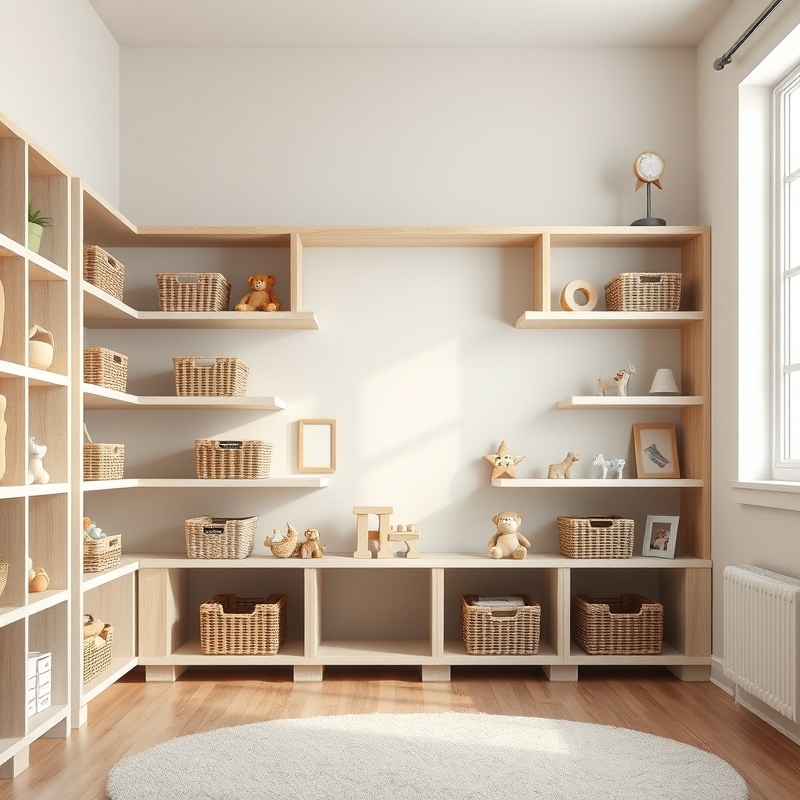
Open shelving at child height—twenty-four to thirty-six inches tall—invites independent play and toy selection without adult help. Choose natural wood or white-painted units with woven baskets or labeled bins that contain chaos visually. Rotating toys monthly keeps a four-shelf unit feeling fresh and prevents toy fatigue. Kids instinctively return items to these accessible shelves because reaching feels manageable and empowering. This approach transforms messy playrooms into organized spaces where children develop responsibility naturally. Low shelving becomes the foundation of successful kids playroom ideas because accessibility directly impacts cleanup participation and sustained creative engagement.
2. Chalkboard Accent Wall for Creative Play
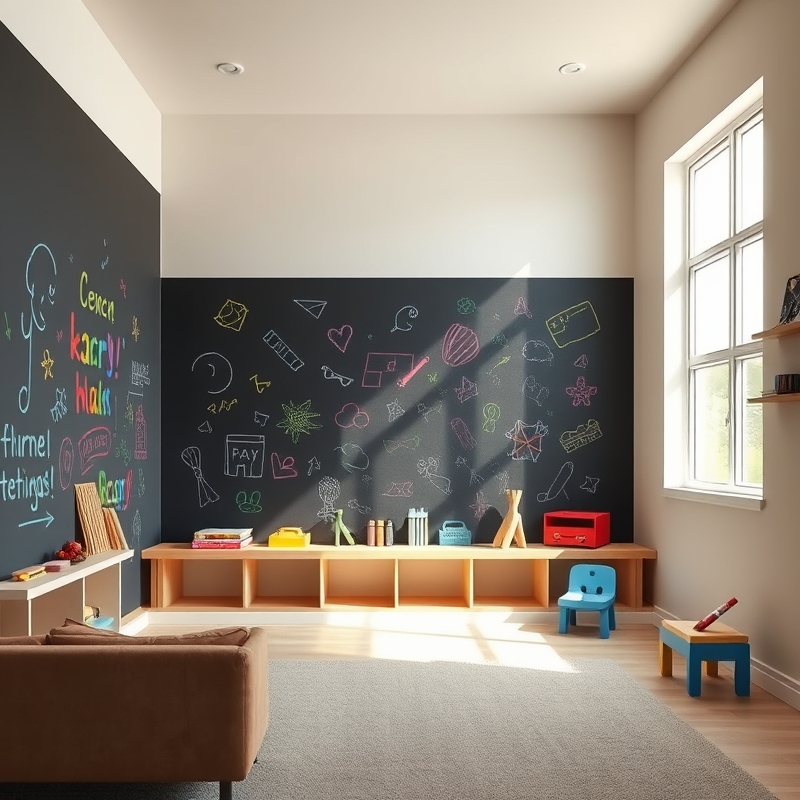
A full accent wall painted with chalkboard paint costs thirty to fifty dollars and becomes an unlimited creative canvas where children draw endlessly. The dark matte finish contrasts beautifully with surrounding walls while the interactive surface invites creative expression daily. Install a narrow chalk ledge shelf below the wall for easy access to colored chalk and erasers. Children feel empowered knowing they can create freely without fear of permanent marks. The chalkboard surface encourages artistic play while containing creativity to one designated zone. This single wall upgrade instantly elevates playrooms by turning blank space into purposeful creative infrastructure that changes daily.
3. Floor Cushion Reading Nook by Window
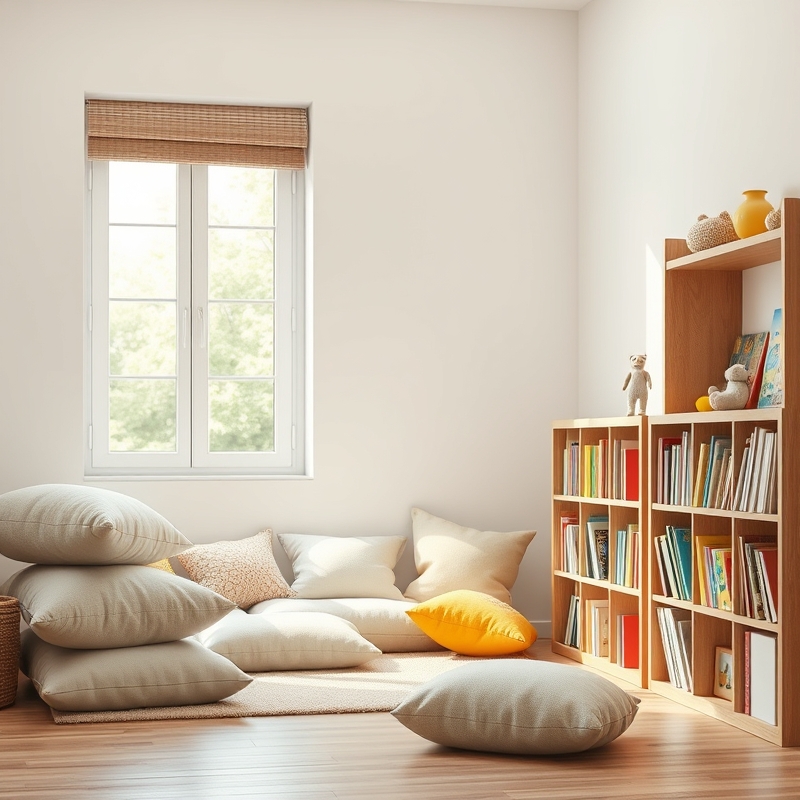
Floor cushions cost fifteen to thirty dollars and transform unused window corners into cozy reading retreats where children escape to favorite stories. Stack cushions in neutral or primary colors for comfort that encourages extended quiet time. Position low bookshelves at arm’s reach for easy book access without adult assistance. Natural window light creates ideal reading conditions while connecting the space to outdoor views. Add a small plant or string lights overhead to signal this zone as special and intentional. These intimate nooks balance active play zones by providing quiet refuges where creativity shifts from movement-based to imagination-focused activities.
4. Pegboard Wall Storage for Costumes
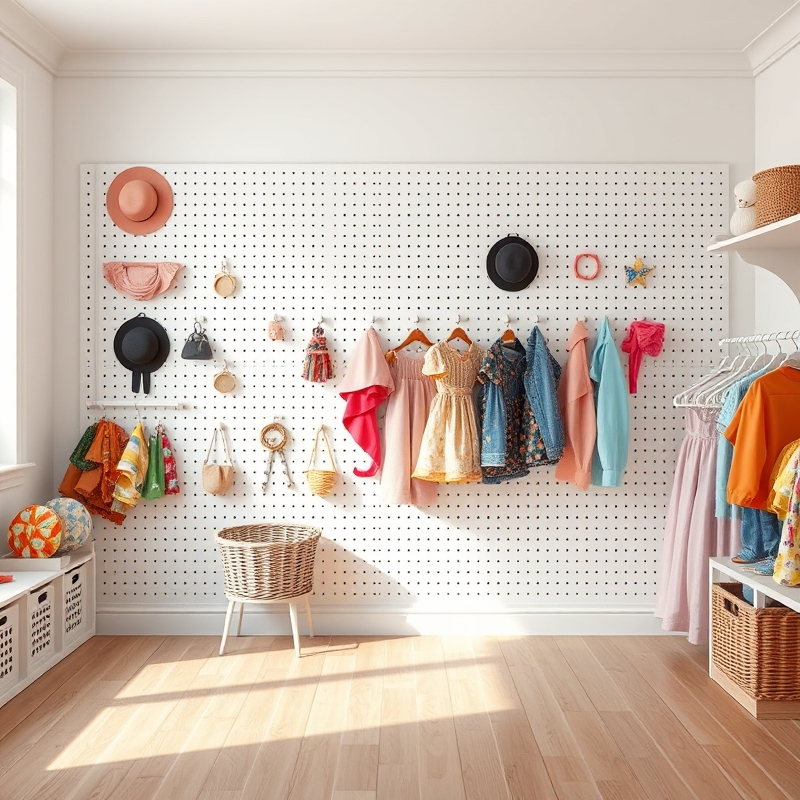
Pegboard walls cost forty to eighty dollars installed and display dress-up costumes as accessible art while keeping them organized and visible. Paint the board in soft pastels or white to match your playroom aesthetic, then add hooks and small baskets for hats, belts, and accessories. Visible costume storage invites imaginative play because children see possibilities immediately. Pegboards encourage independent outfit creation and change without asking for help finding pieces. The vertical storage preserves floor space while turning costume chaos into an intentional design feature. This organizational approach makes dress-up play feel supported and celebrated rather than tolerated as messy play.
5. Kids Playroom Ideas With Labeled Bins
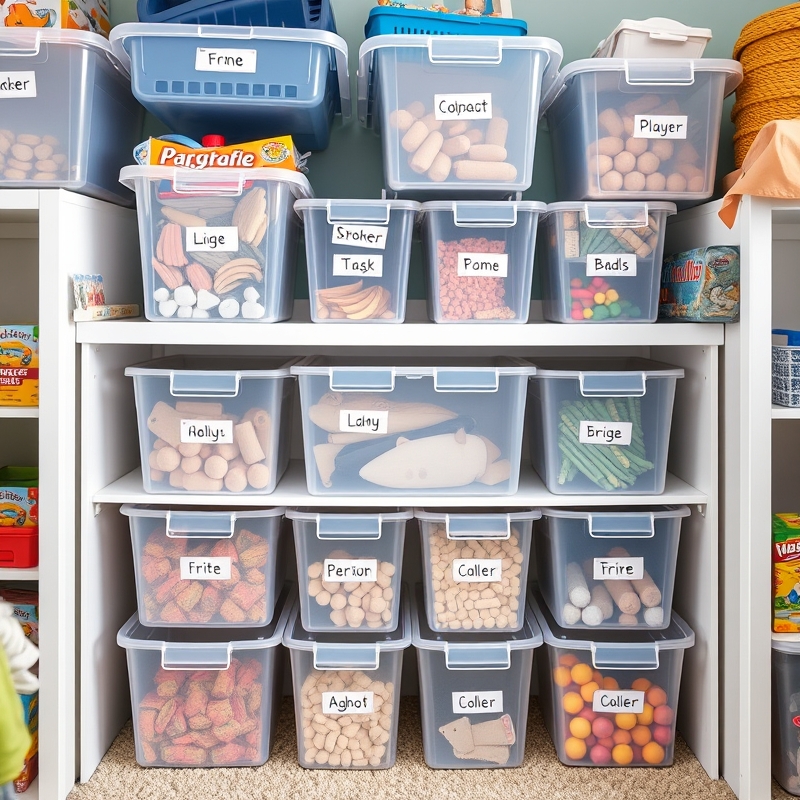
Clear plastic bins with printed or handwritten labels cost twenty to forty dollars total and transform toy storage from chaotic to systematic. Kids can see contents immediately without opening containers, reducing decision fatigue during cleanup. Labels with pictures plus words support early readers while preventing guessing games about where things belong. Consistent labeling teaches organizational systems children carry into adulthood. Bins organize by toy type—blocks, vehicles, dress-up, art supplies—making cleanup feel manageable rather than overwhelming. The Spruce recommends clear bins as the foundation of functional playroom storage because visibility directly impacts whether children actually use systems consistently.
6. Fold-Down Art Table for Small Areas
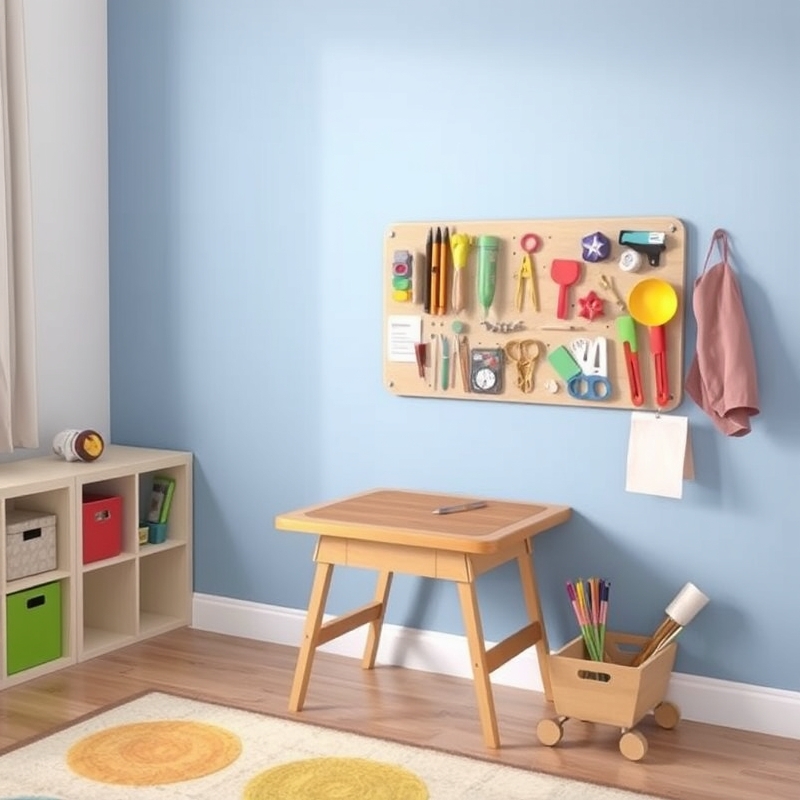
Paint a wall section with magnetic primer and finish coat to create interactive learning surfaces that cost thirty to sixty dollars installed. Magnetic panels hold letters, numbers, shapes, and educational tiles without adhesive, allowing endless rearrangement for learning play. Children develop letter recognition and early math skills through tactile exploration. Metal caddies mounted below the panel keep magnetic pieces organized and accessible. The interactive nature invites repeated engagement while teaching systems naturally. Magnetic walls transform educational learning into playful discovery rather than structured lessons, making skill development feel effortless.
7. Hanging Chair or Swing in Corner
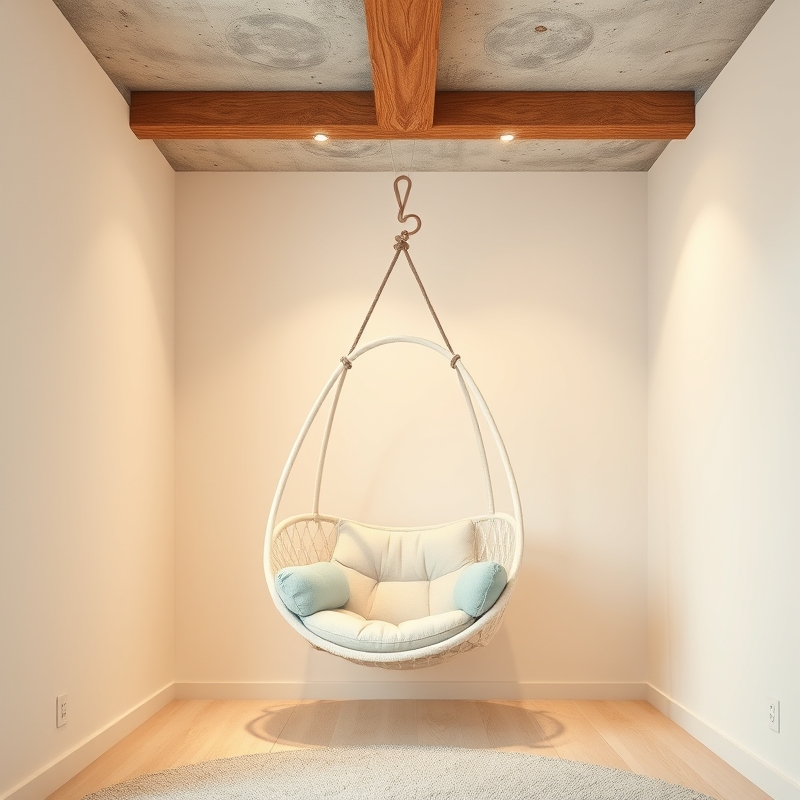
Plus, hanging chairs or swings cost sixty to one hundred fifty dollars and provide vestibular input while creating a personal retreat space within the playroom. Choose suspension systems rated for children’s weight and install securely into ceiling joists or beams. The gentle swaying motion calms nervous systems while the enclosed space provides sensory breaks during active play. Children naturally gravitate toward hanging spaces for quiet time or imaginative solitary play. Corner placement maximizes unused vertical space while keeping the chair out of foot traffic zones. These suspended retreats become beloved favorites in kids playroom ideas because they combine comfort with developmental movement benefits.
8. Padded Play Mat With City Map
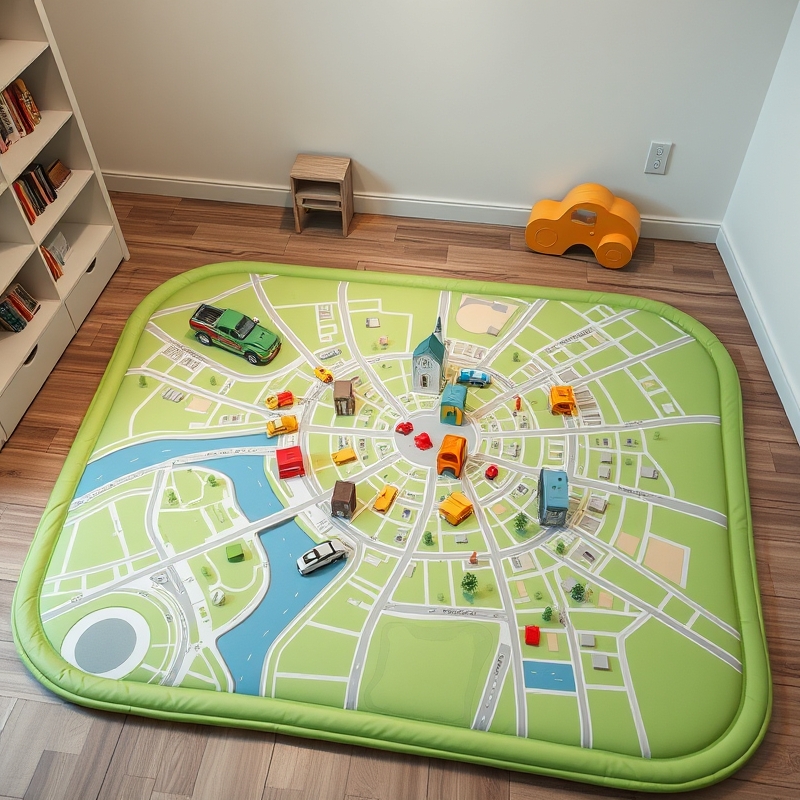
Interactive padded mats with printed city maps cost forty to eighty dollars and inspire vehicle play while defining a contained play zone visually. Foam padding protects joints during crawling and tumbling while the road design guides imaginative scenarios organically. Choose mats measuring four by six feet or larger for adequate play space without overwhelming room dimensions. The printed landscape invites narrative play—delivering packages, managing traffic, creating neighborhoods—extending engagement naturally. Padded surfaces reduce noise impact on floors below while providing comfort during extended play sessions. This investment anchors active play zones while supporting kids playroom ideas that balance structured zones with open exploration space.
9. Wall-Mounted Craft Paper Roll Holder
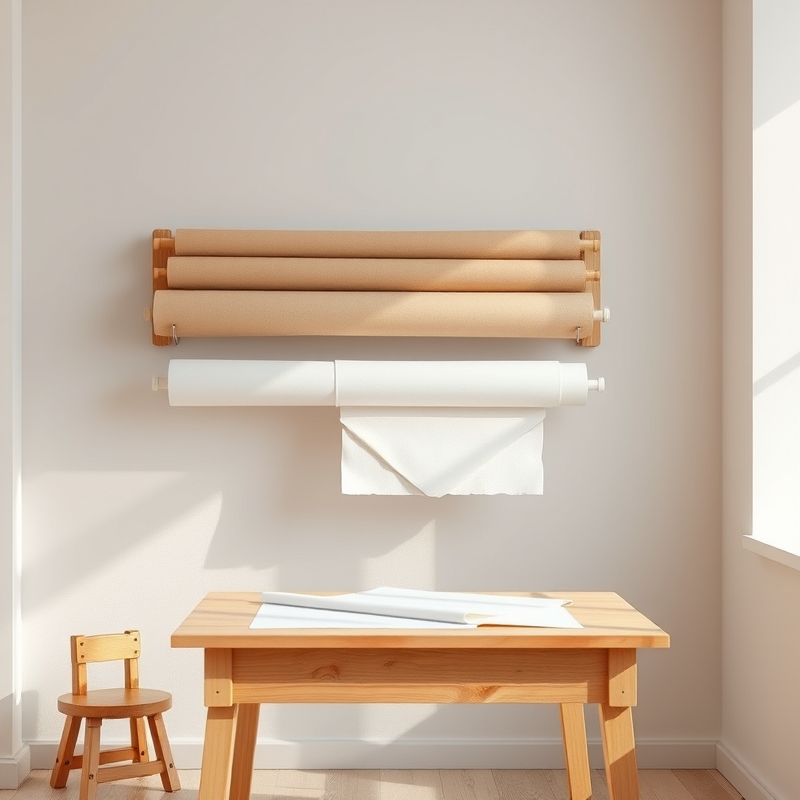
Even better, wall-mounted paper holders cost twenty to forty dollars and provide endless drawing surfaces without consuming floor or table space permanently. Mount the holder at child shoulder height, loaded with kraft paper, butcher paper, or colored rolls children can tear independently. The continuous paper supply invites spontaneous art creation without asking permission or waiting for adult setup. Installation requires simple wall mounting with minimal hardware. Positioning above an art table creates a designated creative station children recognize immediately. This simple infrastructure removes barriers to artistic expression while keeping supplies visible and accessible throughout the day.
10. Art Display Wire for Kids’ Gallery
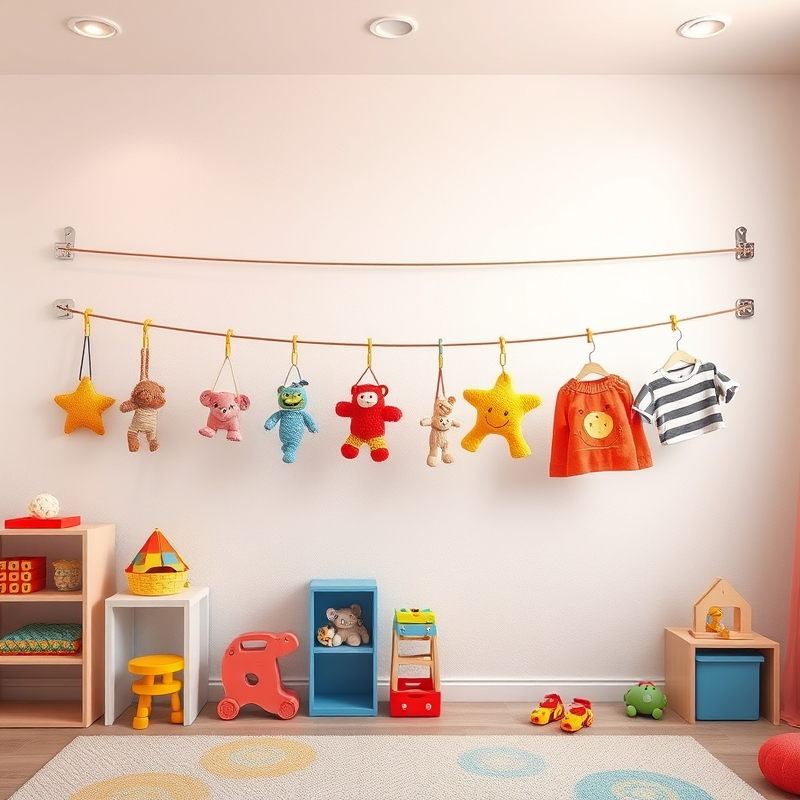
Art display wires cost fifteen to thirty dollars per installation and celebrate children’s creations while keeping walls damage-free and rotation flexible. Install horizontal wires at child eye-level using metal hanging clips that grip artwork without tape or pins. The rotating gallery honors creative output while teaching children that their work matters. Changing displayed pieces weekly maintains freshness and excitement about the gallery space. Unlike traditional frames, wire displays accommodate various paper sizes and thicknesses without modification. This gallery approach transforms kids playroom ideas by shifting focus from toy accumulation to creative expression, reinforcing that imagination matters most in this important space.
11. Cozy Canopy Tent With String Lights
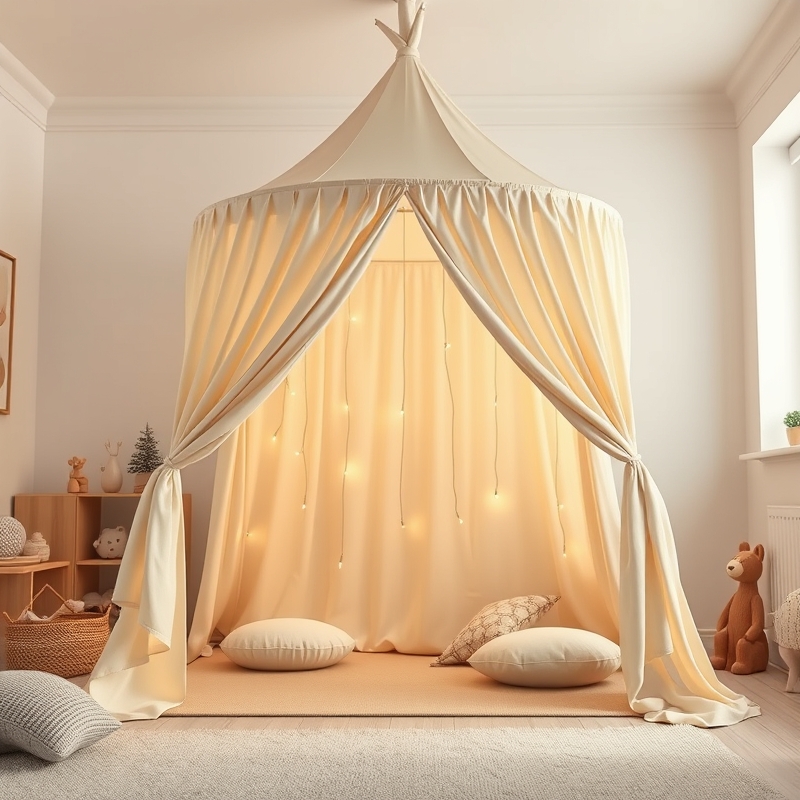
Canvas or cotton canopy tents cost fifty to one hundred twenty dollars and create magical retreats where children escape into imaginative worlds. String lights suspended inside the tent cast warm ambient glow that transforms ordinary fabric into enchanted spaces. Position tents in corners or against walls to maximize floor space while creating defined hideaways. The enclosed feeling provides sensory regulation while soft lighting encourages calm, focused play. Children naturally gravitate toward these cozy structures for reading, storytelling, or quiet imaginative play. These whimsical refuges become cherished spaces where creativity flourishes in intimate, protected environments.
12. Bright Modular Foam Seating Blocks
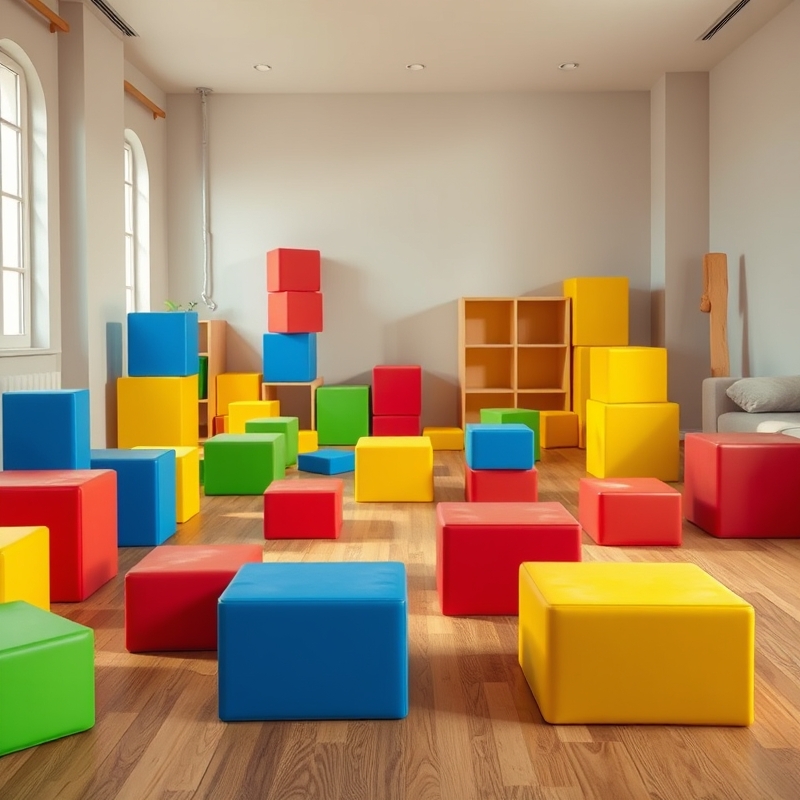
Here’s what makes this work—foam seating blocks cost sixty to one hundred dollars per set and transform instantly based on children’s play needs. Bright primary colors in red, blue, yellow, and green energize spaces while supporting visual development. Lightweight blocks allow children to rearrange seating independently, building spatial reasoning and problem-solving skills. The soft foam surfaces cushion play while supporting active movement and balance development. Blocks stack into towers, form obstacle courses, or arrange as conversation seating depending on day’s activities. This flexible furniture system adapts to evolving kids playroom ideas while supporting physical development through active manipulation.
13. Kids Playroom Ideas With Indoor Climbing Wall
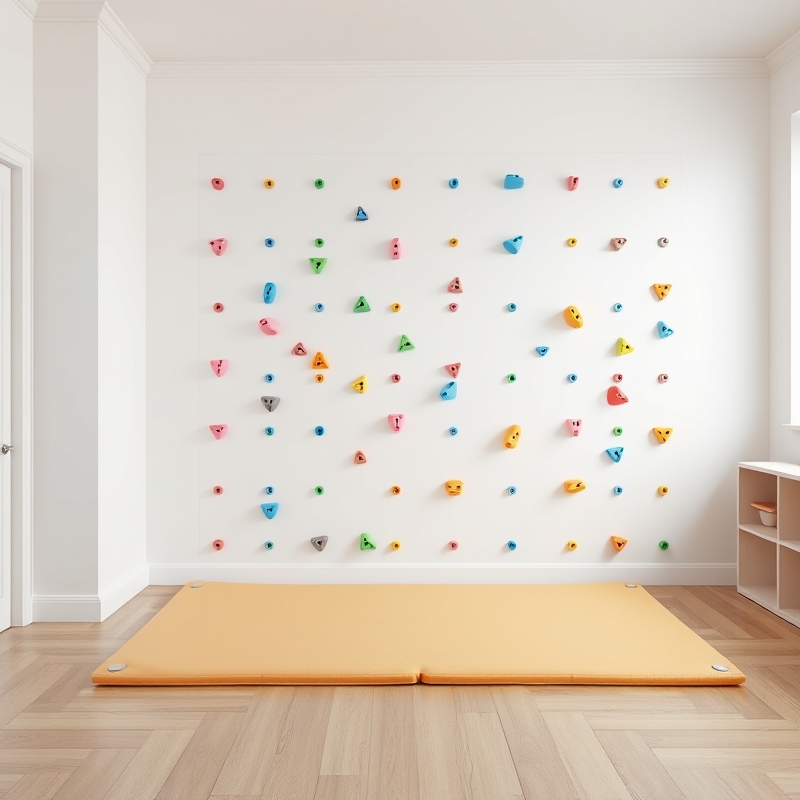
The real difference is installing climbing walls with colored holds—costs eighty to one hundred fifty dollars—that build strength while providing active sensory input. Mount holds securely to wall studs using heavy-duty hardware rated for climbing forces. Arrange holds in progressive difficulty levels encouraging repeated attempts and skill development. Position padded mats below climbing surfaces for safety during falls. Multi-colored holds guide feet naturally while making climbing feel like playful exploration rather than exercise. Indoor climbing walls address developmental needs for vestibular and proprioceptive input while transforming wall space into functional play infrastructure.
14. Wooden Storage Bench With Toy Baskets
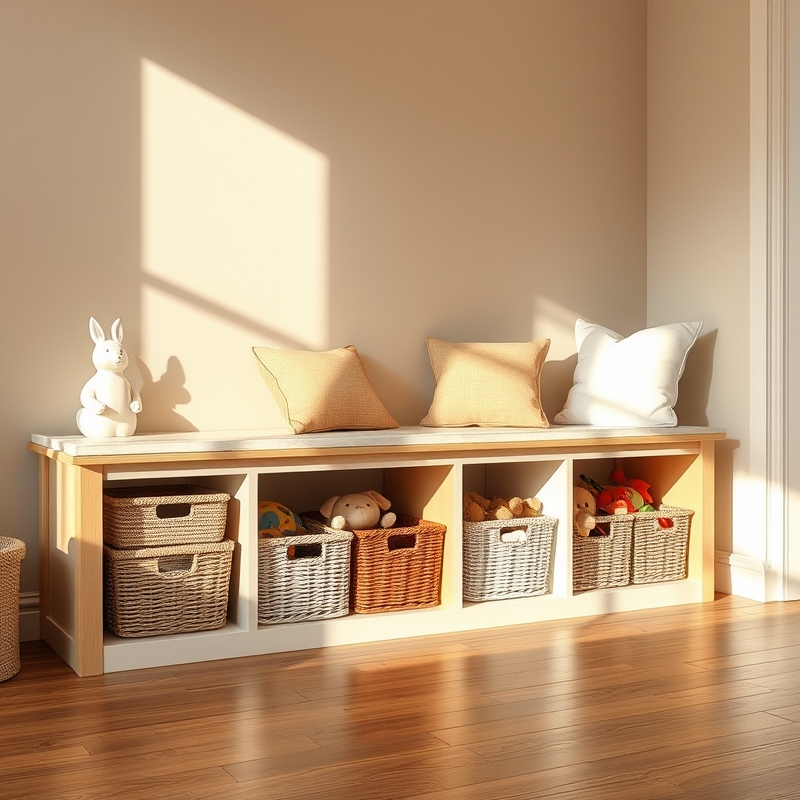
What most people overlook is that storage benches cost seventy to one hundred thirty dollars and serve dual purposes as seating and organization. Wooden benches with built-in cubbies hold woven baskets perfectly, creating attractive storage that doubles as casual seating. The bench top accommodates snack breaks, conversations, or game playing throughout the day. Baskets beneath keep toys organized while remaining accessible without adult assistance. Natural or white finishes coordinate with various playroom aesthetics. These multi-functional pieces prove that purposeful furniture solves organization challenges while supporting comfortable daily living within playroom spaces.
15. Removable Wall Decals for Imagination
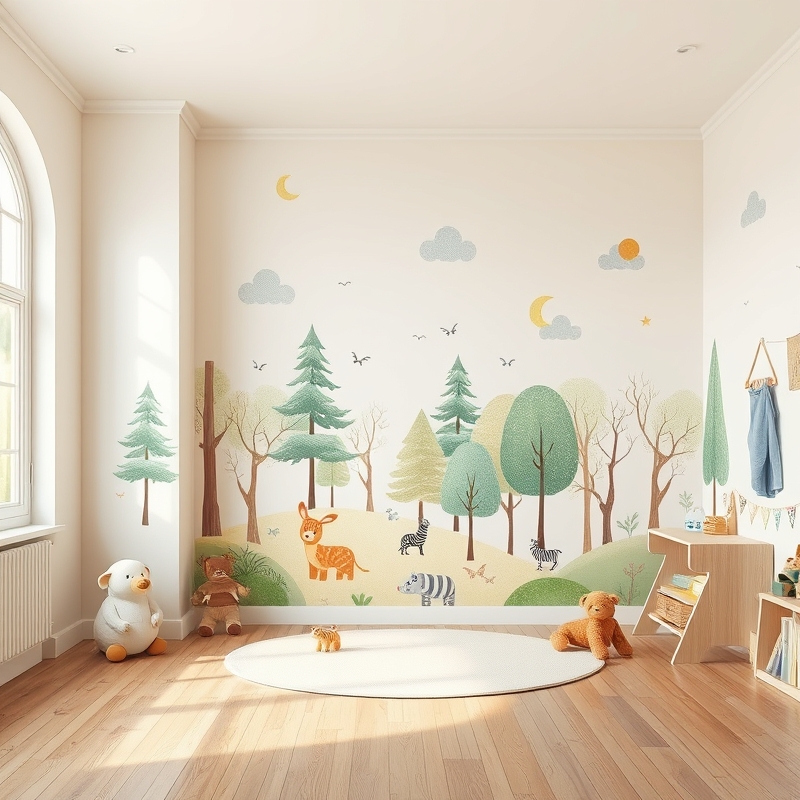
And the best part? Removable wall decals cost fifteen to forty dollars and transform blank walls without permanent damage or paint commitment. Houzz features removable decals as renter-friendly solutions for playroom personalization. Choose forest scenes, underwater themes, space explorations, or abstract patterns that inspire imaginative narratives. Decals peel cleanly without residue, allowing easy updates as children’s interests evolve. Layering decals creates depth while soft colors avoid overwhelming small spaces. This temporary decoration approach honors rental constraints while fully personalizing playroom aesthetics. Children internalize that their spaces reflect their imagination through thoughtfully chosen visual environments supporting creative development.
16. Kid-Height Hooks for Self-Care Items
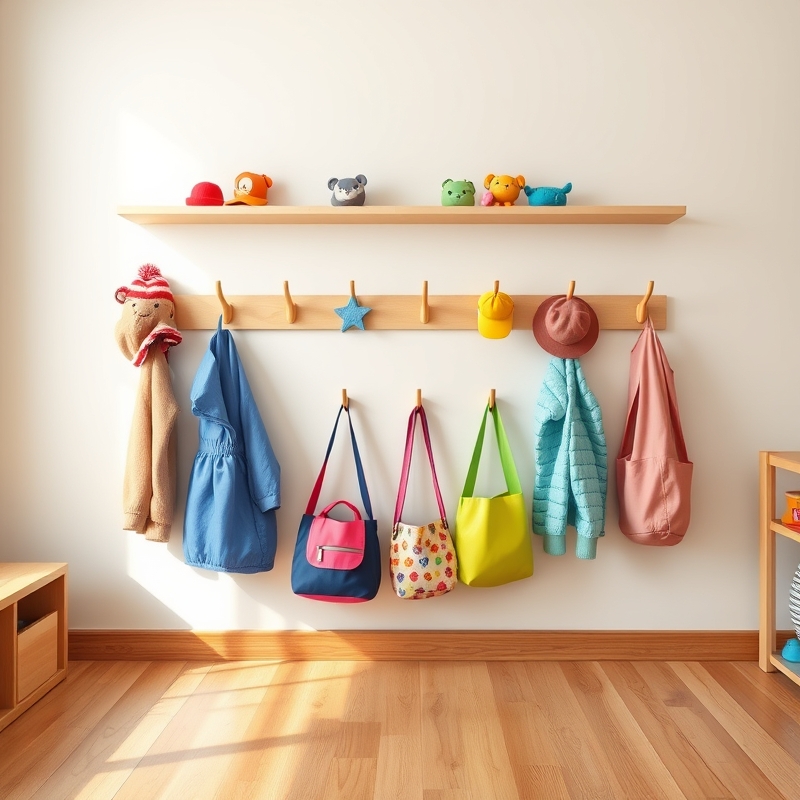
Installing hooks at child shoulder height—thirty-six to forty-eight inches—encourages independent coat hanging and responsibility development. Choose colorful wooden or metal hooks that coordinate with playroom aesthetics. Position hooks near entry points or near seating areas for convenient access. Children gain confidence hanging their own belongings without adult assistance. Hooks provide the only organizational system children will consistently use because accessibility removes barriers. This simple infrastructure teaches life skills while supporting the independence that makes kids playroom ideas actually functional for families managing daily routines.
17. Clear Storage Bins for Visible Toys
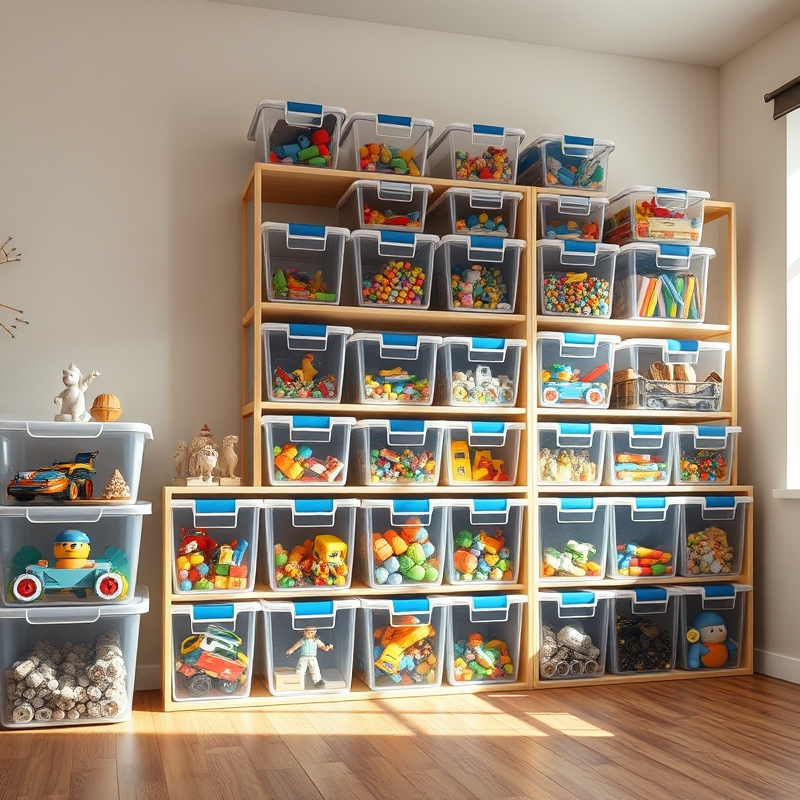
Clear plastic bins cost thirty to fifty dollars per set and solve visibility challenges that prevent toy rotation success. Transparent containers let children spot desired toys immediately without opening multiple bins. Stack bins in graduated sizes to maximize vertical space efficiently. Label bins consistently with toy categories children understand—vehicles, building materials, creative supplies—supporting independent organization. The visibility factor dramatically increases cleanup participation because children see where items belong. Clear storage transforms toy management from frustrating to manageable within kids playroom ideas by eliminating decision fatigue during cleanup and play transitions.
18. Recycled Material Play Kitchen Station
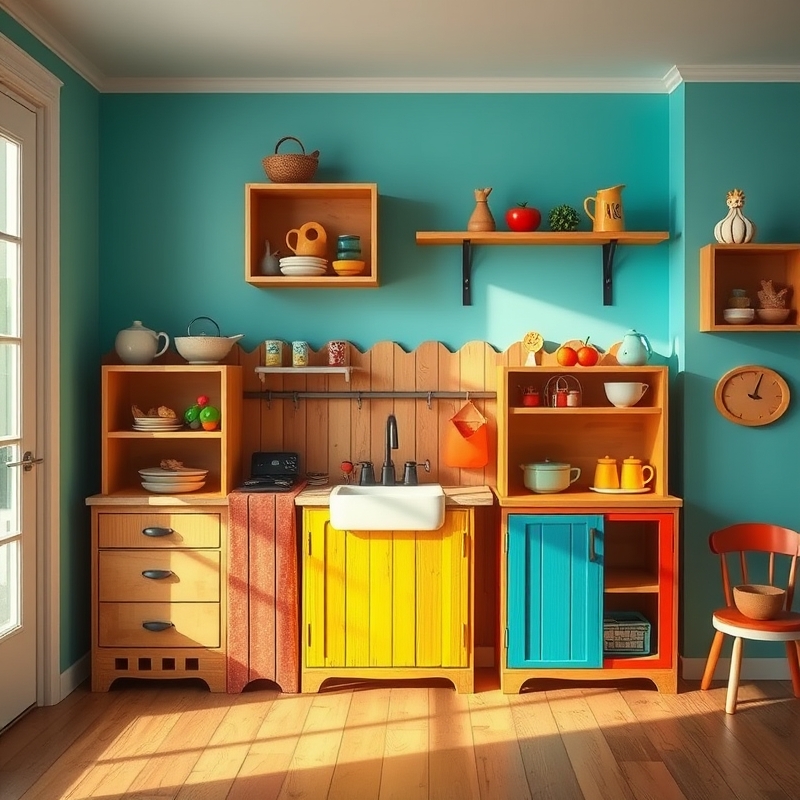
DIY play kitchens built from wooden crates or repurposed furniture cost twenty to sixty dollars and inspire imaginative pretend play. Paint cardboard boxes or crates in bright colors—red, yellow, blue—creating functional surfaces for cooking scenarios. Stack crates horizontally and vertically to build counter height and storage simultaneously. Include play dishes, food items, and cooking tools children access independently. Recycled material kitchens teach resourcefulness while supporting open-ended dramatic play. Building together creates bonding moments while teaching children that creativity thrives with constraint and limited resources.
19. Lego Table With Built-In Storage Drawers
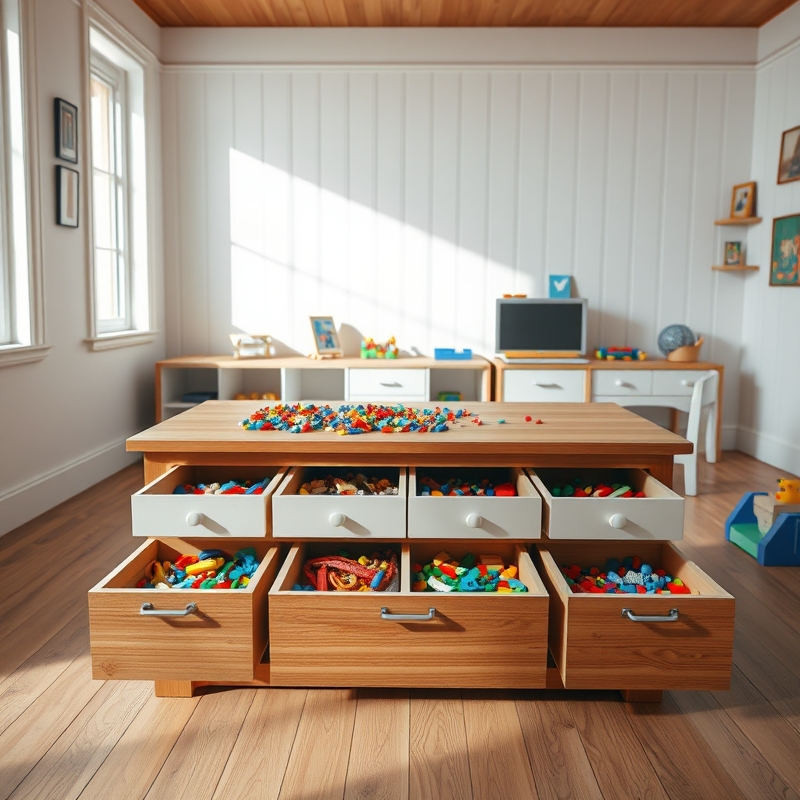
Dedicated Lego tables with built-in storage drawers cost eighty to one hundred fifty dollars and contain brick chaos while supporting extended building sessions. Drawers organize bricks by color using clear containers, reducing search time dramatically. The table height accommodates floor sitting or chair seating comfortably. Keep tables positioned where incomplete creations can remain undisturbed between sessions. The dedicated surface signals that building receives valued space within playrooms. This focused infrastructure encourages deeper creative engagement because children can maintain projects across multiple play sessions without cleanup pressure.
20. Floor Rug With Interactive Road Design
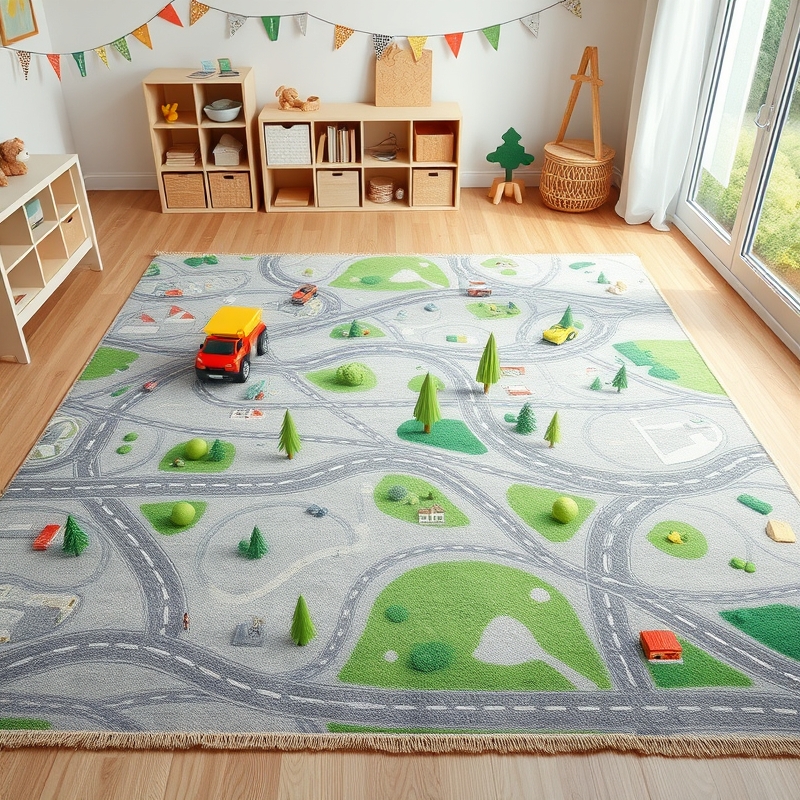
Interactive road rugs cost fifty to one hundred dollars and create built-in play environments where vehicles navigate predetermined landscapes. Choose rugs displaying roads, buildings, trees, and landscape features encouraging narrative play. Position rugs in central play areas anchoring active toy play zones. The printed design guides storylines naturally—delivering packages, building communities, managing traffic—extending engagement. Washable rug materials withstand spills and play wear. Road rugs define play boundaries visually while supporting kids playroom ideas centered on imaginative vehicle play scenarios requiring minimal setup from adults.
Final Thoughts
These twenty-one kids playroom ideas demonstrate that organization and creativity thrive together when thoughtful systems support both. From rotating toy displays and magnetic learning walls to cozy canopies and interactive road rugs, each element serves dual purposes—reducing clutter while sparking imagination. The most successful playrooms balance designated zones with flexible spaces, open shelving with hidden storage, and structured systems with room for spontaneous play. When children understand where things belong, can access materials independently, and feel their space reflects their interests, they naturally maintain organization while diving deeper into creative exploration.
Your child’s playroom can feel calm, inspiring, and genuinely functional. Start with one idea that addresses your biggest challenge, then layer additional solutions gradually.
Frequently Asked Questions
How can I organize a small kids playroom on a budget?
Start with clear bins and labeled storage that maximize vertical space using wall shelving. Rotate toys monthly to reduce what stays visible, making limited square footage feel spacious. DIY solutions like pegboards, fold-down tables, and hooks cost minimal amounts while providing functional organization. Focus on kid-accessible systems because children maintain storage they can independently use, preventing clutter accumulation that defeats budget organization efforts.
What color schemes stimulate creativity in a playroom?
Primary colors—bright red, blue, and yellow—energize spaces and support cognitive development visually. Soft neutrals like cream and pale gray prevent overstimulation while allowing colorful toys and decor to shine. Consider accent walls in jewel tones like emerald or sapphire for sophisticated visual interest. Balance bright colors with calm neutral backgrounds, avoiding overwhelming sensory environments that actually inhibit creative focus and relaxation during imaginative play.
Can I create a playroom in a shared bedroom?
Yes, using vertical storage, dividing screens, and zone designation strategies. Install tall shelving units that double as room dividers. Use rugs to anchor play areas visually separate from sleeping spaces. Fold-down tables and wall-mounted storage preserve sleeping area while accommodating kids playroom ideas. Storage benches and modular furniture adapt to dual-purpose spaces. Thoughtful layout design lets siblings or shared spaces function as both restful bedrooms and